

Return to Prudent Banking Act of 2023 This bill generally separates the activities of commercial banks and investment banks. Specifically, the bill prohibits an insured depository institution from affiliating with any person or firm engaged principally in, among other things, issuing or selling stocks, bonds, notes, or other securities. Officers, directors and employees of securities firms are prohibited from simultaneously serving as an officer, director, or employee of a depository institution, except in specified circumstances. No entity issuing or selling stocks, bonds, or other securities may engage in the business of receiving deposits, which includes the establishment and maintenance of transaction accounts. The bill declares that Congress ratifies the interpretation by the Supreme Court in Investment Company Institute v. Camp (ICI) of specified statutory language regarding permissible activities of banks and securities firms. It further declares that the reasoning of the Court in that case shall continue to apply to the limitations placed upon security affiliations as enacted by this bill. No federal banking agency or federal court shall issue an interpretation regarding such security affiliations that is narrower than that of the Court in ICI.
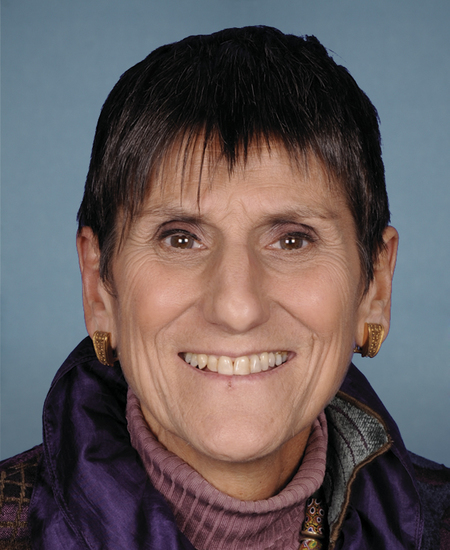
Rep. Rosa L. DeLauro
Sponsored bills
Maddy summaryThe Puppy Protection Act of 2023 sets new standards for businesses that sell dogs (dealers), directly affecting pet stores and breeders operating under the Animal Welfare Act. It requires specific housing with space allowances based on dog size (e.g., 12-30 square feet per dog), temperature control (45-85°F), clean food twice daily, and daily exercise or socialization with humans/dogs for at least 30 minutes. The bill also mandates annual veterinary exams including dental care, strict breeding limits (e.g., age restrictions, maximum 2 litters in 18 months), and efforts to place retired breeding dogs in homes instead of selling them to other breeders. Regulations must be finalized within 18 months of enactment.
Maddy summaryThe "For the 99.5 Percent Act" (HR 2676) would increase estate and gift taxes for large estates by lowering the basic exclusion amount from $750,000 to $3.5 million and implementing higher tax rates for estates over that threshold. It would limit discounts on estate valuations for family-owned businesses and nonbusiness assets, require minimum 10-year terms for certain trusts, and eliminate tax exemptions for transfers to certain beneficiaries. These changes would directly affect individuals with estates valued over $3.5 million, particularly those using complex trust structures to minimize tax liability. The bill aims to increase tax revenue from the top 0.5% of estates by making it harder to avoid estate taxes through various valuation techniques and trust arrangements. The changes would take effect for estates of decedents dying, and gifts made, after December 31, 2023.
Maddy summaryThe Junk Fee Prevention Act requires businesses to clearly display total prices including all mandatory fees at the point of sale, preventing hidden or excessive charges. It applies to ticketing services (for events like sports and theater), short-term lodging providers, and communications services (internet, mobile), prohibiting deceptive fees and requiring full refunds if tickets can't be delivered. The bill also mandates that airlines seat young children (13 or younger) adjacent to an accompanying adult without additional cost, with specific options for refunds or rebooking if this isn't possible. The Federal Trade Commission and Federal Communications Commission will enforce these provisions with penalties for violations. The bill aims to increase price transparency and protect consumers from unexpected fees across multiple industries.
Maddy summaryHJRES 54 proposes a constitutional amendment stating that only natural persons (human beings) have rights protected by the U.S. Constitution, explicitly denying constitutional rights to corporations, limited liability companies, and other artificial entities. It would require governments to regulate or restrict corporate political contributions and spending to ensure equal access to elections, mandate public disclosure of all political spending, and clarify that campaign finance rules do not violate the First Amendment. This amendment directly affects corporations and other artificial entities by removing their constitutional standing in legal challenges and subjecting their political activities to stricter government oversight. If passed, it would fundamentally change how corporations interact with election laws and constitutional protections, though it preserves press freedom under Section 3. The bill is a proposed amendment requiring ratification by 3/4 of state legislatures to become part of the Constitution.
Maddy summaryHRES 284 is a non-binding House resolution that commends the University of Connecticut Men's Basketball Team for winning the 2023 NCAA Men's Basketball Championship. It specifically honors the team's fifth national title (all since 1999), their undefeated championship game record, and their tournament performance. The resolution formally congratulates the team, UConn fans/staff, and directs the House Clerk to send a copy to UConn's president and head coach. As a ceremonial resolution, it has no legal effect or policy changes.
Maddy summaryHR 2439, the Ally’s Act, requires most private health insurance plans to cover hearing-related services and devices for qualifying individuals. It mandates coverage for cochlear implants, bone conduction devices, maintenance, upgrades every five years, hearing assessments, surgery, and rehabilitation, without separate cost-sharing or medical necessity reviews. This directly affects people with hearing loss who need implantable devices, as defined by a physician or audiologist. The law applies to group health plans under the Public Health Service Act, ERISA, and Internal Revenue Code, taking effect for plan years beginning January 1, 2025.
Maddy summaryThe Women's Health Protection Act of 2023 would protect access to abortion services by prohibiting states from imposing restrictions that are more burdensome than those for comparable medical procedures. The bill would ensure people can obtain abortion services before fetal viability without unnecessary limitations like mandatory waiting periods or biased counseling, and after viability when necessary to protect the patient's life or health. It would preempt state laws that conflict with these protections and allow for civil enforcement actions to challenge restrictive state laws. This bill directly affects people seeking abortion services (including transgender and nonbinary individuals who can become pregnant), health care providers, and states that have implemented abortion restrictions.
Maddy summaryHRES 278 is a symbolic House resolution supporting the designation of April 10, 2023, as "Venture Smith Freedom Day." It commemorates the 258th anniversary of Venture Smith purchasing his freedom in 1765 after being enslaved, recognizing his journey to becoming a Connecticut landowner, businessman, and the first African American to publish an autobiography. The resolution does not create new laws or affect any individuals; it is purely a ceremonial recognition of Smith's life and legacy. It honors his authorship of the phrase "My freedom is a privilege which nothing else can equal" and his role in early American history.
Maddy summaryHR 2501, titled "Sunset for the 2001 Authorization for Use of Military Force Act," would end the 2001 law (Public Law 107-40) that authorized military force following the September 11 attacks. The bill directly affects military operations currently justified under that 2001 authorization, requiring future actions to seek new congressional approval. It mandates the repeal of the 2001 AUMF 240 days after the bill becomes law, ending its legal authority. The bill states Congress finds the 2001 authorization has been used too broadly, conflicting with constitutional war powers.