

Maddy summaryThis bill approves and implements a new trade agreement between the United States and Taiwan, negotiated by the American Institute in Taiwan and Taiwan's Taipei Economic and Cultural Representative Office. The agreement aims to strengthen economic ties by addressing areas like supply chain security, investment screening, health, science, technology, and the digital economy. The bill establishes requirements for the President to consult with Congress before implementation, submit reports on how the agreement benefits US workers and businesses, and provide transparency about future trade negotiations. It also clarifies that the agreement doesn't override US or state laws and requires any future agreements to follow a similar approval process with congressional review.
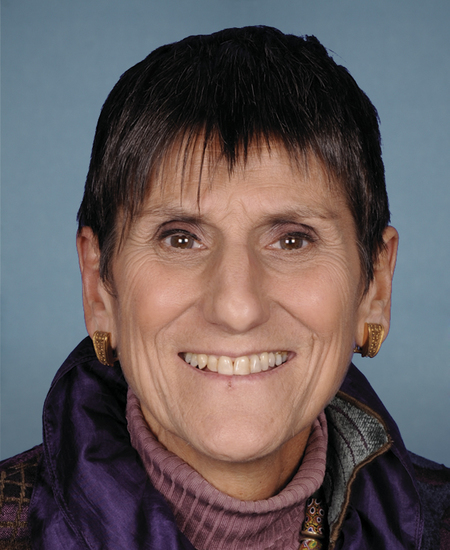
Rep. Rosa L. DeLauro
Sponsored bills
Maddy summary# Summary of the "Protecting Our Democracy Act" This comprehensive legislation aims to strengthen democratic processes, increase government transparency, and prevent foreign interference in elections. Key provisions include: ## Ethics and Transparency - **Ethics Pledge**: Requires all appointees to sign an ethics pledge committing to: - Ban on gifts from registered lobbyists - 2-year revolving door ban (prohibiting participation in matters related to former employers) - Golden parachute ban (no special payments from former employers) - Commitment to decision-making based on public interest - **Tax Transparency**: Requires presidential and vice presidential candidates to disclose 10 years of tax returns, with sitting presidents submitting returns within 30 days of enactment ## Campaign Finance and Foreign Interference - **Foreign Contact Reporting**: Requires political committees to report any contact with "covered foreign nationals" within 1 week - **Enhanced Penalties**: Criminal penalties of up to $1 million and 5 years in prison for violations - **Online Advertising Rules** ("Honest Ads Act"): - Requires clear disclosure of who paid for political ads online - Mandates machine-readable public databases of political ads - Requires visible sponsor identification that remains when ads are shared - Defines "qualified political advertisements" to include various online formats ## Preventing Patronage Systems - Limits exceptions to competitive service for federal positions - Restricts transferring positions between competitive and excepted service - Requires employee consent for position transfers ## Use of Federal Property - Prohibits holding national political conventions on federal property - Requires publicly available visitor records at White House and other official locations (with privacy exceptions) The legislation establishes detailed definitions, reporting requirements, and enforcement mechanisms across multiple agencies, with the goal of increasing transparency, preventing foreign interference, and ensuring ethical conduct in government service.
This concurrent resolution opposes actions that undermine Israel's future as a Jewish, democratic state. The resolution expresses that democracy is at the core of the special relationship between the United States and Israel, and that Congress stands with all Israelis seeking to defend liberal democracy, judicial review, and independent political institutions.
Maddy summaryHR 4963, the Tax Fairness for Workers Act, would restore tax deductions for certain employee expenses. It creates an above-the-line deduction for union dues and expenses paid by wage-earning employees, and allows miscellaneous itemized deductions for other work-related expenses (like uniforms or supplies) that were previously disallowed after 2017 tax law changes. These provisions directly affect employees who pay union dues or incur qualifying job-related costs. The bill amends specific sections of the Internal Revenue Code to make these deductions available for taxable years beginning after December 31, 2022. It does not change tax rates or provide new benefits, only reinstating previously eliminated deductions for eligible workers.
Maddy summaryThe HELP Act of 2023 requires the Department of Housing and Urban Development to create a national database collecting detailed eviction data from federally assisted housing, including demographic information and reasons for eviction. It allocates $10 billion for legal aid to help tenants facing eviction in covered housing, covering court fees and attorney costs for tenants (but not landlords). The bill also changes credit reporting rules to prevent eviction records from appearing on consumer credit reports and mandates annual written notices to tenants about their eviction rights and local resources. This directly affects renters in federally assisted housing - covering public housing, Section 8, and other HUD-assisted units - which includes approximately 26 million households. The policy aims to address racial disparities in evictions, where Black renters face eviction at twice the rate of White renters.
Maddy summaryThis bill establishes new federal requirements for employers to prevent heat-related illness and injury among workers. It mandates that employers provide safe work environments by implementing specific measures, including access to cool water, scheduled rest breaks in shaded areas, employer-paid cooling equipment, and training for employees and supervisors on recognizing heat illness symptoms. The Secretary of Labor must create these standards within one year, requiring employers in high-heat occupations (like construction, agriculture, and outdoor labor) to adopt engineering controls, administrative schedules, and health protocols. Key provisions include ensuring hydration, rest, and language-accessible training, while preserving existing safety protections and allowing for updates as scientific evidence evolves.
Maddy summaryHR 4900, the Fair College Admissions for Students Act, bans colleges receiving federal financial aid from favoring applicants based on family connections to donors or alumni. Specifically, it amends the Higher Education Act to prohibit institutions from giving preferential treatment in admissions to students whose parents or relatives donated money to the school or are alumni. This applies to all colleges participating in federal student aid programs under the Higher Education Act. The rule takes effect for the second award year starting after the bill's enactment date.
Maddy summaryHR 4889, the Raise the Wage Act of 2023, would gradually increase the federal minimum wage for most workers to $15.50 per hour by 2027, with specific annual targets: $9.50 starting in 2023, rising to $11.00 after one year, $12.50 after two years, and $15.50 after four years. It would also phase out the separate lower minimum wage for tipped employees (starting at $6.00/hour) by aligning their pay with the regular minimum wage by 2028, while requiring employers to let workers keep all tips. The bill includes similar phased increases for workers under 20 and transitions toward fairer wages for workers with disabilities under special certificates, which would sunset after 2028. Future annual increases after 2028 would tie the minimum wage to the median hourly wage of all workers.
Maddy summaryH.J.Res. 25 would remove the 1979 deadline for states to ratify the Equal Rights Amendment (ERA), which was originally proposed in 1972. This bill directly affects states that ratified the ERA after the deadline (such as Nevada, Illinois, and Virginia in 2017-2018) by making their ratifications legally valid. The key provision states that the ERA is valid as part of the Constitution if ratified by three-fourths of states, regardless of the original deadline. The bill does not create new rights but aims to finalize the constitutional amendment process by eliminating the time limit.
Maddy summaryThis bill, HR 1282 (Major Richard Star Act), expands benefits for certain military retirees by allowing them to receive both veterans' disability compensation and military retirement pay simultaneously. It specifically affects combat-related disabled retirees under Chapter 61 of the military retirement system who have fewer than 20 years of service. The key change removes the automatic reduction of military retirement pay when these retirees also receive disability compensation, as amended in Section 1413a(b)(3) of Title 10. Technical updates to the law’s structure and effective date (starting after enactment) complete the provisions.