

Maddy summaryHR 6181, the John Lewis Every Child Deserves a Family Act, prohibits child welfare agencies receiving federal funds from discriminating against children, youth, or prospective foster/adoptive parents based on religion, sex (including sexual orientation and gender identity), or marital status. It directly affects LGBTQ youth in foster care - overrepresented at 30% of the system - who face higher risks of trauma, group home placements, and suicide attempts compared to non-LGBTQ peers. Key provisions require agencies to collect data on sexual orientation and gender identity, establish a National Resource Center for LGBTQ youth support, provide cultural competency training, and eliminate discriminatory practices. The law aims to improve safety, permanency, and placement stability by expanding access to family-based care and ensuring equitable services for all children in the system.
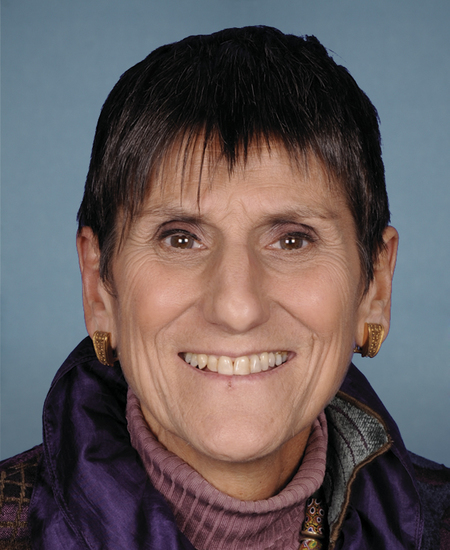
Rep. Rosa L. DeLauro
Sponsored bills
Maddy summaryThe Increasing Access to Mental Health in Schools Act creates a federal grant program to increase the number of mental health professionals (counselors, social workers, and psychologists) in low-income public schools. It provides funding for partnerships between schools serving high percentages of low-income students and graduate institutions that train mental health professionals, aiming to reach recommended staff-to-student ratios (such as 1 counselor per 250 students). The bill also establishes a student loan repayment program for mental health professionals working in these schools, offering up to $200,000 in total repayment over five years. This legislation directly affects low-income school districts and mental health professionals working in those schools, with the goal of improving mental health support for students facing challenges like poverty, homelessness, or trauma.
Maddy summaryThe Global Respect Act (HR 6151) requires the U.S. President to publicly list foreign officials responsible for severe human rights violations against LGBTQI individuals, including torture, prolonged detention, or violence based on sexual orientation or gender identity. It mandates denying visas and entry to listed individuals and requires annual reports on the list's updates and impacts. The bill also directs the State Department to track global violence against LGBTQI people and update annual human rights reports to include discrimination based on sexual orientation or gender identity. These provisions directly affect foreign government officials and entities implicated in such abuses, aiming to increase accountability through U.S. visa restrictions.
Maddy summaryThe EXPERTS Act of 2025 requires agencies to disclose funding sources and potential conflicts of interest for studies submitted during rulemaking, including who funded research and any financial relationships that might influence findings. It establishes an Office of the Public Advocate within the Office of Management and Budget to assist public participation in rulemaking, conduct social equity assessments, and improve outreach to underrepresented groups. The bill also mandates that agencies consider social equity impacts when creating rules and requires detailed explanations for withdrawing proposed regulations. These provisions aim to increase transparency, inclusivity, and accountability in the federal regulatory process.
Maddy summaryHR 6109 amends Medicare Advantage plan rules to address excessive initial denials of prior authorizations. It requires the Medicare program to terminate contracts with plans that reverse more than 25% of initially denied coverage requests through appeal or reconsideration during a plan year. The bill specifically targets plans where a high rate of reversed denials indicates improper initial denials, or where plans fail to properly reconsider denials compared to prior years. This directly affects Medicare Advantage plan providers, imposing new accountability for their prior authorization practices.
Maddy summaryThis bill amends Section 1983 of federal law (42 U.S.C. 1983) to explicitly allow lawsuits against federal officials who violate constitutional rights while acting under federal authority. It directly affects individuals whose constitutional rights were allegedly infringed by federal employees, such as law enforcement or agency staff. The key provision inserts "of the United States" before "of any State" in the statute, expanding the existing legal remedy for state officials to cover federal officials as well. This creates a clear, standalone legal path for citizens to seek redress for federal constitutional violations without relying on precedent.
Maddy summaryThis bill limits how many Medicare Advantage (MA) plans a single organization can offer under Medicare contracts. It prohibits the Medicare program from contracting with an MA organization for more than three plans in a single year, and requires that if an organization offers multiple plans, each must be meaningfully different in premiums, benefits, or out-of-pocket costs. The rule applies to new or renewed contracts starting one year after the bill becomes law. It directly affects MA plan providers and Medicare's contracting process, aiming to reduce plan complexity for beneficiaries.
Maddy summaryThis bill requires Medicare Advantage (MA) plan advertisements to disclose specific data about prior authorization denials. Starting one year after enactment, ads must include the number of denied prior authorization requests, how many were later approved after reconsideration, and the average time between denial and approval. These disclosures must cover the most recent plan year before the ad is published, using both verbal and visual methods where possible. The policy directly affects MA plan marketers and beneficiaries who view these advertisements, aiming to provide clearer information about plan coverage experiences.
Maddy summaryHR 6108 requires the federal government to automatically exclude from all federal health care programs anyone convicted of specific fraud-related crimes after a one-year implementation period. It targets convictions for health care fraud, theft, or financial misconduct in health care delivery or government programs (including non-health care programs funded by government). The bill mandates this exclusion without requiring additional administrative action by the Secretary. This directly affects health care providers and organizations found guilty of such offenses, barring them from participating in programs like Medicare or Medicaid.
Maddy summaryThis bill (HR 6110) requires Medicare Advantage plans to automatically reconsider coverage denials without needing an enrollee to request it. It directly affects Medicare Advantage beneficiaries whose initial coverage requests are denied. The key change amends existing law to eliminate the requirement for patients to submit a separate request for reconsideration, instead mandating that plans proactively review these denials. This streamlines the process for enrollees facing coverage rejections under their Medicare Advantage plan.