

Improving Access to Mental Health Act of 2021 This bill increases the Medicare reimbursement rate for clinical social worker services. The bill excludes clinical social worker services from the prospective payment system in which predetermined amounts form the basis for payment under Medicare. Additionally, the bill alters the definition of clinical social worker services as it relates to Medicare. Under current law, such services (1) include services performed for the diagnosis and treatment of mental illnesses, and (2) exclude services furnished to an inpatient of a skilled nursing facility as a condition of the facility's participation in the Medicare program. The bill repeals these provisions and instead specifies that such services include certain types of health behavior assessment and intervention.
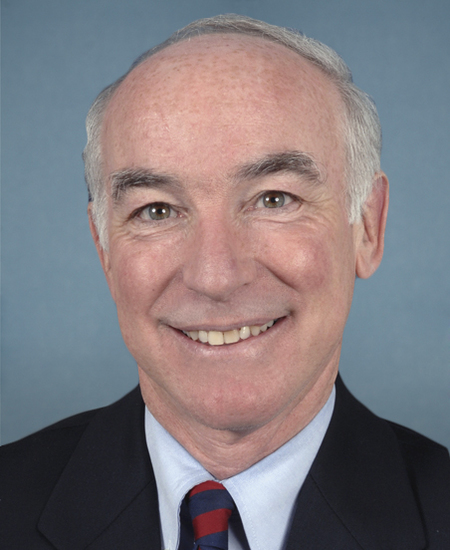
Rep. Joe Courtney
Sponsored bills
Pandemic Supplies Production Act This bill requires certain actions to manage the supply and distribution of materials needed to respond to the COVID-19 emergency. Specifically, the President must immediately exercise authorities under the Defense Production Act of 1950 to ensure the supply of necessary materials during the COVID-19 emergency. That act confers upon the President a broad set of authorities to influence domestic industry in order to provide essential materials and goods needed for the national defense. In addition, the Defense Logistics Agency (DLA), which is responsible for supply activities common to all military departments, must manage requests for and distribution of materials to respond the COVID-19 emergency and future emergencies or disasters. The Federal Emergency Management Agency (FEMA) must reimburse the DLA for costs incurred to undertake these activities. In addition, the DLA must report on the raw materials needed for the mass production of COVID-19 vaccines and related topics.
Outdated AUMF Repeal Act This bill repeals the authorizations for the use of military force against Iraq (dated January 14, 1991, and October 16, 2002) and repeals a joint resolution authorizing the provision of military assistance in the general area of the Middle East (dated March 9, 1957).
Increasing Access to Quality Cardiac Rehabilitation Care Act of 2021 This bill accelerates and expands certain changes that are scheduled to take effect relating to the coverage of cardiac, intensive cardiac, and pulmonary rehabilitation programs under Medicare. Currently, such programs require physician supervision. Effective January 1, 2024, physician assistants, nurse practitioners, and clinical nurse specialists may also supervise these programs. The bill expedites the effective date of these changes to January 1, 2022, and also allows these practitioners to administer programs in their offices, prepare and sign treatment plans, and prescribe exercise.
Medicare Multi-Cancer Early Detection Screening Coverage Act of 2021 This bill provides for Medicare coverage and payment for multi-cancer early detection screening tests that are approved by the Food and Drug Administration and that are used to screen for cancer across many cancer types.
This bill directs the Speaker of the House and the President pro tempore of the Senate to arrange for the award of three Congressional Gold Medals to the U.S. Capitol Police (USCP) and other law enforcement agencies that protected the U.S. Capitol on January 6, 2021. Following the award of these medals, one medal shall be given to the USCP, one medal shall be given to the Metropolitan Police Department of the District of Columbia, and one medal shall be given to the Smithsonian Institution and displayed with a plaque listing all law enforcement agencies that participated in protecting the Capitol on January 6, 2021.
Global War on Terrorism Memorial Location Act This bill authorizes the establishment of a National Global War on Terrorism Memorial in the area of the National Mall.
Equality Act This bill prohibits discrimination based on sex, sexual orientation, and gender identity in areas including public accommodations and facilities, education, federal funding, employment, housing, credit, and the jury system. Specifically, the bill defines and includes sex, sexual orientation, and gender identity among the prohibited categories of discrimination or segregation. The bill expands the definition of public accommodations to include places or establishments that provide (1) exhibitions, recreation, exercise, amusement, gatherings, or displays; (2) goods, services, or programs; and (3) transportation services. The bill allows the Department of Justice to intervene in equal protection actions in federal court on account of sexual orientation or gender identity. The bill prohibits an individual from being denied access to a shared facility, including a restroom, a locker room, and a dressing room, that is in accordance with the individual's gender identity.
Information Transparency & Personal Data Control Act This bill requires the Federal Trade Commission (FTC) to establish requirements for certain entities when they collect, transmit, store, process, use, or otherwise control sensitive personal information. Information relating to an identifiable individual is generally considered sensitive personal information. However, information that is publicly available is not considered sensitive. Specifically, these entities must (1) obtain affirmative consent from users for functionality related to the disclosure of sensitive personal information, (2) publish a privacy and data use policy that is readily understandable, (3) provide users the ability to opt-out of the sharing of their nonsensitive information, and (4) obtain at least once every two years a privacy audit that evaluates the sufficiency of the entity's data privacy and security controls. These requirements do not apply to the collection or sharing of sensitive or nonsensitive personal information for certain purposes such as detecting fraud or identity theft. The bill provides authority for the FTC and state attorneys general to enforce these requirements. Additionally, the FTC must hire 500 new employees to focus on privacy and data security.
Energizing American Shipbuilding Act of 2021 This bill directs (1) the Federal Energy Regulatory Commission (FERC) to require specified percentages of liquefied natural gas exports to be transported on vessels built or retrofitted in the United States and documented under its laws, and (2) the President to require specified percentages of crude oil exports to be transported on vessels built or retrofitted in the United States and documented under its laws. FERC and the President may waive these requirements under specified circumstances. The Energy Information Administration must collect and publish information on exports of natural gas and crude oil by vessels, including forecasts and data on those exports.