

United States Call Center Worker and Consumer Protection Act of 2021 This bill establishes restrictions on businesses that relocate call centers or redirect customer service calls to locations outside the United States. Specifically, a business must notify the Department of Labor that it intends to move its customer service call center overseas and Labor must maintain a publicly available list of such businesses. Subject to narrow exceptions, a business appearing on such list is ineligible to receive federal grants or guaranteed loans for five years after the business is added to the list. Further, agencies must condition the awarding of government contracts on the requirement that any call center activity pursuant to the contract must be performed in the United States. Additionally, the bill requires call center employees to disclose their physical location at the beginning of each call initiated or received, unless all employees of the business participating in the communication are located in the United States, among other exceptions.
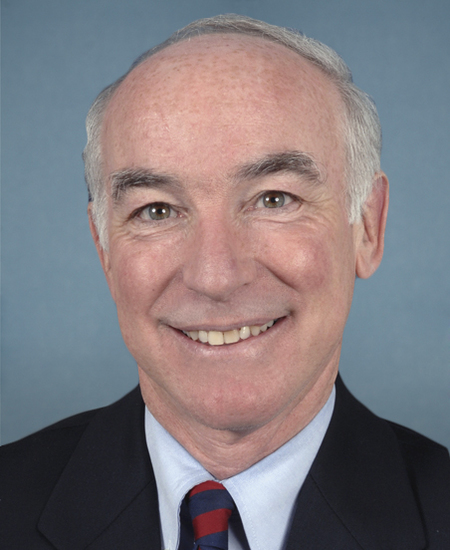
Rep. Joe Courtney
Sponsored bills
Averting Loss of Life and Injury by Expediting SIVs Act of 2021 or the Allies Act of 2021 This bill increases the number of special immigrant visas available to qualified Afghan nationals who worked for the U.S. government or the North Atlantic Treaty Organization (NATO) missions in Afghanistan. The bill also relaxes certain qualifications for such visas. Specifically, this bill makes available an additional 8,000 visas for principal aliens under this special visa program, to be available until all such visas have been issued. (The numerical limitations in this program apply only to the principal alien who applies for the visa, not to any accompanying spouse or child.) Under this bill, an alien may qualify based on a credible basis for concern about the possibility of an ongoing serious threat in Afghanistan due to their work with the U.S. government or a NATO mission, where currently the alien must have experienced such a threat. The bill also eliminates a requirement for each applicant to submit a credible sworn statement describing that threat. Furthermore, for an applicant qualifying for a visa by performing duties for U.S. military personnel stationed with a NATO mission, this bill eliminates a requirement that the duties performed qualify as sensitive and trusted duties. If an alien submits a visa application that included an accompanying spouse or child but the alien passes away before the application is granted, the surviving spouse or child shall remain eligible to receive a visa under that application. Currently, a surviving spouse or child retains eligibility only if the application was approved before the alien passed away.
This resolution recognizes and expresses support for efforts to promote democracy and human rights in Cuba.
Processing Revival and Intrastate Meat Exemption Act or the PRIME Act This bill expands the exemption of custom slaughtering of animals from federal inspection requirements. Under current law, the exemption applies if the meat is slaughtered for personal, household, guest, and employee uses. The bill expands the exemption to include meat that is slaughtered and prepared at a custom slaughter facility in accordance with the laws of the state where the facility is located; and prepared exclusively for distribution to household consumers in the state or restaurants, hotels, boarding houses, grocery stores, or other establishments in the state that either prepare meals served directly to consumers or offer meat and food products for sale directly to consumers in the state. The bill does not preempt any state law concerning (1) the slaughter of animals or the preparation of carcasses, parts thereof, meat and meat food products at a custom slaughter facility; or (2) the sale of meat or meat food products.
Safe Schools Improvement Act of 2021 This bill requires states to direct their local educational agencies (LEAs) to establish policies that prevent and prohibit bullying and harassment of elementary and secondary school students. In particular, these policies must prohibit bullying and harassment based on race, color, national origin, sex, sexual orientation, gender identity, disability, or religion. Further, LEAs must provide (1) students, parents, and educational professionals with annual notice of the conduct prohibited in their disciplinary policies; (2) students and parents with grievance procedures that target such conduct; and (3) the public with annual data on the incidence and frequency of that conduct at the school and LEA level. The Department of Education must conduct and report on an independent biennial evaluation of programs and policies to combat bullying and harassment in elementary and secondary schools. The National Center for Education Statistics must collect state data to determine the incidence and frequency of the conduct prohibited by LEA disciplinary policies.
America's Red Rock Wilderness Act This bill designates specified lands in the following areas of Utah as components of the National Wilderness Preservation System: (1) Great Basin, (2) Grand Staircase-Escalante, (3) Moab-La Sal Canyons, (4) Henry Mountains, (5) Glen Canyon, (6) San Juan-Anasazi, (7) Canyonlands Basin, (8) San Rafael Swell, and (9) Book Cliffs and Uinta Basin. The bill sets forth administrative requirements for (1) the exchange of state-owned lands within such areas, (2) federal reservation of water rights, (3) measurement of setbacks for roads with adjacent wilderness, (4) authorized livestock grazing, and (5) withdrawal of such lands from disposition under certain public land laws.
Medicare Dental, Vision, and Hearing Benefit Act of 2021 This bill provides for Medicare coverage of dental, vision, and hearing care. Coverage includes (1) routine dental cleanings and exams, basic and major dental services, emergency dental care, and dentures; (2) routine eye exams, eyeglasses, and contact lenses; and (3) routine hearing exams, hearing aids, and exams for hearing aids. With respect to such care, the bill establishes special payment rules, limitations, and coinsurance requirements.
Food and Nutrition Education in Schools Act of 202 1 This bill directs the Department of Agriculture (USDA) to establish a Food and Nutrition Education in Schools Pilot Program to award grants to local educational agencies for (1) projects that hire qualified, full-time food and nutrition educators to carry out programs in schools that have the goal of improving student health and nutrition; and (2) projects that fund school gardens or other evidence-based interventions relating to student health and nutrition, aligned with the latest school nutrition standards, to create hands-on learning opportunities for students. In awarding grants under the program, USDA must prioritize projects that serve schools or districts (1) in which not less than 40% of students qualify for free or reduced-price meals, or (2) that include neighborhoods with high rates of childhood obesity or other diet-related diseases. Additionally, it must give priority to projects that provide programming in summer months and those that are joint partnership projects.
Essential Caregivers Act of 2021 This bill requires skilled nursing facilities, nursing facilities, intermediate care facilities for the intellectually disabled, and nearby inpatient rehabilitation facilities to establish an essential caregivers program during a public health emergency. Under the program, facilities must allow each resident to select up to two essential caregivers to provide daily living assistance, emotional support, or companionship during the emergency. Facilities must afford such caregivers 12 hours of access to residents each day (or unlimited access for end-of-life care), and caregivers must agree to follow facility protocols for staff safety. Facilities may deny access to caregivers who violate protocols, subject to certain notification requirements; the Centers for Medicare & Medicaid Services must establish an appeals process relating to such decisions and may take specified enforcement actions against facilities that violate the bill's requirements.
Tax-Free Pell Grant Act This bill excludes from gross income, for income tax purposes, any amount received as a federal Pell Grant. It also expands the definition of qualified tuition and related expenses under the American Opportunity and Lifetime Learning tax credit to include computer or peripheral equipment (up to a maximum of $1,000), child and dependent care expenses, and course materials.