

Boundary Waters Wilderness Protection and Pollution Prevention Act This bill withdraws certain federal lands and waters in Minnesota from mining and related activities. Specifically, the bill withdraws approximately 234,328 acres of federal land and waters in a specified area in the Rainy River Watershed of Superior National Forest from entry, appropriation, and disposal under the public land laws; location, entry, and patent under the mining laws; and operation of the mineral leasing, mineral materials, and geothermal leasing laws. The area is adjacent to the Boundary Waters Canoe Area Wilderness and the Boundary Waters Canoe Area Wilderness Mining Protection Area. Land or interest in land within such area that is acquired by the United States shall be immediately withdrawn in accordance with this bill. The Forest Service is authorized to permit the removal of sand, granite, iron ore, and taconite from national forest system lands within such area if the removal is not detrimental to the water quality, air quality, and health of forest habitat within the Rainy River Watershed.
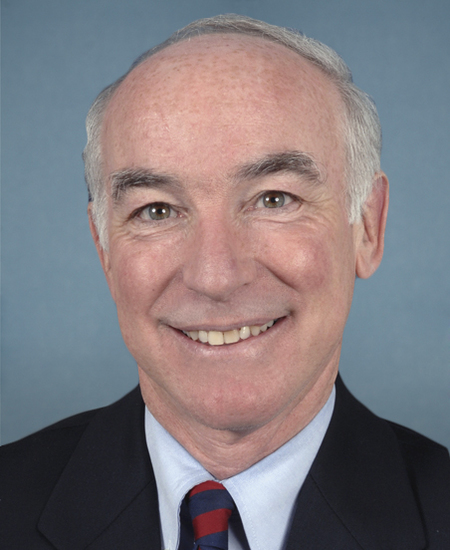
Rep. Joe Courtney
Sponsored bills
Find It Early Act This bill requires health insurance plans (including public health insurance programs) to cover screenings and diagnostic imaging (with no cost sharing and no limit on frequency) for individuals who are at an increased risk of breast cancer.
Save Oak Flat Act This bill repeals the requirement for the Department of Agriculture to convey the 2,422 acres of Forest System land located in Tonto National Forest in Pinal County, Arizona, known as Oak Flat, to Resolution Copper Mining, LLC, in exchange for various parcels of land owned by Resolution Copper. Oak Flat is withdrawn from (1) entry, appropriation, or disposal under the public land laws; (2) location, entry, and patent under the mining laws; and (3) disposition under all laws pertaining to mineral and geothermal leasing or mineral materials.
The Jackie Walorski Maternal and Child Home Visiting Reauthorization Act of 2022 This bill reauthorizes through FY2027, increases funding for, and modifies the Maternal, Infant, and Early Childhood Home Visiting Program. This program supports home visits for expectant and new parents who live in communities that are at-risk for poor maternal and child health outcomes. Changes to the program include setting out requirements for allocating program funds; increasing the percentage of funds reserved for tribal entities; establishing a publicly available dashboard that reports program outcomes; requiring activities to reduce unnecessary data collection, reporting, and other administrative requirements of the program; and allowing for virtual home visits (provided certain conditions are met). The bill also reduces funding for the Medicare Improvement Fund.
Maddy summaryThis bill changes the service requirement for military members to transfer unused Post-9/11 GI Bill educational benefits to family members. Currently, service members need 10 years of service to transfer benefits, but this bill would raise that requirement to 12 years. It directly affects active-duty service members with at least 12 years of service and their eligible family members who would gain access to transferred education benefits. The key change is the increased service threshold for eligibility under Section 3319(b) of Title 38, United States Code.
Lymphedema Treatment Act This bill provides for Medicare coverage of lymphedema compression treatment items. Specifically, the bill provides for coverage of standard and custom fitted gradient compression garments and other approved items that are prescribed by a physician or other specified health care professional to treat lymphedema.
Prevent All Soring Tactics Act of 2022 or the PAST Act of 2022 This bill addresses the practice of soring horses. The soring of horses includes various actions taken on horses' limbs to produce higher gaits that may cause pain, distress, inflammation, or lameness. Specifically, the bill expands soring regulation and enforcement at horse shows, exhibitions, sales, and auctions, including by establishing a new system for inspecting horses for soring. In addition, the bill increases penalties for violations.
Maddy summaryHRES 1459 is a symbolic House resolution formally acknowledging the service and sacrifices of veterans who served during the Korean War (1950-1953) and current Korean Defense Veterans stationed in South Korea. It recognizes the contributions of approximately 1.8 million U.S. military personnel who served under the UN Command, including the 36,574 U.S. service members who died. The resolution specifically honors the ongoing service of nearly 25,000 U.S. personnel currently stationed in South Korea to maintain the armistice. As a non-binding resolution, it does not create new benefits or policy changes but serves as a formal statement of congressional recognition.
Asunción Valdivia Heat Illness and Fatality Prevention Act of 2022 This bill directs the Occupational Safety and Health Administration to promulgate a standard that requires employers to implement certain measures for protecting workers from heat stress and related illnesses or injuries. Heat stress refers to the load of heat that a person experiences due to sources of heat or heat retention (including metabolic heat, environmental factors, and clothing or personal protective equipment) or the presence of heat in a work setting. Further, if an employer cannot reduce exposure to heat stress below hazardous levels through engineering controls (e.g., heat shields and insulation) or personal protective equipment (e.g., heat reflective clothing), the employer must implement a program that mitigates such exposure through access to appropriate hydration and cool-down spaces, acclimatization policies, and periodic paid rest breaks. Additionally, the bill establishes requirements concerning judicial review, implementation, enforcement, recordkeeping, and whistle-blower protections related to the standard. The bill also requires the Department of Labor to include questions about heat-related illness and injury in the National Agricultural Workers Survey (an employment-based, random-sample survey of U.S. crop workers that collects demographic, employment, and health information).
This concurrent resolution recognizes that people with disabilities experience barriers to access every day and pledges to make universal and inclusive design a guiding principle for all infrastructure bills and projects.