

Maddy summaryThe International Human Rights Defense Act of 2023 creates a permanent Special Envoy at the State Department to coordinate U.S. efforts against discrimination and violence targeting LGBTQI+ people globally. The bill requires the development of an annual global strategy to address criminalization, discrimination, and violence based on sexual orientation, gender identity, or sex characteristics. It also mandates that U.S. country reports on human rights practices include detailed information about laws and practices affecting LGBTQI+ communities. The legislation authorizes U.S. foreign assistance programs to support LGBTQI+ rights through health services, legal protections, and community capacity building. This bill aims to strengthen U.S. diplomatic engagement on LGBTQI+ rights as part of broader human rights policy.
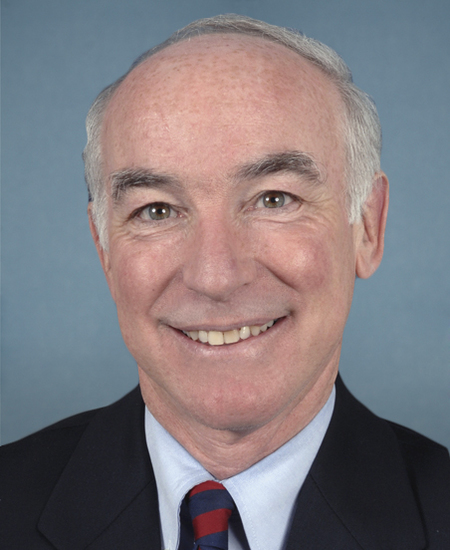
Rep. Joe Courtney
Sponsored bills
Maddy summaryHR 1139, the GUARD VA Benefits Act, amends federal law to strengthen penalties for individuals or organizations charging veterans unauthorized fees when helping with VA benefit claims. It directly affects veterans seeking assistance with VA claims and the representatives (like advocates or attorneys) who might charge them fees. The bill adds a new provision making it a violation to solicit, charge, or receive any fee for preparing, presenting, or prosecuting VA claims, punishable by fines under Title 18. This change specifically targets unauthorized fee-charging while excluding fees covered under existing exceptions in sections 5904 or 1984 of the law.
This resolution condemns Russia's abduction of Ukrainian children and the relocation of those children to reeducation camps. The resolution also rebukes nations that provide support to Russia's kidnapping enterprise, condemns forced adoptions of Ukrainian children by Russian citizens, and implores Russia to work with international organizations to return Ukrainian children to their home country.
Maddy summaryHR 1831 would award Billie Jean King a Congressional Gold Medal to honor her lifelong advocacy for equal rights in sports and society. The bill directs the Secretary of the Treasury to strike the medal and have it presented by congressional leaders, recognizing her pivotal role in advancing women's equality through tennis (including founding the Women’s Tennis Association and securing equal prize money) and her broader impact on society through initiatives like Title IX advocacy.
Maddy summaryHR 1808 prohibits the military from considering gender identity, sexual orientation, or sex characteristics when determining service eligibility or implementing policies. It requires that all eligibility decisions and military treatment be based solely on a person's ability to meet job-specific military standards, not on protected characteristics like race, religion, or sex. The bill directly affects all current and prospective military members by mandating equality in service through new provisions added to Title 10 of U.S. Code.
Maddy summaryThe Pell Grant Sustainability Act adjusts Federal Pell Grants to keep pace with rising college costs by indexing them annually to inflation. It directly affects low-income undergraduate students who receive Pell Grants, ensuring the maximum award amount increases each academic year based on the Consumer Price Index. The bill replaces previous fixed amounts with a new formula: starting in 2023-2024, grants will be set at $6,895 (or the prior year's amount if higher), then adjusted yearly by the inflation rate. This change aims to restore the grant's purchasing power, which covered 80% of costs in 1974-75 but only 30% by 2020-21.
Maddy summaryHR 1093 requires the U.S. Secretary of State, with Defense Department coordination, to submit a detailed report to Congress within 90 days of enactment about implementing the AUKUS partnership's "advanced capabilities pillar." The report must include specific data on U.S. defense export license processing times for Australia and the UK (2021-2022), denial rates, ITAR violations by these nations, civil penalties assessed, and legal frameworks governing defense exports. It directly affects the State and Defense Departments, which must compile and submit this data, and impacts Australia and the UK as key partners in the trilateral security agreement. The bill focuses on transparency and administrative processes for defense cooperation, not on policy changes or outcomes.
Maddy summaryThis bill establishes the Agent Orange Veterans Service Medal, a commemorative award for veterans who receive compensation under 38 U.S.C. §§ 1116 or 1116A (for health conditions linked to Agent Orange exposure). The Secretary of Defense must design and issue the medal upon request by eligible veterans or their next-of-kin if the veteran has passed away. Veterans must apply through a process created by the Department of Defense to receive the medal, which serves solely as a symbolic recognition of service. The bill does not alter existing benefits or create new entitlements.
Maddy summaryThe LOAN Act (HR 1731) makes significant changes to federal student financial aid programs. It doubles the maximum Federal Pell Grant amount for eligible students, expands Pell Grant eligibility to graduate students and "Dreamer" students (undocumented individuals who came to the U.S. as children), and restores the total semesters of Pell Grant eligibility from 12 to 18. The bill also eliminates interest capitalization on federal student loans, repeals origination fees, and creates automatic enrollment in income-driven repayment plans for borrowers who are delinquent or rehabilitating defaulted loans. Additionally, it establishes new refinancing programs for both federal and private student loans with interest rates capped at 5.0% for new loans.
Maddy summaryThis bill modifies federal highway funding rules to prioritize safety for cyclists and pedestrians. It allows states and local governments to receive 100% federal funding for projects that connect existing bike/pedestrian infrastructure or reduce safety risks for these users, instead of the usual lower federal share. The bill also requires projects to align with state safety plans focusing on vulnerable road users and includes specific "Proven Safety Countermeasures" for cyclists/pedestrians. These changes directly affect states administering federal highway funds and local governments seeking to improve non-motorized transportation infrastructure.