

Maddy summaryThe Young Farmer Success Act expands student loan forgiveness to include individuals working full-time as employees or managers on farms and ranches. To qualify, these agricultural operations must generate at least $35,000 in gross revenue from selling agricultural products in 2026, with the required income increasing annually based on inflation adjustments. This change directly affects young people seeking loan relief who are currently employed in the farming and ranching sectors but were previously ineligible for this specific provision.
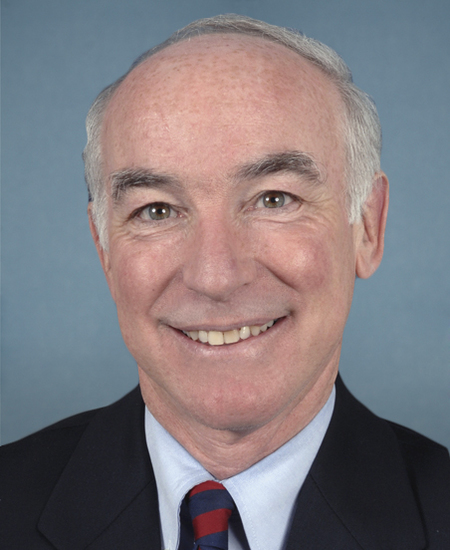
Rep. Joe Courtney
Sponsored bills
Maddy summaryThis bill establishes federal protections and funding to expand access to in vitro fertilization and intrauterine insemination for individuals, military service members, and veterans. It requires most private health plans, Medicaid programs, and Medicare to cover these fertility treatments without imposing higher cost-sharing than other medical services. Additionally, the legislation mandates that the Department of Defense and the Department of Veterans Affairs provide specific fertility preservation and treatment benefits to uniformed service members and eligible veterans. The bill also includes preemption clauses that override state laws restricting these procedures and prohibits discrimination based on marital status, sex, or sexual orientation in the provision of care.
Maddy summaryThe CLINIC Assistance Act creates a federal grant program to help accredited law schools establish clinical programs where law students assist individuals with employee welfare benefit plans. These grants, capped at $500,000 per school per year, allow institutions to hire supervising attorneys and support students in helping people appeal denied benefits, sue for unpaid costs, or enforce their rights under the Employee Retirement Income Security Act. The Department of Labor will coordinate with these programs to share information and provide lists of eligible schools to those needing assistance. A total of $5 million is authorized for this initiative over five years, starting in fiscal year 2026.
Maddy summaryThe Essential Caregivers Act of 2026 requires nursing homes, long-term care hospitals, rehabilitation facilities, and intermediate care facilities to allow two chosen family members or friends to visit residents during times when regular visitation is suspended. These essential caregivers must agree to follow the facility's existing safety and infection control rules, which are no more restrictive than those applied to staff. While facilities can limit access for the first seven days of a suspension or deny entry if a caregiver shows symptoms of a serious infectious disease, they cannot block visits for end-of-life care. Additionally, the bill mandates that complaints about denied access to essential caregivers be investigated and resolved within three days.
Maddy summaryThis bill requires Medicare Advantage plans to implement electronic pre-approval systems for medical services by 2028 and meet transparency reporting standards starting in 2027. Plans must publicly report data on approval/denial rates, appeal outcomes, response times, and technology use for pre-approval requests, including details on how denials relate to clinical criteria. It establishes a 24-hour response timeframe for certain requests and mandates annual reviews of pre-approval requirements based on data and input from seniors and providers. The law directly affects Medicare Advantage plans, seniors enrolled in these plans, and healthcare providers who submit pre-approval requests. These changes aim to make the pre-approval process faster, more transparent, and more accountable for seniors seeking covered medical services.
Maddy summaryThe Sunshine for Our Kids Act of 2026 makes standard time permanent across the United States by repealing the requirement to observe daylight saving time. It allows individual states to choose whether to adopt standard time year-round or to continue observing daylight saving time, provided the entire state observes the same time. This change would eliminate the biannual clock shifts that currently occur in spring and fall.
Maddy summaryThe UNLOCK AUKUS Act modifies existing export control rules to allow the transfer of specific defense articles and services under the AUKUS partnership. By amending the Arms Export Control Act, the bill removes certain restrictions that previously limited what can be shared between partner nations. This change directly affects the U.S. government's ability to share advanced military technology with allies in the AUKUS alliance. The legislation aims to facilitate collaboration without altering the core legal framework governing defense exports.
Maddy summaryThis bill authorizes the presentation of Congressional Gold Medals to the four crew members of the Artemis II mission to recognize their historic achievement in advancing human space exploration. The legislation directs the Speaker of the House and the President pro tempore of the Senate to arrange for the medals, which will feature the faces of the astronauts and be struck by the Secretary of the Treasury. In addition to the gold medals, the bill permits the minting and sale of duplicate bronze versions to help cover production costs, with any proceeds returned to the United States Mint Public Enterprise Fund.
Maddy summaryThis resolution commemorates the 50th anniversary of women enrolling in the U.S. Military, Naval, Air Force, and Coast Guard Academies. It formally designates a specific day to honor the history and achievements of female cadets and graduates, noting their significant contributions to military leadership and combat roles since 1976. The text highlights specific milestones, such as women earning the Army Ranger tab and commanding aircraft carriers, while acknowledging their continued service in both uniform and civilian sectors. Ultimately, the bill serves as a symbolic gesture to recognize the progress made by women in the armed forces without altering any existing laws or policies.
Maddy summaryThe SAFEGUARD Veterans Act of 2026 strengthens protections for veterans by imposing stricter penalties on individuals who charge unauthorized fees for helping with benefits claims and requiring that only accredited representatives or those under their supervision provide such assistance. Key provisions include creating an online searchable list of recognized and suspended agents, mandating warnings on Department websites about potential predatory practices, and adding questions to claim forms to identify anyone who charged fees for coaching or filing assistance. The bill also updates federal laws to prohibit the use of automated telephone equipment for making repeated calls to federal agencies and requires the Department of Veterans Affairs to establish a more accessible digital system for recognizing representatives and processing complaints. Additionally, the Department must conduct a review of its current regulations regarding representation and report its findings to Congress within 180 days of the law's enactment.