

Maddy summaryThe PRIME Act exempts custom slaughter facilities from federal meat inspection requirements when they follow state laws and sell meat exclusively within the same state. It specifically allows facilities to slaughter animals and prepare meat without federal oversight if the products go only to household consumers or local businesses (like restaurants, hotels, or grocery stores) serving consumers directly in that state. The bill clarifies that this exemption does not override stricter state regulations governing custom slaughter or meat sales. This primarily affects small-scale slaughter operations and local food businesses operating within a single state's borders.
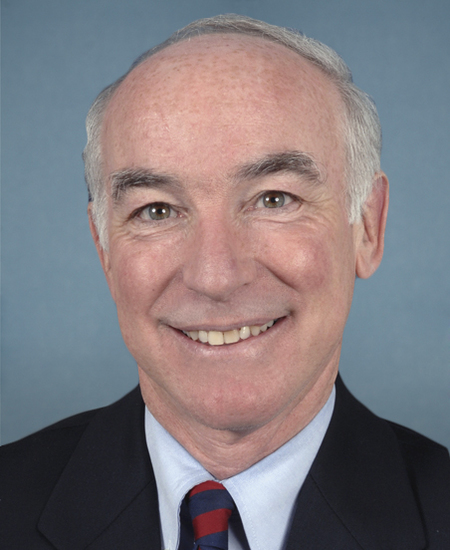
Rep. Joe Courtney
Sponsored bills
Maddy summaryH.J. Res. 108 proposes a constitutional amendment to remove legal immunity for federal officials, including the President, from criminal prosecution for actions taken while performing official duties. It would prohibit the President from granting pardons to themselves and eliminate the defense that "official authority" excuses violations of federal or state law (with limited exceptions for certain congressional actions). If ratified, this amendment would require Congress to pass implementing laws to enforce these changes. The proposal is currently in the House Judiciary Committee and requires approval by three-fourths of state legislatures to become part of the Constitution.
Maddy summaryHR 3095 requires the U.S. Postal Service to assign a single, unique ZIP Code to 74 specific communities across 16 states (including Canyon Lake, CA; Castle Pines, CO; and Estero, FL) within 270 days of the bill's enactment. This addresses current issues where these communities share ZIP Codes with neighboring areas, causing mail delivery confusion. The bill directly affects residents and businesses in these designated locations by simplifying mail routing. It creates a concrete administrative change without altering broader postal policies or funding.
Maddy summaryHR 672 directs the United States Postal Service to assign a single unique ZIP Code to 14 specific communities within 270 days of enactment. These communities include Eastvale (CA), Scotland (CT), Castle Pines and Silver Cliff (CO), Hollywood, Miami Lakes, and Ocoee (FL), Urbandale (IA), Franklin, Greenfield, Caledonia, Mount Pleasant, and Somers (WI), and Mills (WY). This change will update mail delivery systems and address identifiers for residents and businesses in these areas, streamlining postal operations.
Maddy summaryHR 4444 would replace the current "undue hardship" standard for discharging student loan debt in bankruptcy with a new, more accessible standard. This change directly affects the 43 million Americans with federal student loans, particularly those struggling with payments (over 6 million are 90+ days delinquent as of June 2025), who currently face an extremely low success rate (less than 0.01%) under the existing Brunner test. The bill amends Section 523(a)(8) of the bankruptcy code to remove "undue hardship," giving courts flexibility to use reasonable criteria while maintaining existing bankruptcy requirements like means testing. This aims to provide a fairer path to relief for borrowers who cannot repay their debts, addressing a system where most bankruptcy filings for student loans fail.
Maddy summaryThe Child Care for Working Families Act creates a federal program to provide affordable, high-quality child care for working families with children under age 6. It would provide direct child care assistance through certificates or grants to parents, with no copayment required for families at or below 85% of state median income. The program requires states to implement quality standards for child care providers, including a tiered quality system and minimum wage requirements for staff (at least a living wage equivalent to elementary educators). The bill appropriates $20 billion for the program over five years, with additional funding for quality improvement initiatives and universal preschool services.
Maddy summaryHR 4382 authorizes the U.S. Mint to produce commemorative coins for the 2028 Los Angeles Olympics/Paralympics and 2034 Salt Lake City Winter Olympics/Paralympics. It specifies gold, silver, and half-dollar coin designs with defined mintage limits (e.g., up to 100,000 $5 gold coins for each event), all bearing inscriptions like "2028" or "2034" and standard coin features. A surcharge ($5-$50 per coin) is added to sales, with all funds directed to the respective Olympic committees to support event hosting and legacy programs like youth sports. The bill ensures no net cost to the government by requiring surcharge revenues to cover all design, production, and marketing expenses before funds are disbursed.
Maddy summaryThis resolution (HRES 549) is a non-binding House measure expressing support for designating June 26 as "LGBTQI+ Equality Day." It commemorates three landmark Supreme Court rulings on June 26 (2003, 2013, and 2015) that ended criminalization of same-sex intimacy, struck down marriage discrimination, and established marriage equality. The resolution encourages public celebration of this day to honor these milestones and educate about ongoing discrimination faced by LGBTQI+ communities. It also acknowledges the need for future legislation to address discrimination in areas like employment, housing, and public accommodations. As a symbolic resolution, it does not create new legal requirements but formally recognizes these historical court decisions.
Maddy summaryHR 4152, the Safe Storage Saves Lives Act, requires gun sellers to offer a compatible gun lock with every firearm sale. It directly affects licensed gun retailers, who must make such locks available at the point of purchase. The bill amends federal law to mandate that sellers provide a secure storage device compatible with the firearm, with violations subject to $1,000 civil penalties. Funds from these penalties must be used for distributing free/reduced-cost locks or public awareness campaigns about safe storage.
Maddy summaryThis bill makes technical corrections to the Camp Lejeune Justice Act of 2022 to streamline claims for individuals harmed by water contamination at Camp Lejeune. It clarifies the evidence required (30+ days at the base plus a link between contaminants and health harm), specifies that cases must be handled in North Carolina courts (with limited transfer options), and sets attorney fee caps (20% before suit, 25% after). These changes directly affect veterans and civilians who lived at Camp Lejeune and filed claims under the 2022 law. The bill does not create new eligibility but aims to improve the legal process for existing cases.