

Booster Seat Safety Act This bill addresses labeling requirements and testing standards for booster seats used in motor vehicles. Specifically, the bill requires labels on booster seats to include the minimum recommended age (4 years) and weight (40 pounds) for a child to use the seat. It also requires that a label on a car seat or combination car seat list the maximum weight and height limits of the seat, as well as a recommendation to continue using the seat until the child exceeds the listed limits. Additionally, the National Highway Traffic Safety Administration (NHTSA) must either establish a minimum height recommendation for booster seats or a method for manufacturers to use to determine a minimum height recommendation. Once the minimum height or method is established, booster seat labels must also contain the minimum height recommendation. The NHTSA must also establish a standard for side-impact crash tests for booster seats and provide guidelines for creating a testing dummy that approximates a six-year old child for such crash tests. Further, the NHTSA must study systems for tethering child restraint systems in vehicles and make recommendations about using or modifying tether systems to maximize child safety.
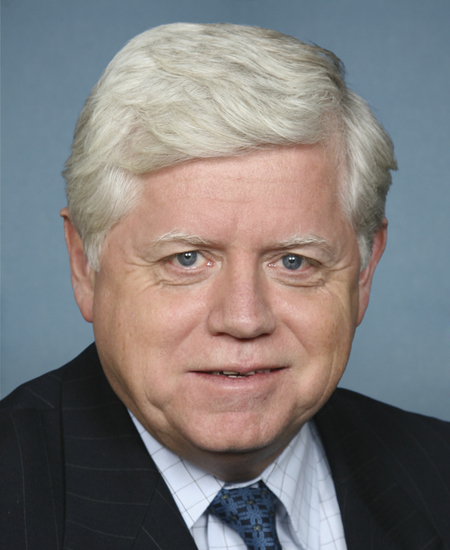
Rep. John B. Larson
Sponsored bills
Social Security 2100: A Sacred Trust This bill makes changes to Social Security benefits, taxes, and other aspects of the program, including by raising the primary insurance amount, increasing the maximum taxable earnings that are subject to Social Security payroll taxes, and requiring Social Security account statements to be mailed unless the individual recipient opts for electronic delivery.
Original National Domestic Violence Awareness Month Resolution of 2021 This resolution supports the goals and ideals of National Domestic Violence Awareness Month. Further, it expresses the sense of the House of Representatives that Congress should continue to raise awareness of and support programs to end domestic violence.
Public Service Freedom to Negotiate Act of 20 21 This bill provides minimum collective bargaining rights and procedures for public employees and prohibits strikes by certain public safety workers. The Federal Labor Relations Authority (FLRA) shall determine for each state whether the laws of such state substantially provide for each of the minimum standard collective bargaining rights and procedures specified by this bill, including the right of public employees and supervisory employees to self-organize, form or join a labor organization, or collectively bargain. The FLRA must issue rules and take actions to establish and administer bargaining rights and procedures for those states that do not substantially provide for them. No employers, emergency services employees, or law enforcement officers may engage in a lockout, strike, or any other organized job action that is likely to result in a measurable disruption of the delivery of emergency or public safety services. Furthermore, no labor organization may be the cause of a violation of such prohibition.
This concurrent resolution recognizes the disparity between wages paid to Latina women, and its impact on women, families, and the nation and reaffirms Congress' commitment to supporting equal pay and to narrowing the gender wage gap.
Caring for Survivors Act of 2021 This bill increases the monthly rate of dependency and indemnity compensation payable to surviving spouses through the Department of Veterans Affairs. The bill also adjusts the amount payable to surviving spouses and children of veterans who were rated as totally disabled for a period of less than 10 years before their death.
Maddy summaryHRES 344 is a non-binding resolution that declares racism a public health crisis in the United States, directly affecting Black, Latino, Native American, and other communities of color who experience severe health disparities. It cites historical and ongoing systemic racism as a root cause of unequal health outcomes, including higher infant mortality, chronic disease rates, and barriers to care. The resolution commits the federal government to developing a national strategy to address health inequities, dismantle systemic racism, and tackle social determinants of health affecting marginalized groups. It does not create new laws or funding but urges cross-government action based on established public health criteria.
This resolution calls for the creation of a Green New Deal with the goals of achieving greenhouse gas and toxic emissions reductions needed to stay under 1.5 degrees Celsius of warming; establishing millions of high-wage union jobs and ensuring economic security for all; investing in infrastructure and industry; securing clean air and water, climate and community resiliency, healthy food, access to nature, and a sustainable environment for all; and promoting justice and equality. The resolution calls for accomplishment of these goals through a 10-year national mobilization effort. The resolution also enumerates the goals and projects of the mobilization effort, including building smart power grids (i.e., power grids that enable customers to reduce their power use during peak demand periods); upgrading all existing buildings and constructing new buildings to achieve maximum energy and water efficiency; removing pollution and greenhouse gas emissions from the transportation and agricultural sectors; cleaning up existing hazardous waste and abandoned sites; ensuring businesspersons are free from unfair competition; and providing higher education, high-quality health care, and affordable, safe, and adequate housing to all.
This resolution recognizes the opportunity for Black Maternal Health Week to raise national awareness of the state of Black maternal health in the United States.
Khalid Jabara and Heather Heyer National Opposition to Hate, Assault, and Threats to Equality Act of 2021 or the Jabara-Heyer NO HATE Act of 2021 This bill creates grants for state and local governments to combat hate crimes. It also authorizes additional penalties for hate crime offenses. Specifically, it establishes grants for states to create state-run hate crimes reporting hotlines. It also authorizes grants for states and local governments to implement the National Incident-Based Reporting System and to conduct law enforcement activities or crime reduction programs to prevent, address, or respond to hate crimes. Finally, in the case of an individual convicted of a hate crime offense and placed on supervised release, the bill allows a court to order that the individual participate in educational classes or community service as a condition of supervised release.