

Maddy summaryHR 33 would expand Medicare to cover dental, vision, and hearing services for beneficiaries, which are currently not covered under Medicare. The bill provides 100% coverage for preventive dental services in 2024, with basic dental services gradually increasing to 80% coverage by 2027. Vision coverage would include routine eye exams and corrective lenses at 80% coverage, while hearing services would cover hearing exams and hearing aids at 80% coverage. The bill includes specific limitations, such as two dental cleanings per year and one pair of glasses every 24 months, with the Secretary of Health and Human Services having authority to apply additional limitations or modify coverage based on medical recommendations. The changes would take effect on January 1, 2024.
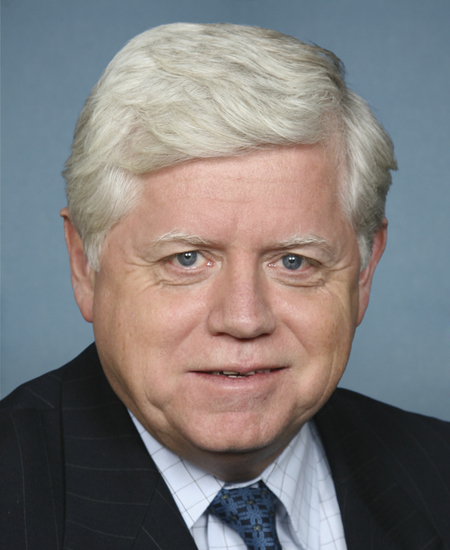
Rep. John B. Larson
Sponsored bills
Maddy summaryHR 6751 authorizes the U.S. Mint to produce commemorative coins honoring Roberto Clemente, a Hall of Fame baseball player and humanitarian, including 50,000 $5 gold coins, 400,000 $1 silver coins, and 750,000 half-dollar coins. The coins must feature Clemente's image and inscriptions like "Roberto Clemente" and "2027," with all sales including a surcharge ($5-$35 per coin) paid to the Roberto Clemente Foundation. The foundation, which supports youth sports, education, and disaster relief programs, will use these funds for its mission, while the U.S. Treasury must recover all production costs. The coins will be sold exclusively in 2027, with no net cost to the government.
Maddy summaryHR 10273 directs the Secretary of Defense to study the health effects of indoor mold in military housing, specifically focusing on risks to service members, their families, and children living in covered housing (including unaccompanied and family housing). The study must examine harmful mold types, detection methods, health impacts like respiratory illnesses, and the effect on military readiness. Based on the study, the Department of Defense must develop model standards for preventing, detecting, and remediating mold, including new construction requirements to control moisture and ventilation. The bill also requires training military health professionals on mold-related illnesses and mandates public review of proposed standards.
Maddy summaryThis bill (HR 9528) is a ceremonial renaming resolution. It redesignates two specific park features at Paterson Great Falls National Historical Park: the Great Falls Scenic Overlook Trail Bridge and Overlook Park, to honor Congressman Bill Pascrell, Jr. The bill updates all official references in government documents, maps, and records to reflect these new names. It has no policy impact beyond commemorating the congressman with permanent naming changes.
Maddy summaryThis resolution (HRES 1558) is a symbolic House of Representatives measure supporting October as "National Domestic Violence Awareness Month." It does not create new laws or allocate funding but formally expresses the House's support for raising awareness about domestic violence and its impacts, and urges continued backing for existing programs that address domestic violence. The resolution cites statistics on domestic violence prevalence (e.g., 24 people per minute affected by intimate partner violence) to underscore the importance of the observance. It directly affects public awareness efforts but does not change policies or directly impact individuals.
Maddy summaryThe VA Employee Fairness Act of 2024 modifies collective bargaining rules for employees of the Veterans Health Administration (VHA). It removes existing subsections (b), (c), and (d) from the law governing VHA employee bargaining and renumbers the remaining provision. This change streamlines the collective bargaining framework but does not alter the Secretary of Veterans Affairs' existing authorities over incentive pay and expedited hiring. The bill directly affects VHA employees by changing how their collective bargaining rights are structured under federal law. The law remains neutral, focusing solely on procedural adjustments to the existing bargaining framework.
Maddy summaryHRES 1530 is a non-binding House resolution recognizing former President Jimmy Carter's 100th birthday. It honors his life, public service, and key achievements, including his presidency (noting the Panama Canal treaties, Camp David Accords, and founding the Departments of Education and Energy), post-presidency work with the Carter Center, and decades of humanitarian efforts. The resolution does not create new laws or affect any policies; it is purely commemorative. It formally acknowledges his contributions to Georgia, the U.S., and global peace efforts, including his 2002 Nobel Peace Prize. This symbolic gesture has no direct impact on citizens or government operations.
Maddy summaryThis resolution expresses the U.S. House of Representatives' support for designating October 8, 2024, as "National Hydrogen and Fuel Cell Day." It recognizes hydrogen and fuel cell technologies for their role in clean energy, transportation (including vehicles and industrial applications), and grid reliability. The resolution has no legal effect - it is purely symbolic, acknowledging the importance of these technologies without creating new laws or funding. It was introduced by multiple representatives and refers to hydrogen's historical and potential future applications.
Maddy summaryThis bill eliminates out-of-pocket costs for all FDA-approved contraceptives under TRICARE for military dependents (spouses and children) and extends full coverage to include counseling, insertion, removal, and follow-up care. It requires TRICARE Select, Prime, and pharmacy benefits to cover all contraceptive methods without cost-sharing, addressing current gaps where dependents face copays. The law also mandates family planning education for all service members and ensures sexual assault survivors can access emergency contraception without barriers at military medical facilities. This applies to all individuals with reproductive capacity, including transgender and non-binary dependents.
Maddy summaryThe Child Safety and Well-Being Act of 2024 (HR 9875) establishes a Children's Commission to represent children's interests in federal policymaking. The Commission, composed of 15 diverse members including experts, youth with lived experience, and representatives from various backgrounds, will advise Congress and federal agencies on policies affecting children, particularly marginalized youth defined as those experiencing systemic barriers. The Commission will review agency actions, receive complaints about how children are treated, and publish annual reports with recommendations to improve child well-being policies. It is authorized $5 million annually for operations and must study the feasibility of requiring agencies to create "child impact statements" assessing how policies affect children.