

Maddy summaryHRES 68 is a non-binding House resolution expressing strong disapproval of the President’s announcement to withdraw the U.S. from the Paris Agreement. It commends states, businesses, and citizens supporting the Agreement, urges the President to reverse the withdrawal decision, and calls for Congress to prioritize U.S. climate leadership. The resolution does not create new laws or affect specific groups but formally states the House’s position against withdrawing from the international climate accord. It was introduced by 115 co-sponsors and reflects broad congressional concern about reversing U.S. climate commitments.
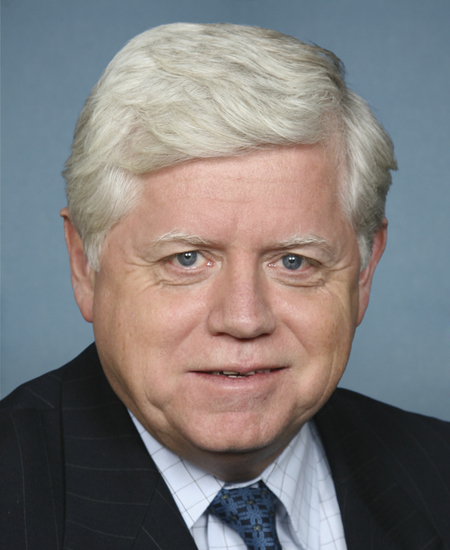
Rep. John B. Larson
Sponsored bills
Maddy summaryHR 669, the "Restricting First Use of Nuclear Weapons Act of 2025," requires Congress to declare war before the U.S. can conduct a first-use nuclear strike. It directly affects the President (who currently has sole authority to authorize such strikes), military commanders, and Congress by mandating that federal funds cannot be used for a first-use attack without a congressional declaration of war. The bill defines a "first-use nuclear strike" as an attack launched without prior confirmation that the U.S., its territories, or allies were first hit with nuclear weapons. This law changes policy by creating a constitutional check on presidential nuclear authority, requiring explicit congressional approval for the initial use of nuclear weapons.
Maddy summaryHR 609, the Assuring Medicare's Promise Act of 2025, directs revenue from the net investment income tax (currently applied to investment income) into the Medicare Hospital Insurance Trust Fund. It expands the tax base to include certain business income for high-income individuals with modified adjusted gross income exceeding $400,000 ($500,000 for joint filers), with a phase-in to limit the tax increase. The bill ensures this tax revenue directly supports Medicare's hospital insurance program, applying to taxable years beginning after December 31, 2025. The changes do not alter the tax rate but broaden the income types subject to the tax for high earners.
Chiropractic Medicare Coverage Modernization Act of 2025 This bill expands Medicare coverage of chiropractic services to include all services provided by chiropractors, rather than only subluxation corrections through manual manipulation of the spine.
Maddy summaryThis bill prohibits discrimination based on gender identity, sexual orientation, or sex characteristics in military service. It requires that eligibility for military service and all personnel policies consider only an individual's ability to meet job-specific military standards, banning the use of race, color, national origin, religion, or gender-related factors. The law directly affects all current and prospective members of the Armed Forces by mandating that military occupational standards apply equally to everyone. It amends Title 10 of the U.S. Code to establish these protections as a formal requirement for all military personnel policies.
Maddy summaryHR 485, the Muhammad Ali Congressional Gold Medal Act, authorizes Congress to award a gold medal in recognition of Muhammad Ali's lifetime contributions to sports, civil rights, and humanitarian causes. The bill directs the Treasury Secretary to strike the medal and present it to Ali's widow, Lonnie Ali, following his death in 2016. It also permits the sale of bronze duplicates to cover costs, with proceeds going to the U.S. Mint. This is a commemorative measure with no policy impact, solely honoring Ali's legacy through a symbolic medal.
Maddy summaryHR 500, the Medicare Hearing Aid Coverage Act of 2025, removes Medicare's longstanding exclusion of hearing aids and related examinations from coverage. This change would directly affect Medicare beneficiaries with hearing loss by allowing them to receive coverage for hearing aids starting January 1, 2026. The bill amends the Social Security Act to eliminate the specific exclusion, making hearing aid coverage a standard Medicare benefit. Additionally, it requires the Government Accountability Office (GAO) to study existing hearing aid programs and submit a report with recommendations to Congress within 18 months of the effective date.
Maddy summaryThe Prevent Tariff Abuse Act amends the International Emergency Economic Powers Act to prohibit the President from using emergency powers to impose tariffs or import quotas on goods entering the U.S. It adds a specific provision stating the President cannot impose duties, tariffs, or quotas under this law. This directly limits the executive branch's authority during emergencies, preventing the use of emergency powers for trade restrictions. The bill does not affect other trade policies or the President's other emergency authorities.
Maddy summaryHR 433, the Department of Education Protection Act, prohibits the use of federal funds to reorganize the Department of Education. Specifically, it blocks any spending from current fiscal year appropriations on activities that would decentralize the department, reduce staffing, or alter its structure, responsibilities, or authority relative to its organization as of January 1, 2025. The bill directly affects the Department of Education by preventing structural changes to its existing offices and operations. This is a procedural measure focused solely on preserving the current departmental framework, not on changing education policy or funding.
Maddy summaryThe TRUST in Congress Act requires current and new Members of Congress, along with their spouses and dependent children, to place certain investments - such as stocks, commodities, and derivatives - into a blind trust within 90 to 180 days of taking office. It excludes U.S. Treasury securities and widely held mutual funds from this requirement and exempts investments tied to a spouse’s or dependent child’s primary job. Members must certify the trust’s setup to the House Clerk or Senate Secretary within 15 days, with these records posted publicly online. The act also prohibits dissolving such trusts until 180 days after a member leaves office.