

Maddy summaryHR 2965, the Autism Family Caregivers Act of 2023, establishes a federal pilot program to provide free or low-cost evidence-based skills training for family caregivers of children (ages 0-9) with autism spectrum disorder or other developmental delays. It authorizes $10 million annually to fund grants for eligible organizations (like nonprofits, health centers, and community groups) to teach caregivers practical strategies for communication, social engagement, daily living skills, and managing challenging behaviors. The program requires local stakeholder committees - including caregivers, healthcare providers, and community representatives - to ensure cultural relevance, and mandates annual evaluations to assess impacts on children's well-being and caregiver support.
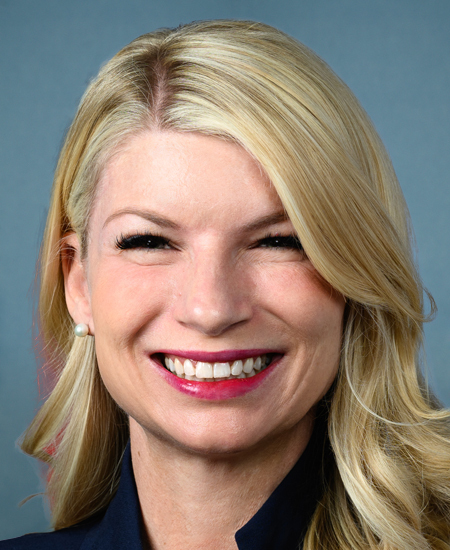
Rep. Brittany Pettersen
Sponsored bills
Maddy summaryThe SAFE Banking Act of 2023 would protect banks and financial institutions that provide services to state-legal marijuana businesses and hemp-related businesses by preventing federal regulators from taking adverse actions against them solely for serving these businesses. It clarifies that income from state-legal marijuana businesses can be considered for mortgage applications, and requires regulators to update guidance on suspicious activity reports related to these businesses. The bill does not require financial institutions to serve these businesses, but ensures they won't face penalties for doing so. It extends similar protections to hemp-related businesses, which have faced banking challenges despite being federally legal under the 2018 Farm Bill.
Maddy summaryThis bill establishes a Space National Guard as part of the organized militia in states, territories, Puerto Rico, and D.C. where the Space Force operates, creating two distinct components: state-level "Space National Guard" forces and a federal "Space National Guard of the United States" that serves as the Space Force's reserve component. It defines these terms in federal law, clarifies their structure (including personnel requirements and status when not on active duty), and requires implementation within 18 months, with annual congressional briefings on progress. The bill does not create new missions or funding but formalizes existing National Guard roles within the Space Force framework.
Catastrophic Risk Transfer Act of 2023 or the CART Act of 2023 This bill establishes a system for the taxation of catastrophic risk transfer companies and their security holders to ensure sufficient capital to cover catastrophic insurance losses. The bill defines catastrophic risk as a risk of loss that has a low likelihood of occurring but that would be large in amount. The bill defines catastrophic risk transfer company as any domestic corporation created and regulated under state law with the purpose of entering into one or more insurance or reinsurance agreements covering catastrophic risk.
Maddy summaryHR 3011 establishes a 15-member task force within the Department of Defense to review and assess mental health services for active-duty military members, reservists, and their families. The task force, requiring half DOD personnel (including service surgeons and family members) and half external experts (like VA and SAMHSA staff), must submit a report within 12 months detailing improvements needed in areas like access to care, telehealth, reducing stigma, and transitioning care to veterans' services. The report will include specific recommendations for legislative or administrative changes, followed by annual progress reports to Congress over five years on implementing those recommendations. This bill creates a review mechanism but does not directly change existing mental health programs or funding.
Maddy summaryThis bill protects living organ donors from insurance discrimination by prohibiting life, disability, and long-term care insurers from denying coverage, raising premiums, or altering policy terms solely because someone donated an organ while alive. It also updates the Family and Medical Leave Act to include recovery from organ donation surgery as a qualifying health condition, allowing donors to take protected leave for this purpose. Additionally, the bill requires the Health and Human Services Secretary to update public educational materials about living donation benefits, risks, and insurance protections within six months of enactment. These changes directly affect living organ donors, insurers, employers, and healthcare systems by ensuring fair access to insurance and workplace leave.
Maddy summaryHR 2955, the Stop Institutional Child Abuse Act, establishes a Federal Work Group to improve data collection and best practices for youth in residential programs (like therapeutic schools, treatment centers, and group homes). The Work Group, composed of federal agency representatives and diverse stakeholders, must develop national data standards, create risk assessment tools, and issue biennial reports with recommendations to enhance safety, reduce restraints, and expand community-based alternatives. It directly affects youth with mental health, substance use, or disability needs placed in these facilities, as well as agencies overseeing them. The bill also mandates a National Academies study to examine funding, oversight, and barriers to community care. These mechanisms aim to standardize data tracking and promote less restrictive, trauma-informed care for youth in residential programs.
Maddy summaryHRES 334 is a symbolic resolution recognizing "Community College Month" to celebrate over 1,000 community colleges across the United States. It highlights how these institutions support accessible higher education, workforce training, and economic prosperity - serving 10.2 million students annually while charging affordable tuition (averaging $3,860 for in-district students). The resolution does not create new laws or requirements but formally acknowledges community colleges' role in strengthening local communities and the national economy. This acknowledgment applies broadly to all community colleges and their students, without imposing any obligations.
Maddy summaryThe Election Mail Act (HR 2987) establishes new requirements for handling mail-in ballots in federal elections to improve reliability and accessibility. It requires the Postal Service to process absentee ballots on the same day received, place postmarks indicating mailing dates on ballot envelopes, and treat election mail as first-class mail with free postage for completed ballots. The bill also mandates states to use intelligent mail barcodes on return envelopes, affix specific tags for ballot visibility, and adopt a uniform 7-day deadline for accepting mailed ballots postmarked on or before election day. These changes apply to federal elections, with most provisions taking effect for the 2024 election cycle. The bill includes additional provisions for the Postal Service to consult with Indian Tribes about voting barriers on tribal lands.
Maddy summaryThe Child Care for Working Families Act establishes a federal entitlement program providing subsidized child care for working families with children under age 6 who are not yet in kindergarten. It creates a sliding fee scale where families at or below 85% of State median income pay no copayment, while higher-income families pay up to 7% of their income based on income thresholds. The bill requires states to develop quality rating systems for child care providers and ensures providers receive sufficient funding to meet quality standards, including wages equivalent to elementary educators. It prioritizes access for underserved populations including children with disabilities, infants and toddlers, children experiencing homelessness, and families in low-income communities. The program is funded with $20 billion for fiscal year 2024 and subsequent years through 2029.