

Maddy summaryHR 4285, titled the Protect Vulnerable Immigrant Youth Act, would amend the Immigration and Nationality Act to remove numerical caps on certain employment-based visas. Specifically, it changes two sections to add a new visa category (J) to the list of categories exempt from annual numerical limits, allowing more employment-based visas to be issued without current restrictions. This change would directly affect employers and foreign workers seeking employment-based visas under the newly designated category (J), though the bill does not specify what the (J) category entails. The bill focuses solely on adjusting visa allocation rules rather than addressing youth protection or other aspects implied by its title.
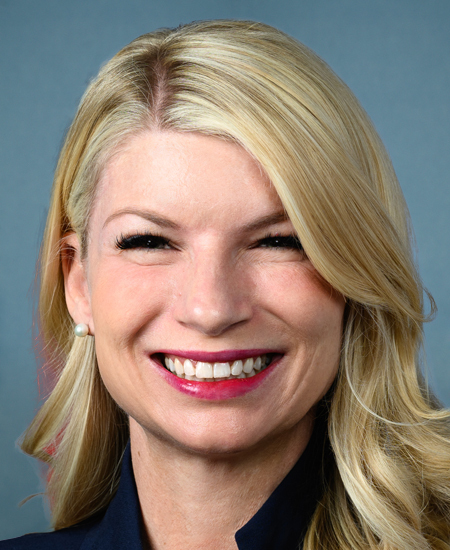
Rep. Brittany Pettersen
Sponsored bills
Maddy summaryHR 4305, the Shelter Act, creates a 25% nonrefundable tax credit for individuals and businesses to offset costs of qualifying disaster mitigation improvements. Individuals can claim up to $2,500 annually for home upgrades like reinforced roofs, flood barriers, fire-resistant materials, or storm shelters, provided the property is in a federally designated disaster area and meets specific safety standards. Businesses may claim up to $5,000 for similar safety upgrades at their locations in disaster-prone zones. The credit phases out for higher-income taxpayers (individuals over $100,000 AGI, businesses over $5 million average gross receipts) and requires documentation proving compliance with building codes. The provisions apply to taxable years beginning after December 31, 2023.
Maddy summaryHR 4289 prohibits "buy now, pay later" financing for firearms classified as "assault weapons" under the bill. It bans such loans for consumers purchasing these weapons and makes it illegal for dealers, manufacturers, or importers to accept funds from these loans for assault weapon sales. The law defines assault weapons to include rifles with features like folding stocks, detachable magazines, or pistol grips, and pistols with specific attachments or capacity limits. Violations carry $100,000 civil penalties assessed by the Attorney General. This directly affects consumers seeking to finance these weapons and the businesses selling them.
This resolution expresses support for the designation of National ASK (Asking Saves Kids) Day to encourage parents to ask, before their child visits another home, whether there is an unlocked gun in the home.
Maddy summaryThe Ending Homelessness Act of 2023 would expand housing assistance for low-income families by creating a new entitlement program for housing choice vouchers starting in 2028, with 500,000 new vouchers in 2024 and 1,000,000 annually through 2027. It would provide $1 billion annually for emergency relief grants to address unmet needs of homeless populations, prioritizing jurisdictions with the highest need and local policies that decriminalize homelessness. The bill prohibits housing discrimination based on source of income, including rental vouchers and Social Security benefits, and repeals current ineligibility criteria for housing programs. It also permanently authorizes funding for McKinney-Vento Homeless Assistance Act grants and expands eligibility for private nonprofit and faith-based organizations to receive housing assistance. The bill directly affects extremely low-income families, homeless individuals, and housing providers by increasing access to affordable housing and reducing barriers to housing stability.
Maddy summaryThe Housing Crisis Response Act of 2023 authorizes over $100 billion in funding for housing programs, including $10 billion for public housing capital improvements, $9.9 billion for the HOME Investment Partnerships Program, and $1.77 billion for energy efficiency improvements in affordable housing. It creates new down payment assistance programs for first-time and first-generation homebuyers, expands housing vouchers for vulnerable populations including those experiencing homelessness, and establishes new requirements for accessible housing units. The bill mandates that many housing projects maintain affordability for at least 20 years and includes specific provisions for rural housing, Native American communities, and lead-based paint hazard control. It also creates a new Housing Investment Fund to support affordable housing development and preservation, primarily for low-, very-low, and extremely low-income renters.
Maddy summaryThe Downpayment Toward Equity Act of 2023 creates a federal program to provide down payment assistance to first-generation homebuyers, defined as individuals whose parents did not own a home. The program would provide grants to states (75% of funds) and eligible entities (25% on competitive basis) to help cover down payments, closing costs, and mortgage interest reductions, with maximum assistance of $20,000 or 10% of purchase price. To qualify, homebuyers must have household income up to 120-140% of median area income, be first-time homebuyers, and meet the "first-generation" definition. States must comply with fair housing requirements, and recipients must repay assistance if they don't occupy the home as their primary residence within five years, with exceptions for hardship.
Maddy summaryThe Equality Act (HR 15) would amend federal civil rights laws to explicitly prohibit discrimination based on sexual orientation and gender identity in public accommodations, housing, employment, credit, and jury service. It amends the Civil Rights Act of 1964 to include sexual orientation and gender identity as protected characteristics under existing sex discrimination provisions. The bill would require businesses, housing providers, employers, and government entities to provide equal access and services without regard to a person's sexual orientation or gender identity. It includes specific definitions for gender identity and sexual orientation to clarify protections across all covered areas. The law would apply to all entities covered by the Civil Rights Act of 1964, including those receiving federal funding.
Maddy summaryHRES 528 is a non-binding House resolution designating June as "National Annuity Awareness Month." It expresses support for raising public awareness about annuities as a financial tool that provides guaranteed lifetime income in retirement. The resolution encourages government entities, schools, businesses, and nonprofits to observe June with educational programs about annuity benefits and professional financial guidance. It does not create new laws or requirements but aims to promote consumer education on retirement income planning. (HRES 528, introduced June 20, 2023)
Maddy summaryThis bill freezes discretionary bonuses for senior executives at large banks ($50 billion+ in assets) when federal regulators issue a "matter requiring immediate attention" about unsafe practices. It prohibits bonus payments until the regulatory issue is resolved to the agency's satisfaction. Banks may temporarily resume bonuses during a defined period if they submit and get approval for a remediation plan to fix the problem, covering the plan's implementation timeline. The rule applies to major bank holding companies, their subsidiaries, and large standalone banks meeting the asset threshold.