

Maddy summaryHR 5808, the Preventing Deep Fake Scams Act, establishes a federal Task Force to address AI-driven financial fraud risks. The Task Force, composed of key financial regulators (Treasury, Federal Reserve, CFPB, FDIC, and others), must issue a report within one year detailing current protections, standard AI definitions, deep fake risks, best practices for institutions, and regulatory recommendations. This bill directly affects banks, credit unions, and financial service providers by requiring them to report on AI security measures and collaborate with the Task Force. The report aims to help financial institutions protect consumers from identity theft and fraud using deep fake technology, without creating new regulations itself.
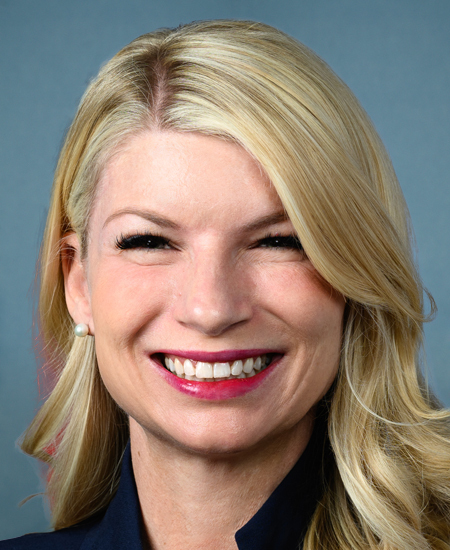
Rep. Brittany Pettersen
Sponsored bills
Maddy summaryThis bill requires websites and applications used by public entities, businesses, and employers to be accessible to people with disabilities. It directs the Department of Justice and Equal Employment Opportunity Commission to establish accessibility standards within 24 months, with special consideration for small businesses. The law defines accessibility as websites that are perceivable, operable, understandable, and robust for people with disabilities. It also creates a technical assistance center to help entities comply and provides grants to small businesses to fix inaccessible websites. The bill aims to ensure equal digital access for people with disabilities, building on existing ADA protections.
Maddy summaryThis bill requires federal agencies to adjust contract prices to reimburse contractors for paying employees during government funding lapses (e.g., shutdowns). It covers costs for furloughed, laid-off, or reduced-hour workers, or for restoring paid leave used during the lapse, with a weekly cap of $1,442 per employee. Directly affecting federal contractors and their employees who experienced work disruptions due to funding gaps, it mandates agencies to make these adjustments promptly after enactment. Contractors must provide proof of costs, and the Office of Federal Procurement Policy must report on implementation to Congress within a year.
Maddy summaryThe WIC for Kids Act expands eligibility for the Special Supplemental Nutrition Program for Women, Infants, and Children (WIC) by adding new qualifying pathways. It allows children to qualify if they live in households where someone receives Head Start, Indian reservation food assistance, or Puerto Rico/Northern Mariana Islands nutrition block grants, and streamlines documentation by permitting states to use existing records. The bill extends certification periods for children from one to two years and automatically enrolls infants born to current WIC participants. This directly affects low-income families with children who qualify for related assistance programs but previously faced barriers to WIC access.
Maddy summaryThis bill authorizes federal funding for precision agriculture workforce training programs. It adds "precision agriculture workforce development" as a specific purpose for research and extension grants under the Food, Agriculture, Conservation, and Trade Act of 1990. It also directs the Agriculture and Food Research Initiative to fund cooperative education programs at colleges and universities that improve precision agriculture training. These changes directly affect educational institutions partnering with public or private entities to develop workforce training curricula.
Maddy summaryThe CONNECT Act of 2023 streamlines support for rural broadband providers by creating an Office of Technical Assistance ($10 million annually) to help small providers (serving ≤20,000 subscribers) navigate applications and permitting. It adds a mini-grant program ($20,000 max per provider) to prepare applications, prioritizes cooperative and nonprofit projects with 20 extra evaluation points, and requires USDA to review broadband permit applications within 180 days. The bill also sets eligibility for funding in areas with no existing fixed-wireline service or stalled broadband projects (after 3 years without significant construction). These changes directly affect rural communities and small broadband providers seeking federal funding to expand internet access.
Maddy summaryThis bill amends the Higher Education Act to require all U.S. colleges and universities receiving federal financial aid to create detailed anti-harassment policies covering physical, online, and institution-sponsored settings. It mandates policies prohibiting harassment based on race, sex (including sexual orientation and gender identity), disability, religion, and other protected characteristics, including harassment via institutional email, computers, or electronic messaging. The bill also establishes a $50 million annual grant program to fund colleges developing prevention programs, victim support services, and training for students and staff on recognizing and addressing harassment. These policies and grants must comply with existing civil rights laws like Title IX but add specific requirements for reporting and prevention.
Community Assistance for Recovery and Empowerment Act or the CARE Act This bill allows inpatient psychiatric treatment facilities and chemical dependence treatment facilities to qualify for Federal Housing Authority mortgage insurance. The bill establishes the Office of Psychiatric and Addition Treatment Facilities to oversee mortgage insurance provided to these facilities. The bill also specifies that a federally insured loan for improvements to a multifamily housing project or health facility may be used to protect against floods, hurricanes, earthquakes, and other natural disasters. The bill also expands loan insurance for certain energy conservation improvements to include health facility projects.
Maddy summaryHR 5354, the Small Farm Conservation Act, creates a dedicated subprogram within the Environmental Quality Incentives Program (EQIP) to provide targeted conservation support for small-scale farms. It allocates $100 million annually (2024-2028) specifically for farms under 50 acres or meeting median state farm size limits, with 35% of funds for tailored technical assistance (including hiring specialized staff) and 65% for direct financial payments. Key provisions include a minimum $2,500 payment per producer, a 50% payment increase for soil health systems, and a streamlined, continuous enrollment process to reduce administrative barriers. The bill prioritizes historically underserved farmers - such as veterans, beginning farmers, and those in high-poverty areas - while requiring annual reporting on program outcomes.
Maddy summaryHR 5569, the Child Care Nutrition Enhancement Act of 2023, increases funding for child care nutrition programs. It adds a 10-cent per meal reimbursement for providers participating in the Child and Adult Care Food Program (CACFP), applying to all meals and supplements served. This change directly affects child care centers, family day care homes, and group day care homes that receive CACFP funding. The additional reimbursement is calculated alongside existing payment rates and applies to all meals served after the bill's enactment. The bill modifies specific sections of the Richard B. Russell National School Lunch Act to implement this funding increase.