

Maddy summaryHR 6746, the Iron Deficiency Education and Awareness Act, creates a national public health campaign to increase screening and awareness of iron deficiency among women and children under two. The bill directs the Secretary of Health and Human Services to fund a $7 million annual campaign (2024-2028) using evidence-based media, culturally tailored resources, and partnerships with health providers and community organizations. It specifically targets high-risk groups including menstruating women, pregnant/breastfeeding individuals, women with gastrointestinal conditions, Black and Hispanic women, and parents of children under two. The campaign will disseminate information on symptoms, screening recommendations, and prevention strategies through social media, health facilities, schools, and community outreach.
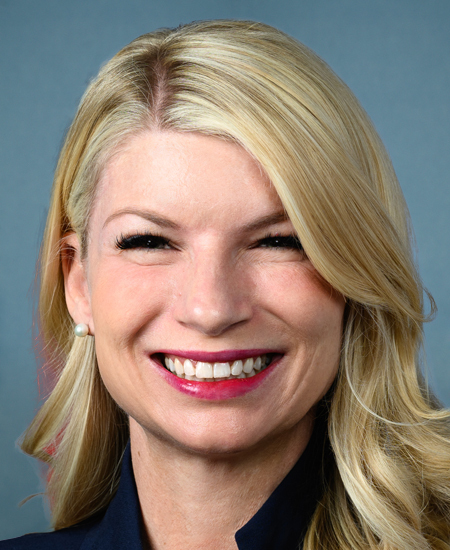
Rep. Brittany Pettersen
Sponsored bills
Maddy summaryThis bill reauthorizes and extends funding for programs addressing substance use disorders and opioid addiction, including residential treatment for pregnant and postpartum women, first responder training, and community recovery initiatives. It increases funding levels for these programs, adds xylazine to Schedule III of controlled substances, and requires a study on remote monitoring for patients prescribed opioids. The bill also expands Medicaid coverage requirements for medication-assisted treatment and mandates reporting on mental health condition data alongside substance use disorder data, directly affecting individuals with substance use disorders, healthcare providers, and state and tribal governments.
Maddy summaryHR 6720 creates a grant program administered by the U.S. Department of Agriculture to provide stabilization payments to farmworkers, meat processing workers, and grocery workers affected by natural or other disasters designated by the Secretary. Eligible entities - such as labor unions or membership organizations representing these worker groups - can apply for funding to support affected workers. The program is authorized to spend up to $50 million, with the Secretary required to report on its outcomes within four years. This bill directly affects workers in specific food industry sectors during disaster events, offering financial stabilization through grants administered by the Agricultural Marketing Service.
Maddy summaryHR 3063, the Retirement Fairness for Charities and Educational Institutions Act of 2023, modifies securities laws to clarify exemptions for certain retirement plans. It expands the definition of exempt retirement plans under the Investment Company Act, Securities Act of 1933, and Securities Exchange Act of 1934 to include 403(b) plans used by charities and educational institutions. These plans must meet specific conditions, such as being subject to ERISA or having employers act as fiduciaries for investment choices. The bill directly affects eligible organizations by reducing regulatory barriers for offering retirement benefits to their employees. This change simplifies compliance without altering the core structure of retirement plans.
Maddy summaryHR 6592, the Fight Book Bans Act, provides federal grants to reimburse public school districts for legal costs when they choose to keep instructional or library materials after parental objections. It directly affects school districts (covered local educational agencies) that select materials for students and handle challenges to their removal. The bill authorizes up to $100,000 per case in grants to cover attorney fees and court costs, provided the district didn’t remove the materials and wasn’t reimbursed by the state. Funding of $15 million is authorized for fiscal years 2024-2028. The grants are strictly for legal challenges to decisions not to remove materials, not for the content of the materials themselves.
Maddy summaryThe COPE Act (HR 3581) creates a new grant program for the VA to fund mental health support services specifically for family caregivers of veterans enrolled in the VA's family caregiver program. It requires grantees to develop equitable plans addressing rural, American Indian/Alaska Native, elderly, women, and other underserved veteran communities, with priority given to areas with high veteran suicide rates or Veterans Crisis Line referrals. Grants must expand or create new mental health services while tracking outcomes like increased service utilization and reduced barriers, with annual reports to Congress. The bill authorizes $50 million annually (2023-2025) to supplement existing VA funding for this purpose.
Maddy summaryHR 6505, the FREED Act, expands U.S. economic sanctions against foreign individuals and entities involved in fentanyl trafficking. It targets foreign opioid traffickers, their family members, foreign government agencies supporting trafficking, and those providing financial or technological support, requiring the President to impose sanctions under specific criteria. The bill also directs the Treasury Secretary to address money laundering risks tied to fentanyl by identifying financial institutions or transactions as "primary money laundering concerns" and reporting on additional enforcement measures needed. It includes provisions for presidential waivers (for national security or humanitarian reasons) with congressional reporting requirements. The law applies directly to foreign actors, not U.S. citizens or domestic entities, focusing on disrupting international fentanyl supply chains through financial penalties.
Maddy summaryHRES 793 is a resolution passed by the U.S. House of Representatives calling on Hamas to immediately release all 199 hostages taken during Hamas' October 7, 2023 attack on Israel. The resolution condemns Hamas for the attack, the taking of hostages, and threats against hostages, while stating that holding hostages violates international humanitarian law under the Geneva Conventions. It demands the immediate release of all hostages and expresses sympathy for victims and their families. As a symbolic resolution, it does not create legal obligations but formally expresses the House's position.
Maddy summaryHR 6468, the Ban Water Beads Act, bans specific water beads products from sale after 180 days of enactment. It defines banned products as those made of water-absorbing polymers (like polyacrylamides), sold with beads small enough to fit in a child's mouth, and marketed as toys, educational materials, or art supplies. These products would be classified as "banned hazardous products" under the Consumer Product Safety Act, prohibiting their manufacture, import, or sale. The law directly affects manufacturers, importers, and retailers of such water beads products intended for children's use.
Maddy summaryThe UNLEADED Act requires the FAA to create an education program about unleaded aviation gasoline for pilots, flight schools, airport operators, maintenance technicians, and fixed-base operators. The program must publish online information on fuel compatibility, availability, required certifications, safety, and federal incentives, plus maintain a real-time tracking system for authorized unleaded fuels. The FAA must also coordinate annual training for fixed-base operator staff on fuel handling and safety. The program runs until December 31, 2030, with annual updates provided to Congress on progress. This directly affects general aviation users transitioning from leaded 100LL fuel to new unleaded alternatives.