

Maddy summaryHR 1093, the Natural Disaster Property Protection Act of 2025, raises the IRS reporting threshold for certain natural disaster-related property expenses. It increases the $600 minimum for businesses and service providers to report payments from $600 to $5,000 for expenses that either mitigate disaster risks to real property or repair damage caused by natural disasters. This change directly affects property owners and businesses making these specific payments, reducing the administrative burden for smaller transactions. The bill applies to payments made after its enactment date, streamlining reporting for qualified disaster-related costs.
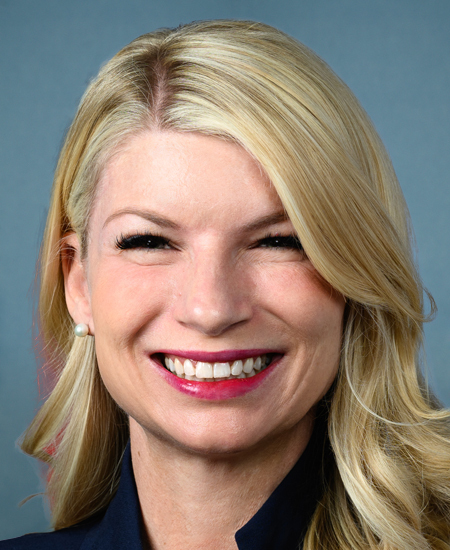
Rep. Brittany Pettersen
Sponsored bills
Protecting Sensitive Locations Act This bill prohibits immigration enforcement actions within 1,000 feet of a sensitive location except in exigent circumstances, such as the imminent risk of death, violence, or physical harm to any person. Sensitive locations include health care facilities; schools and school bus stops; places that provide assistance for people such as children, pregnant women, and abuse victims; child care facilities; places that provide disaster or emergency services; places of worship; courthouses and lawyers’ offices; facilities used as polling places; certain labor union facilities; and public assistance offices. The prohibition shall apply to Department of Homeland Security officers and agents, as well as state employees pursuing immigration enforcement actions. If an enforcement action is carried out in violation of this prohibition (1) no information resulting from the action may be entered into the record in a resulting removal proceeding, and (2) the affected individual may move to immediately terminate such a proceeding. U.S. Immigration and Customs Enforcement and U.S. Customs and Border Protection shall annually report to Congress about enforcement actions taken at sensitive locations in the preceding year.
Protect Our Letter Carriers Act of 2025 This bill requires or authorizes certain actions related to the U.S. Postal Service (USPS). The bill requires the Department of Justice to appoint an assistant U.S. attorney in each judicial district to coordinate and supervise the investigation and prosecution of various crimes related to postal services (for example, assault on a postal service employee, breaking into a post office, or obstruction of mails). The bill also requires the U.S. Sentencing Commission to amend sentencing guidelines to provide that the assault or robbery of a postal employee shall be treated the same as the assault of a law enforcement officer. Additionally, the bill authorizes appropriations for the USPS to install high security collection boxes and replace older versions of the universal mailbox key with electronic versions.
Maddy summaryHR 1046, the Marc Fischer Memorial Act, requires the Bureau of Prisons to implement digital mail scanning technology at all federal prisons to detect fentanyl and other synthetic drugs in inmate mail. It mandates a strategy within 90 days of an evaluation, including 100% scanning of all mail, digital copies of mail to inmates within 24 hours, and physical mail delivery within 30 days for non-contaminated items. The bill directly affects federal prison staff, inmates, and the Bureau of Prisons by aiming to reduce drug-related overdoses and alleviate staff workload tied to mail processing. Implementation must be completed within three years, with annual reports tracking detected drugs and strategy efficiency. The legislation focuses on concrete technological and procedural changes to enhance safety, referencing a successful pilot program at two facilities.
Maddy summaryThe Disaster Resiliency and Coverage Act of 2025 creates a federal program that provides grants to states and tribal governments to help homeowners in high-risk disaster areas make their homes more resilient. The program covers specific mitigation activities like reinforcing roofs, installing flood barriers, and creating fire-resistant features, with a $10,000 per household limit. Homeowners must have an adjusted gross income under $250,000 ($500,000 for joint returns) to qualify. The bill also includes tax benefits, allowing these grant amounts to be excluded from gross income and providing a 30% tax credit for qualifying mitigation expenditures.
Maddy summaryThe STOPP Act (HR 1100) regulates tableting machines, encapsulating machines, and their critical parts (such as press punches, die systems, and hopper components) to prevent their misuse in illegal pill manufacturing. It requires manufacturers, distributors, importers, and dealers to register with the Attorney General, maintain serial numbers on these machines, and report all transactions. The bill creates a National Pill Press Registry to track these regulated items and establishes penalties for violations, including fines and imprisonment. This legislation primarily affects businesses that produce, distribute, or deal in these machines and parts, aiming to disrupt illicit drug production while maintaining legal pharmaceutical manufacturing.
Ski Hill Resources for Economic Development Act This bill allows National Forest System (NFS) units to keep the majority of ski area permit rental fees that were generated within their boundaries and outlines how revenues from those fees may be used. Such fees are collected by the Department of Agriculture (USDA) from ski area operators on NFS land. Within the NFS unit where the fees were generated, USDA must expend (1) 60%-48% of the collected fees for activities such as administration of the ski area permit program, visitor information, or reducing the likelihood of wildfire in or adjacent to a recreation site; and (2) 20% of the collected fees for activities such as repair of a Forest Service-owned facility, habitat restoration, or search and rescue activities. The remainder of the collected fees must be expended by USDA at any NFS unit for any of the activities specified in this bill.
Maddy summaryThis bill establishes a federal right to access contraception, protecting individuals' ability to obtain contraceptives and health care providers' ability to offer them without government interference. It prohibits states from banning or restricting contraceptive services, products, or information, including laws that force providers to deny care based on personal beliefs or limit access to specific methods. The law immediately overrides conflicting state regulations and ensures that contraception remains available regardless of factors like race, income, disability, or location. It applies to all individuals and providers, building on existing federal protections like the Affordable Care Act's coverage requirements.
This resolution supports federal investment in public K-12 schools, affirms that the Department of Education (ED) plays a vital role in the public education system, and states that public education funding should not be diverted (e.g., through the use of vouchers) to privately run K-12 schools. The resolution also rejects any claim that the executive branch has the legal authority to (1) dismantle or relocate ED or any of its major offices; or (2) reduce federal funding for public education, block federal grants for education, or transfer funding burdens for education to state and local governments.
Maddy summaryThis bill reauthorizes the Dr. Lorna Breen Health Care Provider Protection Act, extending mental health support programs for healthcare professionals through 2030 (previously ending in 2024). It requires funded programs to specifically address reducing administrative burdens on healthcare workers while continuing to promote access to mental health and substance use disorder services. The legislation directly affects healthcare providers across the U.S. who may access these federally supported resources. Key provisions include extending funding periods and mandating that grant recipients focus on easing workplace administrative tasks, alongside maintaining existing awareness initiatives. The bill does not create new programs but continues and refines existing mental health support for the healthcare workforce.