Protection of Civilians in Military Operations Act This bill implements policies and procedures within the Department of Defense (DOD) related to the harm of civilians during U.S. military operations.
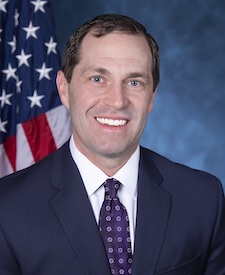
Rep. Jason Crow
Sponsored bills
Department of Defense Civilian Harm Transparency Act This bill requires the Department of Defense (DOD) to designate a senior official to serve as the civilian harm investigation coordinator to conduct a review of each investigation of civilian harm and assess whether applicable laws, policies, guidelines, and processes were followed during the investigations. DOD must also appoint a general counsel to assist the coordinator with such duties. The coordinator must annually submit to Congress a report on civilian harm resulting from U.S. military operations during the preceding year. DOD must make publicly available in an electronic format a detailed list of all ex gratia payments (i.e., payments that are not legally required) and other payments in response to civilian harm paid by the United States. Some information may be excluded to ensure safety or privacy of payment recipients. DOD must provide specified information to Congress to certify the need for confidentiality. DOD must provide an easily accessible electronic method by which individuals may request ex gratia or other condolence payments.
Asset Seizure for Ukraine Reconstruction Act This bill establishes a working group to determine the legal mechanisms that may be used to seize assets belonging to certain foreign persons (i.e., individuals and entities) affiliated with Russia's political leadership and addresses related issues. The interagency working group must determine the constitutional mechanisms by which the President may take steps to seize and confiscate assets belonging to any sanctioned foreign person whose wealth is derived through support for or corruption related to the regime of Russian president Vladimir Putin. The working group must report to Congress on certain issues including (1) recommendations to impose additional energy-related sanctions on Russia's government, and (2) any additional authorities the President needs to take steps to seize and confiscate the assets. The President must report to Congress a determination as to whether to expand existing sanctions related to certain Russian government activities to cover additional persons.
National Discovery Trails Act This bill amends the National Trails System Act to include national discovery trails as part of the national trails system. Such trails (1) shall be extended, continuous, interstate trails located to provide for outstanding outdoor recreation and travel and to connect representative examples of America's trails and communities; (2) shall provide for the conservation and enjoyment of significant natural, cultural, and historic resources and be so located as to represent metropolitan, urban, rural, and back country regions of the Nation; and (3) may be designated on federal lands and, with the owner's consent, on nonfederal lands. The 6,000-mile American Discovery Trail extending from Cape Henlopen State Park in Delaware, to Point Reyes National Seashore in California, splitting into northern and southern routes near Cincinnati, Ohio, and rejoining at Denver, Colorado, is designated as a national discovery trail. The bill sets forth requirements for designation of a trail as a national discovery trail. The appropriate federal department for each national discovery trail shall (1) administer the trail in cooperation with at least one competent trailwide volunteer-based organization; and (2) submit a comprehensive plan for the trail's protection, management, development, and use.
Golden-preneurship Act This bill establishes the Golden Entrepreneurs Training and Demonstration Curriculum within the Office of Entrepreneurial Development of the Small Business Administration to provide small businesses owned by individuals who are 60 years of age or older with tools to accelerate the growth of those businesses.
Armenian Genocide Education Act This bill requires the Library of Congress to maintain a public website and otherwise support educational initiatives to promote understanding about the Armenian Genocide.
This resolution recognizes that Black women are experiencing high, disproportionate rates of maternal mortality and morbidity in the United States and that Black Maternal Health Week is an opportunity to deepen the national conversation about Black maternal health.
Energy Security and Independence Act of 2022 This bill addresses domestic industrial base and manufacturing capabilities for specified energy-efficiency and renewable energy systems and technologies (e.g., electric transportation systems), including by establishing a program to provide financial assistance for the construction of new facilities that manufacture components of specified energy-efficiency and renewable energy systems and technologies (or to retool, retrofit, or expand such facilities).
Ending Importation of Russian Oil Act This bill prohibits the importation of energy products from Russia. Specifically, the bill prohibits the importation of Russian products that are classified under chapter 27 of the Harmonized Tariff Schedule (which includes mineral fuels, mineral oils and products of their distillation, bituminous substances, and mineral waxes). The President may terminate this prohibition, subject to congressional disapproval, if the President certifies that Russia (1) has reached an agreement to withdraw Russian forces and cease military hostilities in Ukraine, (2) poses no immediate military threat of aggression to any North Atlantic Treaty Organization member, and (3) recognizes the right of the Ukrainian people to independently and freely choose their own government.

Protection from Abusive Passengers Act This bill addresses the banning of abusive passengers from commercial aircraft flights. Abusive passenger is defined as any individual who engages in behavior that results in a civil penalty or conviction for assaulting, threatening, or intimidating a crew member or passenger on an aircraft flight, or who takes any action to interfere with security screening personnel or any security system related to civil aviation security. It requires the Federal Aviation Administration or the Attorney General to provide the identity, including the full name and date of birth, and gender of all abusive passengers to the Transportation Security Administration (TSA). The TSA must maintain a list of abusive passengers and develop and make publicly available policies and procedures for handling individuals included on the list. Any individual on the list shall be prohibited from boarding any commercial aircraft flight until the individual is removed from such list. Additionally, all abusive passengers shall be permanently ineligible to participate in the TSA PreCheck or the U.S. Customs and Border Protection's Global Entry programs, with specified exceptions.