

Maddy summaryThis bill requires the Secretary of Defense to submit a detailed report within two years on maternal health access for military families. It directly affects military beneficiaries and their dependents (referred to as "covered individuals") by mandating an analysis of care availability, staffing shortages (like OB-GYNs and midwives), and challenges in accessing services at military facilities and TRICARE providers. The report must cover continuity of care during relocations, wait times, patient satisfaction, historical spending, and identify maternity care deserts. It also requests specific recommendations to address staffing gaps and improve care delivery for pregnant and postpartum military moms.
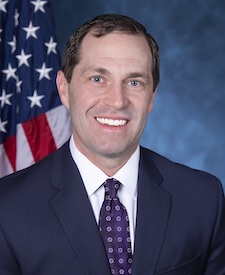
Rep. Jason Crow
Sponsored bills
Maddy summaryThe Credit for Caring Act of 2024 creates a new federal tax credit for family caregivers. It allows eligible caregivers to claim a credit equal to 30% of qualified caregiving expenses (like home modifications, medical supplies, or respite care) exceeding $2,000 per year, capped at $5,000 annually. To qualify, caregivers must earn over $7,500 in income and provide care for a relative (like a spouse or parent) certified by a healthcare provider as needing long-term care for at least 180 days. The credit phases out for higher earners, with a $75,000 income threshold for single filers and $150,000 for joint returns.
Maddy summaryThe Human Rights Defenders Protection Act of 2024 establishes a new U.S. government strategy to protect human rights defenders globally who face threats for their work. It creates a new visa category (101(a)(15)(W)) allowing human rights defenders facing urgent threats to the physical safety to enter the U.S. for up to 3 years, with a cap of 500 visas annually for principal applicants. The bill requires the President to develop a comprehensive strategy within 180 days that includes specific goals, metrics, and a timeline for implementation, along with increased staffing dedicated to human rights issues at diplomatic missions. It also mandates training for U.S. officials on supporting human rights defenders and amends country reports to include detailed information about threats faced by human rights defenders. The legislation aims to strengthen U.S. support for human rights defenders, reduce impunity for attacks against them, and improve coordination across U.S. agencies working on these issues.
Maddy summaryThe Servicemember Apprenticeship Act (HR 7098) directs the Secretary of Defense to study private companies offering registered apprenticeships to military members eligible for the Skillbridge program (Section 1143(e) of Title 10). It requires the Department of Defense to consult with the Department of Labor to create agreements with companies in areas where few apprenticeship opportunities exist for these members. The bill aims to expand access to registered apprenticeship programs by identifying participating entities and facilitating partnerships. This directly affects transitioning service members seeking civilian career training through Skillbridge.
Maddy summaryHR 7097, the College Opportunities for Servicemembers Act, expands educational opportunities for active-duty service members transitioning to civilian careers and veterans. The bill directs the Secretary of Defense to increase agreements with colleges and universities to provide job training and internships through the Skillbridge program, and to support creating dedicated centers at these institutions for military members and veterans seeking job skills. It specifically targets members eligible for Skillbridge under existing law and veterans, using existing higher education institutions defined by the Higher Education Act of 1965. The key mechanism involves federal outreach to colleges to formalize more training partnerships and establish on-campus support centers. This policy directly connects military service members and veterans to civilian career pathways through existing educational infrastructure.
Maddy summary# Summary of the Clean Electricity and Transmission Acceleration Act of 2023 This comprehensive legislation establishes significant reforms across environmental policy, energy infrastructure, and community engagement frameworks. Key provisions include: 1. **Environmental Justice Framework**: - Creates an Office of Environmental Justice and External Civil Rights at EPA - Establishes a White House Environmental Justice Interagency Council - Prohibits disparate impact discrimination under Title VI of the Civil Rights Act - Requires community impact reports for Federal actions affecting environmental justice communities 2. **NEPA Reforms**: - Mandates 90-day public comment periods for environmental justice communities - Requires translation of documents into languages spoken by 5%+ of affected communities - Requires assessment of cumulative impacts, including historical pollution - Requires climate change impact assessments using social cost of carbon - Establishes searchable digital archives of NEPA documents 3. **Community Engagement Requirements**: - Creates "Senior Community Engagement Officers" and "Tribal Community Engagement Officers" at all federal agencies - Requires community benefits agreements for major projects - Establishes grants for capacity building in environmental justice communities - Creates an E-NEPA permitting portal for public access to documents 4. **Energy Policy Provisions**: - Includes reforms for FERC (Federal Energy Regulatory Commission) environmental justice liaison - Establishes requirements for intervenor funding at FERC - Contains provisions for transmission planning and infrastructure 5. **Tribal Consultation**: - Strengthens tribal consultation requirements for projects affecting tribal lands - Requires government-to-government relationships with tribal nations The legislation represents a significant shift toward integrating environmental justice considerations throughout the federal permitting and review process, with specific requirements for meaningful community engagement, transparency, and consideration of cumulative impacts on vulnerable populations. It also establishes new funding mechanisms and administrative structures to support these environmental justice goals.
Maddy summaryThe Healthy Watersheds, Healthy Communities Act of 2023 requires at least 50% of federal funds for watershed projects to support "multibenefit works of improvement" that provide two or more public benefits including water conservation, improved fish/wildlife habitat, flood reduction, or water quality enhancement. The bill defines these projects to include activities like protecting natural features, enhancing fish passage, or improving instream flow, while establishing specific cost-sharing requirements and environmental considerations. Local organizations, including states, tribes, soil conservation districts, rural communities, and irrigation districts, would be the primary beneficiaries of this funding. The legislation aims to shift watershed management toward integrated solutions that address multiple environmental and community challenges simultaneously. It establishes clear definitions and requirements for what qualifies as a multibenefit project under the Watershed Protection and Flood Prevention Act.
Maddy summaryHR 7056, the Access to Family Building Act, establishes federal rights for individuals to access assisted reproductive technology (ART) like IVF without unreasonable restrictions, directly affecting patients seeking fertility treatments and health care providers offering ART services. The bill prohibits states from imposing limitations on ART that are more burdensome than those for comparable medical procedures, fail to advance safety, or unduly restrict access, while allowing health and safety regulations that are necessary and least restrictive. It creates federal enforcement mechanisms, including lawsuits by the Attorney General or affected individuals to challenge violating state laws, and preempts conflicting state regulations. The bill explicitly preserves state authority over health/safety regulations and does not alter existing state insurance coverage laws for ART.
Maddy summaryThis bill creates a new program to provide financial assistance to struggling rural health care facilities, including hospitals, clinics, and long-term care centers in designated rural areas. Facilities may use existing USDA funds to refinance loans, upgrade telehealth technology or equipment, or cover operating costs and reserves - provided the aid preserves local health services and improves the facility's financial health. It includes a waiver allowing facilities in persistent poverty areas (20%+ poverty for 30+ years) or distressed communities to bypass standard eligibility requirements. The program applies to rural areas defined as having ≤50,000 residents not adjacent to larger cities.
Maddy summaryThis bill creates a federal grant program to help animal shelters cover essential costs like food, veterinary care, staff training, and facility maintenance. It authorizes the Secretary of Agriculture to award multi-year grants (up to 3 years, renewable) to eligible shelters, requiring grantees to report annually on animal intake/outcomes and fund usage. The Secretary must also submit yearly reports to Congress detailing how funds improved shelter operations. The program directly affects animal shelters receiving these grants under the Animal Welfare Act.