

Maddy summaryThis resolution (HRES 457) is a symbolic measure expressing congressional support for designating June 6, 2025, as "National Gun Violence Awareness Day" and June 2025 as "National Gun Violence Awareness Month." It does not create new laws or policies but encourages public awareness through specific actions: wearing orange on June 6, focusing on gun safety during summer months, and holding community discussions. The resolution references statistics on gun violence deaths and honors Hadiya Pendleton, a teen victim killed in 2013. It directly affects the public by calling for voluntary observance and community engagement, not government mandates.
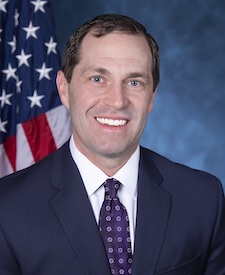
Rep. Jason Crow
Sponsored bills
Maddy summaryThis resolution symbolically supports designating a specific month as "ALS Awareness Month" to raise public recognition of amyotrophic lateral sclerosis (ALS). It does not create new laws or funding but affirms the House's commitment to advancing treatments, reducing the physical/emotional/financial burdens of ALS, and supporting patients and caregivers. The resolution directly affects public awareness efforts and the ALS community by highlighting the disease's impact - such as its 2-5 year life expectancy after diagnosis and the 5,000 annual U.S. diagnoses - without altering policy or providing resources. It serves as a non-binding statement of support from the House.
Maddy summaryThis bill prohibits the U.S. military from discriminating against service members or applicants based on gender identity. It bans policies that would deny service, involuntarily separate members, deny medically necessary healthcare, or require service in a gender different from one's identity. The law defines "gender identity" broadly to include a person's internal sense of gender, appearance, and mannerisms, regardless of sex assigned at birth. It directly affects transgender and gender-diverse individuals currently serving or seeking to serve in the Armed Forces.
Maddy summaryHR 3534, the Mental Health in Schools Excellence Program Act of 2025, creates a federal program to increase the number of school-based mental health professionals. It provides federal matching funds - covering up to 50% of tuition and fees for eligible students - in partnership with graduate schools offering accredited programs in school counseling, psychology, or social work. Participating graduate institutions must match federal contributions, and priority is given to students who received Federal Pell Grants or attended specific institutions as undergraduates. The program directly affects graduate students training to become licensed school mental health providers, aiming to expand the workforce serving K-12 schools.
Maddy summaryThis bill establishes a code of conduct for Supreme Court justices, requiring them to disclose gifts, income, and potential conflicts of interest. It creates a formal process for handling complaints about justices, including a judicial investigation panel to review allegations. The bill adds specific circumstances requiring recusal, such as when a justice or family member has financial ties to a party in a case. Additionally, it mandates that parties and amicus briefs disclose any gifts given to justices and lobbying activities related to their nomination. These provisions aim to increase transparency and accountability in the Supreme Court's operations.
Maddy summaryThe ASSIST Act of 2025 amends the VA’s definition of medical services to explicitly include medically necessary automobile adaptations for veterans. It directly affects veterans with mobility needs who require modifications like ramps, wheelchair lifts, raised doors, or accessibility features to safely operate vehicles. The bill adds these specific adaptations - such as ingress/egress modifications and non-articulating trailers - to the list of VA-covered medical services under Title 38. This change ensures veterans can access these transportation aids without additional administrative hurdles, streamlining coverage for essential mobility support.
Maddy summaryHCONRES 33 requires the Architect of the Capitol to install a permanent plaque on the western front of the U.S. Capitol listing the names of all U.S. Capitol Police officers, Metropolitan Police Department (DC) officers, and other federal, state, and local law enforcement personnel who responded to the January 6, 2021 Capitol attack. The plaque must be installed within 30 days of the resolution's adoption. It directly honors law enforcement officers from multiple agencies who protected the Capitol during the violence. The bill does not create new policies or funding but mandates a commemorative tribute at a specific Capitol location. This is a procedural resolution focused solely on recognizing the officers' service.
Maddy summaryHR 3418, the Historic Preservation Fund Reauthorization Act, extends the federal Historic Preservation Fund through 2035 and increases its annual funding from $150 million to $250 million. This bill directly affects historic preservation programs nationwide, including state and local grants for protecting historic sites and buildings. The key provision updates the funding levels and duration in existing law (54 U.S. Code § 303102), ensuring continued support for preservation efforts. The change maintains current program operations without creating new requirements or altering eligibility.
Maddy summaryHR 3337 designates the U.S. Postal Service facility at 3344 11th Avenue in Evans, Colorado, as the "Deputy Samuel Kent Brownlee Post Office." This bill changes the official name of the building for all government references, including maps, documents, and records. It does not alter postal services, funding, or policy; it solely honors Deputy Samuel Kent Brownlee through a commemorative naming. The change affects how the location is identified in official U.S. government materials.
Maddy summaryHR 3277, the Ensuring Lasting Smiles Act, requires group health plans and health insurance issuers to cover medically necessary outpatient and inpatient treatments for congenital anomalies or birth defects primarily affecting the eyes, ears, teeth, mouth, or jaw. This includes reconstructive procedures, dental/orthodontic support during treatment, and follow-up care, but excludes purely cosmetic surgery not tied to a medical diagnosis. Cost-sharing (like copays) for these services must not be stricter than for other medical benefits. The law takes effect for plan years beginning January 1, 2026, and mandates insurers to provide notice about this coverage to beneficiaries.