

Mental Health Services for Students Act of 2021 This bill provides specific statutory authority for the Project AWARE (Advancing Wellness and Resiliency in Education) State Educational Agency Grant Program that is administered by the Substance Abuse and Mental Health Services Administration. The program supports school-based mental health services, including screening, treatment, and outreach programs.
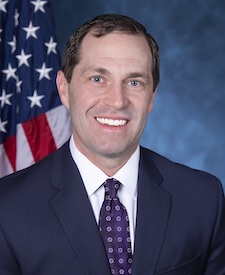
Rep. Jason Crow
Sponsored bills
Accelerating Kids' Access to Care Act This bill requires state Medicaid programs to establish a process through which qualifying out-of-state providers may enroll as participating providers without undergoing additional screening requirements. Among other things, a qualifying provider must (1) serve minors, or adults whose condition began as a minor; and (2) have previously been screened for Medicare participation or for participation in the Medicaid program of the state in which the provider is located.
Equity in Neuroscience and Alzheimer's Clinical Trials Act of 2021 or the ENACT Act of 2021 This bill sets out activities and requirements to increase the participation of underrepresented populations in research and clinical trials for Alzheimer's disease and related dementias. Specifically, the National Institute on Aging (NIA) must establish and provide technical assistance to Alzheimer's research centers located in areas with higher concentrations of minority groups. These centers must establish diagnostic and treatment clinics designed to serve minority, rural, and other underserved populations; operate clinical trials; and carry out public outreach to encourage members of minority populations to participate in clinical trials and research. Additionally, the NIA must disseminate information to members of minority populations about participating in clinical trials and take other actions to enhance diversity with respect to the Alzheimer's research that it conducts or supports. The bill also directs the NIA to increase diversity among Alzheimer's researchers by encouraging the participation of individuals who are from groups that are underrepresented in clinical, behavioral, and social sciences.
Public Health Service Ready Reserve Improvement Act of 2021 This bill entitles members of the Ready Reserve Corps of the Public Health Service to certain rights and benefits concerning leave and pay that are provided to members of the Army Reserve and the National Guard who are employed by the federal government or the government of the District of Columbia. The Ready Reserve Corps provides trained personnel to respond to health emergencies and improve access to health services.
VA Supply Chain Resiliency Act This bill addresses the Department of Veterans Affairs (VA) supply chain processes, particularly during emergency periods. The bill requires the VA to submit a report containing a description of the items and quantities of items that are critical with respect to the VA's ongoing response to the COVID-19 (i.e., coronavirus disease 2019) pandemic and future epidemic, pandemic, emergency, national emergency, or natural disaster scenarios. The VA and the Department of Defense (DOD) must enter into an agreement to provide for the participation of the VA in the Warstopper Program of the Defense Logistics Agency (DLA) of DOD. The Warstopper Program was established to satisfy requirements for sudden and sustained increases in production of critical industrial and medical items. Under such an agreement, the DLA must ensure the maintenance and stability of the items the VA identifies as critical in its report (and that the VA and DOD determine are appropriate for the program), establish guidance for the participation of the VA in the program, and use existing and new contracts and agreements to reserve the supply of critical items. Finally, the VA must ensure it does not exclusively rely on holding regional, physical inventories of critical items in order to respond to greater than expected needs during epidemic, pandemic, emergency, national emergency, or natural disaster situations.
Transform, Heal, and Renew by Investing in a Vibrant Economy Act or the THRIVE Act This bill establishes a program to address the economy, racial justice, and climate change. The President must establish a board to advise the President and the heads of federal departments and agencies regarding the implementation of this bill. The President, in consultation with the board, must establish a 10-year plan to create a society that enables and supports greater racial, Indigenous, gender, environmental, and economic justice; work opportunities; healthy communities; a stable climate; and healthy ecosystems. In addition, the President, in consultation with the board, must implement a program that provides support to public or private entities that carry out qualified programs. The programs must meet certain labor, equity, and environmental conditions and support infrastructure, including to expand access to pollution-free, renewable, and affordable energy; care workers and social infrastructure (e.g., health care infrastructure); expanded access to housing; efforts to protect and restore biodiversity or natural habitats and efforts to remediate pollution in communities harmed by environmental, economic, or socioeconomic injustice; agriculture, including agricultural workers; or the development and transformation of the U.S. industrial base, including by expanding manufacturing of clean technologies.
This concurrent resolution commemorates the 30th anniversary of Operation Provide Comfort (the humanitarian operation to defend and deliver aid to Kurdish refugees fleeing attacks by the Hussein regime), and it reaffirms the strong American-Kurdish partnership.
This resolution thanks the teachers of the United States and promotes the teaching profession by encouraging students, parents, school administrators, and public officials to recognize National Teacher Appreciation Week.
Creating Opportunities Now for Necessary and Effective Care Technologies (CONNECT) for Health Act of 2021 or the CONNECT for Health Act of 2021 This bill expands coverage of telehealth services under Medicare. Among other provisions, the bill allows the Centers for Medicare & Medicaid Services (CMS) to waive certain restrictions, such as restrictions on the types of technology that may be used; permanently removes geographic restrictions on originating sites (i.e., the location of the beneficiary) and allows the home of the beneficiary to serve as the originating site for all services; permanently allows federally qualified health centers and rural health clinics to serve as the distant site (i.e., the location of the health care practitioner); and allows the CMS to generally waive coverage restrictions during any public health emergency. Additionally, the CMS must report on the effects of expanded telehealth services during the COVID-19 public health emergency, including with respect to the utilization, quality, and outcomes of services. The Center for Medicare and Medicaid Innovation may also test alternative payment models relating to expanded telehealth services.
This concurrent resolution (1) affirms, on the 400th anniversary of the arrival of the first slave ship, that the nation owes a debt of remembrance not only to those who lived through the injustices of slavery but also to their descendants; and (2) urges the establishment of a U.S. Commission on Truth, Racial Healing, and Transformation to properly acknowledge, memorialize, and be a catalyst for progress, including toward permanently eliminating persistent racial inequities.