Cady Housh and Gemesha Thomas Student Suicide Prevention Act of 2021 This bill reauthorizes through FY2028, and otherwise revises, grants administered by the Substance Abuse and Mental Health Services Administration (SAMHSA) to support youth suicide early-intervention and prevention strategies. Specifically, the bill requires SAMHSA to award a portion of such grants for statewide training programs on emotional well-being, mental health, and suicide awareness and prevention for elementary and secondary school students and staff.
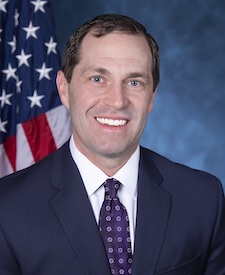
Rep. Jason Crow
Sponsored bills
Social Security 2100: A Sacred Trust This bill makes changes to Social Security benefits, taxes, and other aspects of the program, including by raising the primary insurance amount, increasing the maximum taxable earnings that are subject to Social Security payroll taxes, and requiring Social Security account statements to be mailed unless the individual recipient opts for electronic delivery.
Original National Domestic Violence Awareness Month Resolution of 2021 This resolution supports the goals and ideals of National Domestic Violence Awareness Month. Further, it expresses the sense of the House of Representatives that Congress should continue to raise awareness of and support programs to end domestic violence.
Public Service Freedom to Negotiate Act of 20 21 This bill provides minimum collective bargaining rights and procedures for public employees and prohibits strikes by certain public safety workers. The Federal Labor Relations Authority (FLRA) shall determine for each state whether the laws of such state substantially provide for each of the minimum standard collective bargaining rights and procedures specified by this bill, including the right of public employees and supervisory employees to self-organize, form or join a labor organization, or collectively bargain. The FLRA must issue rules and take actions to establish and administer bargaining rights and procedures for those states that do not substantially provide for them. No employers, emergency services employees, or law enforcement officers may engage in a lockout, strike, or any other organized job action that is likely to result in a measurable disruption of the delivery of emergency or public safety services. Furthermore, no labor organization may be the cause of a violation of such prohibition.
State, Local, Tribal, and Territorial Fiscal Recovery, Infrastructure, and Disaster Relief Flexibility Act This bill allows states, tribes, territories, and localities to use certain COVID-19 relief funds for new categories of spending, including for natural disasters and infrastructure projects. It also makes changes to expenditure deadlines and other aspects of this funding. Specifically, recipients may use funds for emergency relief from natural disasters and associated negative economic impacts of natural disasters. In addition, recipients may use a portion of their COVID-19 relief funds for designated infrastructure projects, such as nationally significant freight and highway projects. Furthermore, the bill allows recipients to expend COVID-19 relief funds on these types of infrastructure projects until September 30, 2026. Under current law, recipients must expend the funds by December 31, 2024. Other changes in the bill include (1) modifying eligibility and allocation requirements for funding set aside for counties and Indian tribes that are near public lands, (2) allowing Indian tribes an additional year to expend their COVID-19 relief funds, and (3) establishing a process for government entities to decline COVID-19 relief funds and requiring any declined funds to be used to reduce the federal deficit.
Afghanistan Security Through Intelligence Act This bill requires reports concerning the situation in Afghanistan and other specified countries. The National Intelligence Council within the Office of the Director of National Intelligence (ODNI) must submit to Congress a National Intelligence Estimate (a type of intelligence community assessment about a specific issue) on topics including (1) the presence of certain countries, including China, Iran, and Russia in Afghanistan and other specified countries, such as India and the Gulf Cooperation Council countries; (2) any change to threats to the United States as a result of the withdrawal of U.S. Armed Forces from Afghanistan on August 31, 2021; and (3) the political composition and stability of the governing body of Afghanistan. The ODNI must periodically report to Congress on issues such as (1) the intelligence community's collection posture with respect to issues involving Afghanistan, including the detection and prevention of any increased threat to the United States as a result of the U.S. military withdrawal from Afghanistan; (2) any plans or efforts to improve the intelligence collection posture in Afghanistan; and (3) the effect of publicly documenting the Taliban's abuses.
Gold Star Spouses Non-Monetary Benefits Act This bill addresses certain federal benefits for surviving spouses of members of the Armed Forces, including those who have remarried. For purposes of noncompetitive appointment to government employment, a surviving spouse of a member of the Armed Forces who was married to such member at the time they died while on active duty may be appointed as a military spouse, regardless of remarriage. Additionally, widows or widowers of certain veterans who served on active duty must be considered preference eligible for purposes of government employment, regardless of remarriage. A surviving spouse who is eligible for the gold star lapel button is entitled to commissary and exchange privileges to the same extent and on the same basis as the surviving spouse of a retired member of the uniformed services. Such spouses are also entitled, upon request, to medical and dental care provided in facilities of the uniformed services. A surviving spouse who is eligible for a gold star lapel button must be permitted to use commissary stores and certain retail facilities on the same basis as a dependent of a member of the Armed Forces on active duty. In regard to Department of Veterans Affairs (VA) benefits, the remarriage of a surviving spouse of a veteran does not bar the furnishing of non-monetary benefits to a surviving spouse who is eligible for a gold star lapel button. Such surviving spouses who are eligible for a gold star lapel button are also eligible for certain VA home loan programs.

Caring for Survivors Act of 2021 This bill increases the monthly rate of dependency and indemnity compensation payable to surviving spouses through the Department of Veterans Affairs. The bill also adjusts the amount payable to surviving spouses and children of veterans who were rated as totally disabled for a period of less than 10 years before their death.
Captain James C. Edge Gold Star Spouse Equity Act This bill addresses restrictions on benefits for surviving spouses of service members. Specifically, the bill prohibits the termination of the payment of an annuity under the Survivor Benefit Plan for certain surviving spouses of service members who died while on active duty solely because the surviving spouse remarries. The Department of Defense must resume payment of an annuity to surviving spouses who remarried before the age of 55 and before the enactment of this bill. The remarriage of a surviving spouse of a veteran does not bar the provision of dependency and indemnity compensation, regardless of their age when they remarried. The Department of Veterans Affairs must resume payment of dependency and indemnity compensation to surviving spouses who remarried before the age of 57 prior to the enactment of this bill.
This resolution recognizes the opportunity for Black Maternal Health Week to raise national awareness of the state of Black maternal health in the United States.