Maddy summaryHRES 939 is a symbolic House resolution expressing support for designating February 21-25, 2022, as "Public Schools Week." It does not create new policies, allocate funding, or impose requirements on schools or students. The resolution uses supportive language to acknowledge public education's role in democracy but has no legal effect. It was introduced by multiple representatives as a non-binding gesture of appreciation for public schools.
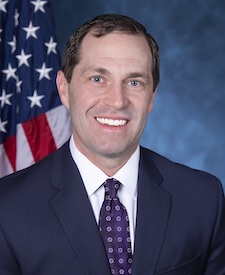
Rep. Jason Crow
Sponsored bills
National Science and Technology Strategy Act of 2021 This bill requires the Office of Science and Technology Policy (OSTP) to develop a national science and technology strategy and publish a science and technology review. The bill revises OSTP reporting requirements to direct the OSTP to submit to Congress a comprehensive national science and technology strategy of the United States to meet national research and development objectives for the following four-year period. No later than December 31, 2022, and every four years afterwards, the OSTP shall complete a review of the science and technology enterprise of the United States.
Congress Leadership in Ending Annuities for Dishonorable Service Act or the Congress LEADS Act This bill prohibits a Member of Congress who is convicted of sexual abuse from collecting a retirement annuity under either the Civil Service Retirement System or the Federal Employees Retirement System.
Bridging the Gap for New Americans Act This bill requires the Department of Labor to submit to Congress a study on the factors affecting employment opportunities for certain individuals with professional credentials obtained in a non-U.S. country, specifically individuals who are lawfully present noncitizens or naturalized U.S. citizens. The study shall include policy recommendations for better enabling such individuals to obtain skill-appropriate employment in the United States.
This resolution supports the designation of Career and Technical Education Month to celebrate career and technical education across the United States.
This resolution extends collective bargaining rights prescribed in the Congressional Accountability Act of 1995 to employees of the House of Representatives.
Climate Security Intelligence Act of 2022 This bill permanently authorizes the Climate Security Advisory Council (currently authorized until December 31, 2025). The bill also requires the advisory council to report to Congress a plan to permanently establish a Climate Security Intelligence Center within the Office of the Director of National Intelligence. The plan must contain recommendations relating to the proposed center's duties, which shall include (1) serving as the primary intelligence community organization addressing the climate security intelligence needs and priorities of policymakers, (2) analyzing U.S. climate security risks and U.S. influence on climate policies around the world, and (3) conducting strategic forecasting for future climate security risks and opportunities. The plan shall also include a proposed process for transferring recommended functions and duties from the advisory council to the center.
Saudi Arabia Legitimate Self Defense Act This bill imposes restrictions on exports of defense services for maintaining or servicing U.S.-provided aircraft belonging to Saudi Arabian military units conducting offensive airstrikes in Yemen. Specifically, the President may not authorize (and must suspend authorizations issued before this bill's enactment) exporting such defense services for aircraft that, in the preceding year, have undertaken offensive airstrikes in Yemen not directly related to preventing or degrading the ability of Houthi (Ansar Allah) to launch missile and unmanned aircraft strikes on the territory of Saudi Arabia or the United Arab Emirates. This restriction shall be in effect for two years starting from this bill's enactment. The Department of State must report quarterly to Congress on airstrikes by the Saudi Air Force in Yemen, including (1) information about strikes in the past three months that the U.S. government considers to be legitimate self-defense, internal security, or for preventing the proliferation of weapons of mass destruction; (2) information about strikes that do not meet such criteria; and (3) a certification that the State Department is investigating any indications that U.S.-sourced defense articles are not being used against anything other than legitimate military targets in Yemen.

Stop the Wait Act of 2022 This bill allows individuals with disabilities to begin receiving Social Security Disability Insurance (SSDI) benefits in the month they become eligible for the benefits. It also allows these individuals to immediately enroll in Medicare if they cannot afford minimum essential coverage. (Under current law, an individual must generally wait 5 months after the onset of disability to begin receiving SSDI benefits and an additional 24 months to become eligible for Medicare.)
TSA Security Threat Assessment Application Modernization Act This bill requires the Transportation Security Administration (TSA) to standardize the enrollment and renewal system for individuals applying for or renewing multiple TSA Security Threat Assessment programs, including the Transportation Worker Identification Credential, Hazardous Materials Endorsement, and TSA PreCheck programs. The standardization shall permit an individual to (1) enroll at a TSA-designated universal enrollment center once and use the application for one of such programs to enroll in two or more of such programs,with specified exceptions for those applying for or renewing enrollment in more than one program at different times; (2) apply successful, valid clearance results from a TSA Security Threat Assessment to satisfy vetting requirements for participation in any related program without additional cost; and (3) undergo a streamlined and expeditious renewal process. Additionally, the TSA must publish on its website information relating to the standardization of the enrollment system.