

Conscience Protection Act of 2021 This bill provides statutory authority for certain protections for health care providers that refuse to participate in abortions based on religious beliefs or other convictions. Health care providers include individual professionals, medical facilities, health insurance organizations, and social services providers that refer clients to health care services. The federal government and entities that receive federal funding for health-related activities, including state and local governments, may not discriminate against a health care provider that refuses to be involved in, or provide coverage for, abortions. Currently, similar requirements apply to various related activities, including certain employment or personnel decisions (the Church Amendments), abortion services training (the Coats-Snowe Amendment), qualified health plans offered through health insurance exchanges, and annual appropriations bills for the Department of Health and Human Services (HHS) and other federal agencies (the Weldon Amendment). The HHS Office for Civil Rights must investigate complaints of this kind of discrimination. Furthermore, HHS may terminate or reduce HHS funding for health-related activities if a person or entity fails to comply with nondiscrimination requirements. Additionally, the Department of Justice or any entity adversely affected by such discrimination may bring a civil action to obtain appropriate relief. A plaintiff does not need to seek or exhaust administrative remedies before bringing the action. A plaintiff may also bring an action, including one for money damages, against a governmental entity. In many cases, principles of sovereign immunity shield states and some localities from these kinds of actions.
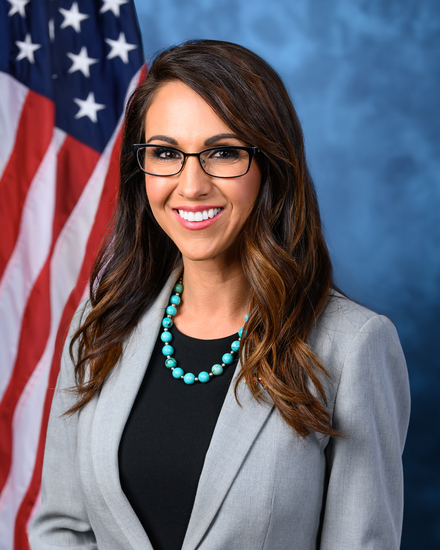
Rep. Lauren Boebert
Sponsored bills
Natural Immunity Transparency Act This bill requires the Department of Health and Human Services to report within 30 days of the bill's enactment to Congress concerning natural immunity to COVID-19. In particular, the report must compare certain outcomes for individuals who recovered from a COVID-19 infection without having received the vaccination and individuals who received the vaccination.
Fairness for Federal Contractors Act of 2021 This bill prohibits executive agencies from requiring contractors to receive a COVID-19 vaccination. The bill also requires the Government Accountability Office to study the degree to which Executive Order 14042 (Ensuring Adequate COVID Safety Protocols for Federal Contractors) caused disruptions to federal contracts, supply chains, and transportation systems.
This joint resolution nullifies a Department of Labor emergency temporary standard for preventing the transmission of COVID-19 in employment settings. Under the standard issued on November 5, 2021, employers with 100 or more employees must require their onsite employees to either be fully vaccinated against COVID-19 or undergo weekly COVID-19 testing.
Maddy summaryThis bill removes a temporary expiration date for telehealth coverage in health insurance plans. It amends two sections of the Internal Revenue Code to permanently allow health plans to cover telehealth services without the prior deadline of December 31, 2021. The key change makes existing telehealth coverage rules permanent for health insurance plans under federal tax law. This directly affects health insurance plans that provide telehealth benefits, ensuring they can continue covering these services without needing to renew temporary provisions. The bill does not change what telehealth services are covered, only makes the coverage rules permanent.
This bill prohibits military departments from taking any adverse action against a member of the Armed Forces based solely on the member's refusal to receive a COVID-19 vaccination or to disclose whether they have received such vaccination.
Lawless Cities Accountability Act of 2021 This bill prohibits federal funding for a jurisdiction that is a lawless jurisdiction. The term lawless jurisdiction means a state or political subdivision of a state that does one of the following: forbids law enforcement from intervening to restore order during widespread violence or destruction, withdraws law enforcement protection from an area or structure that law enforcement officers are lawfully entitled to access, disempowers or defunds law enforcement agencies, or refuses to accept law enforcement assistance from the federal government amid widespread violence or destruction.
Protecting Our Kids from Harmful Research Act This bill prohibits the use of federal funds for research or publications concerning gender transitions in individuals under the age of 18.
This bill prohibits withholding federal education funds from an otherwise eligible recipient (e.g., educational agencies, schools, and institutions of higher education) because the recipient does not require students or employees to be vaccinated against COVID-19.
National Patient ID Repeal Act This bill repeals the requirement that the Department of Health and Human Services adopt a standard unique health identifier for each individual, employer, health plan, and health care provider. The provision has not been implemented to date because language included in annual appropriations acts has prohibited the use of federal funds for developing a unique identifier. However, some appropriations bills introduced in recent years have not included this funding restriction.