

Maddy summaryHR 6636, the "Woman’s Right To Know Act," requires abortion providers performing or attempting abortions to provide specific information to patients 24 hours before the procedure. This includes showing an ultrasound, sharing results, and obtaining a signed consent form detailing the fetus's gestational age, medical risks of the procedure, and fetal developmental characteristics (like heartbeat and organ development). The bill imposes civil penalties of $100,000-$250,000 per violation and allows patients to sue for triple damages and attorney fees if providers fail to comply, with exceptions for life-threatening medical emergencies. It directly affects abortion providers in interstate commerce and applies to all patients seeking abortions, while clarifying it does not override stricter state abortion disclosure laws.
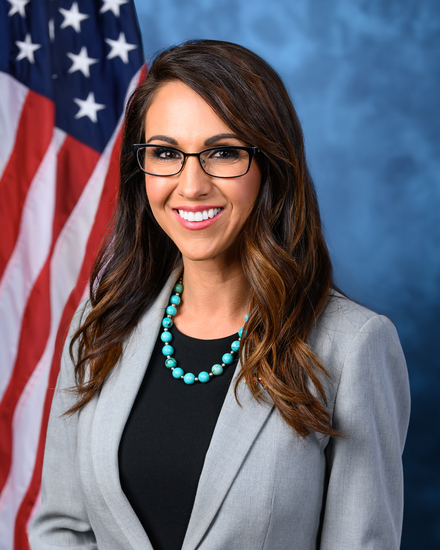
Rep. Lauren Boebert
Sponsored bills
Maddy summaryThis bill prohibits the Department of Health and Human Services (including the FDA) from treating pregnancy as an illness when approving abortion drugs under the Federal Food, Drug, and Cosmetic Act. It specifically nullifies existing approvals of abortion drugs like mifepristone that relied on pregnancy being classified as an illness. The law requires the FDA to stop using this framework for approving or managing risk strategies for abortion drugs. This directly affects how the FDA regulates abortion medications, removing a specific basis for their current approval status.
Maddy summaryThe Love Them Both Act of 2023 prohibits the Equal Employment Opportunity Commission (EEOC) and the Office of Congressional Workplace Rights from finalizing, implementing, or enforcing any regulations under the Pregnant Workers Fairness Act that apply to abortion or abortion-related services. This bill directly restricts two federal agencies' regulatory authority by banning rules that would require workplace accommodations related to abortion. The key provision is a specific ban on including abortion coverage or related services in the regulatory framework of the Pregnant Workers Fairness Act. The bill does not amend the underlying law but limits its implementation to exclude abortion-related matters. As a result, workplace accommodations under this law would not extend to abortion-related needs.
Maddy summaryHR 6619, the PATROL Act, prevents the federal government from suing states for building border barriers. It specifically blocks the Attorney General from filing civil lawsuits under the 1899 Act against states that construct physical barriers (like walls, fences, or buoys) along the border to stop illegal entry or protect state territory. The law directly affects states building such barriers and the federal government’s legal authority to challenge those actions. This is a procedural change that removes a legal obstacle for states pursuing border security measures.
Maddy summaryThe No Kill Switches in Cars Act (HR 6563) repeals Section 24220 of the Infrastructure Investment and Jobs Act, which had authorized the use of "kill switches" in vehicles to disable them if a driver was impaired by alcohol or drugs. This repeal removes the federal requirement for vehicle manufacturers to incorporate or allow such technology, directly affecting automotive safety regulations and manufacturers' compliance obligations. The bill eliminates a specific statutory provision without introducing new requirements, changing federal policy by withdrawing permission for kill switches in cars. As a procedural repeal, it focuses solely on removing an existing provision from the Infrastructure Investment and Jobs Act.
Maddy summaryHR 6625, the Chinese Spy Balloon Assessment Act, requires the Secretary of Defense to submit a report to Congress within 90 days of the bill's enactment. The report must detail the national security effects of surveillance conducted by China via a high-altitude balloon shot down in U.S. airspace in February 2023, including impacts on military installations and an analysis of recovered technology's country of origin. This bill directly affects the Department of Defense and Congress by mandating a specific, time-bound assessment of a single incident. It does not create new policies or funding but establishes a procedural requirement for transparency about the 2023 balloon event. The report must be unclassified, though it may include a classified annex.
Maddy summaryHR 6612, the Birthright Citizenship Act of 2023, clarifies who qualifies for U.S. citizenship at birth under the 14th Amendment. It amends immigration law to define that a child born in the U.S. is "subject to the jurisdiction" for citizenship if one parent is a U.S. citizen, a lawful permanent resident living in the U.S., or an active-duty military member. The bill directly affects children born in the U.S. to parents in these specific categories, ensuring they meet the citizenship definition without altering the constitutional right itself. It explicitly states this definition applies only to births occurring after the law's enactment, leaving existing citizenship status unaffected for those born before. The bill aims to codify existing constitutional principles through specific, narrow criteria for parental status.
Maddy summaryHR 6580, the LAND Act, restricts foreign purchases of U.S. agricultural land by requiring foreign buyers to follow the land ownership rules of their home country (or the most restrictive country they hold citizenship in). It mandates sellers to report such sales to the Secretary of Agriculture, who must then notify relevant congressional members. The bill establishes a Task Force (including the Agriculture Secretary and Justice Department) to monitor compliance and report quarterly to Congress on sale details, locations, costs, and proximity to military installations. This directly affects foreign individuals, companies, and governments purchasing agricultural land in the U.S., shifting restrictions from U.S. standards to the buyer's home country rules.
Maddy summaryThis bill prohibits federal funding for housing undocumented immigrants on public lands managed by specific federal agencies. It blocks the use of federal money to provide temporary or permanent shelter (including encampments) for "specified aliens" - defined as individuals not legally admitted to the U.S. - on lands under the National Park Service, Bureau of Land Management, Fish and Wildlife Service, or Forest Service. The restriction applies to all housing arrangements, including leases or contracts, and directly affects how these agencies manage public lands. The policy change prevents federal agencies from using taxpayer funds to support shelter for non-admitted immigrants on federally managed properties.
Maddy summaryHR 6558, titled the "END the DEEP STATE Act," requires the Office of Personnel Management (OPM) to withdraw a specific proposed rule titled "Upholding Civil Service Protections and Merit System Principles" (published in the Federal Register on September 18, 2023). The bill directly affects OPM by mandating the withdrawal of this proposed rule and prohibiting the agency from finalizing, implementing, or enforcing it or any substantially similar rule. The key mechanism is a mandatory withdrawal of the 2023 proposed rule, which aimed to strengthen civil service protections and merit-based hiring standards. This is a procedural bill focused on halting a specific regulatory action, not on creating new policy.