

Maddy summaryThis bill amends Title IX to clarify that "female," "male," and "sex" refer to biological characteristics (egg-producing or sperm-producing reproductive systems). It explicitly states that schools receiving federal funding cannot be forced to eliminate sex-segregated spaces (like bathrooms or locker rooms) or sex-segregated athletic/academic programs. The bill directly affects all schools and colleges that accept federal education funding, ensuring they may maintain such programs without losing that funding. Key mechanisms include adding specific definitions to Title IX and prohibiting the Secretary of Education from making funding contingent on ending sex-segregated facilities or programs.
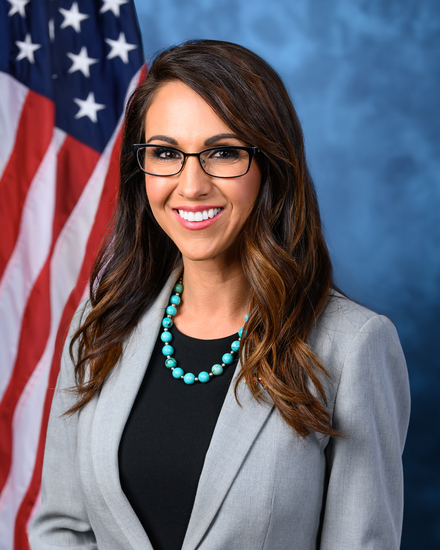
Rep. Lauren Boebert
Sponsored bills
Maddy summaryHR 5026, the ALCATRAZ Act, establishes a federal grant program to reimburse state and local governments for costs related to detaining migrants at facilities within their jurisdictions, starting January 20, 2025. Eligible states or localities must apply to the DHS Secretary for reimbursement, with funding coming from redirected FEMA shelter funds. The bill requires DHS to submit a 90-day report detailing plans for rapidly building new detention facilities and identifying underused federal or state funds that could support the program. This legislation directly affects state and local governments operating migrant detention facilities by providing financial support for their detention costs.
Maddy summaryThis bill creates a federal database identifying state or local governments that conflict with immigration enforcement laws. It prohibits federal funding for any jurisdiction listed in this database, which includes entities that block cooperation with immigration detainers, restrict arrests of certain immigrants, or prevent officials from interviewing incarcerated individuals about immigration status. The database must be updated quarterly and made public within 90 days of the bill's enactment. This directly affects local governments that have policies limiting collaboration with federal immigration authorities.
Maddy summaryThe PRIME Act exempts custom slaughter facilities from federal meat inspection requirements when they follow state laws and sell meat exclusively within the same state. It specifically allows facilities to slaughter animals and prepare meat without federal oversight if the products go only to household consumers or local businesses (like restaurants, hotels, or grocery stores) serving consumers directly in that state. The bill clarifies that this exemption does not override stricter state regulations governing custom slaughter or meat sales. This primarily affects small-scale slaughter operations and local food businesses operating within a single state's borders.
Maddy summaryThe End the Vaccine Carveout Act changes the National Vaccine Injury Compensation Program (NVICP) to allow individuals to sue vaccine manufacturers or administrators directly in court for vaccine-related injuries or deaths, without first needing to file a claim under the NVICP. It removes time limits for filing NVICP claims and repeals rules that previously let people choose between the program and a lawsuit for the same injury. The bill also specifically excludes COVID-19 vaccines from the definition of "covered countermeasure," meaning they are no longer protected by the same emergency liability shield that applied to other pandemic vaccines. This affects vaccine manufacturers, providers, and individuals who experience vaccine-related harm, shifting liability from the NVICP to the court system for most cases.
Maddy summaryHR 4706 prohibits Chinese government-linked entities (including Chinese corporations, CCP-affiliated organizations, and entities controlled by China) from acquiring, leasing, or owning U.S. agricultural land or residential real estate. The bill requires such entities to sell all existing U.S. agricultural land holdings within one year (with a 180-day letter of intent deadline) and residential real estate holdings within one year, imposing daily fines of $100 per acre for agricultural land violations and $1,000 per residential unit. It also voids noncompete agreements between these entities and their employees. The law applies to all 50 states and territories, with enforcement by the Agriculture and Commerce Departments, and includes a 2-year temporary residential purchase ban ending in 2026 (extendable by the President).
Veterans' Assuring Critical Care Expansions to Support Servicemembers Act of 2025 or the Veterans' ACCESS Act of 2025 This bill addresses the administration of the Veterans Community Care Program (VCCP) and other Department of Veterans Affairs (VA) health care matters. Among other provisions regarding the VCCP, the bill establishes in statute access standards that determine when a veteran is eligible to receive non-VA care through the VCCP, requires the VA to notify veterans regarding their eligibility for care within two business days after the VA is aware the veteran is seeking care, and extends the deadline for the submittal of claims under the VCCP by health care entities and providers. The VA must address its mental health treatment programs by establishing a standardized screening process to determine whether a veteran satisfies criteria for priority or routine admission to a mental health residential rehabilitation treatment program or a program for residential care for mental health and substance abuse disorders, tracking the performance of medical facilities and Veterans Integrated Service Networks in meeting the requirements for mental health treatment screenings and timely admission to treatment programs under such screenings, and establishing an appeal process for when a veteran is denied admission to a covered treatment program or is accepted into a program but not offered bed placement in a timely manner. Additionally, the VA must establish an online self-service module for veterans to request and manage appointments, track referrals, and appeal and track decisions related to requests for care.
Maddy summaryHR 4620 amends federal law to include rioting as a form of racketeering activity under Title 18, United States Code. This change would allow prosecutors to charge individuals who organize or participate in riots as part of a larger criminal enterprise under federal racketeering laws. The bill specifically targets coordinated riot activities linked to organized crime, not isolated or spontaneous protests.
Maddy summaryHR 3095 requires the U.S. Postal Service to assign a single, unique ZIP Code to 74 specific communities across 16 states (including Canyon Lake, CA; Castle Pines, CO; and Estero, FL) within 270 days of the bill's enactment. This addresses current issues where these communities share ZIP Codes with neighboring areas, causing mail delivery confusion. The bill directly affects residents and businesses in these designated locations by simplifying mail routing. It creates a concrete administrative change without altering broader postal policies or funding.
Maddy summaryHR 672 directs the United States Postal Service to assign a single unique ZIP Code to 14 specific communities within 270 days of enactment. These communities include Eastvale (CA), Scotland (CT), Castle Pines and Silver Cliff (CO), Hollywood, Miami Lakes, and Ocoee (FL), Urbandale (IA), Franklin, Greenfield, Caledonia, Mount Pleasant, and Somers (WI), and Mills (WY). This change will update mail delivery systems and address identifiers for residents and businesses in these areas, streamlining postal operations.