

Maddy summaryThe Focus on Learning Act requires the Surgeon General to study how personal mobile devices affect student learning, mental health, and school climate in elementary and secondary schools. It establishes a pilot program offering $5 million over five years to school districts that implement "device-free" environments - requiring secure storage for students' personal phones during school hours - while allowing exceptions for health needs, students with disabilities, or language translation. Schools in the pilot must obtain parental input, maintain staff communication systems, and detail their device policies before participating. The study and pilot aim to test whether reducing personal device use during school improves academic outcomes and school environment, with results to be reported to Congress.
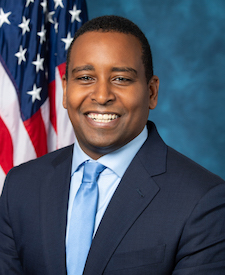
Rep. Joe Neguse
Sponsored bills
Maddy summaryThis bill restricts access to Treasury payment systems (including the Bureau of the Fiscal Service) to only Treasury employees with a "fully successful" performance rating and at least one year of civil service, or contractors/outsiders with security clearances, required privacy/cybersecurity training, ethics agreements, and no conflicts of interest. It treats non-government users accessing these systems as government employees for ethics rules and defines specific actions (like stopping payments) as "personal and substantial participation" in government matters. The Treasury Inspector General must investigate any unauthorized access within 30 days and report to Congress, detailing the breach, security risks, and any halted payments. The bill directly affects Treasury staff, contractors, and any external entities accessing federal payment systems.
Maddy summaryThis proposed bill (HR 220) would expand VA healthcare benefits to cover infertility treatments like in vitro fertilization (IVF) and fertility preservation services for veterans with infertility or at risk of infertility (e.g., due to medical treatments), and their partners. It limits VA coverage to three successful IVF cycles or ten attempts, requires consent from veterans, partners, and donors, and allows use of donated eggs or embryos. Partners would receive travel reimbursement as if they were veterans, and temporary rules during implementation will immediately allow partners to access care without marriage requirements. The bill clarifies VA isn’t required to cover maternity care beyond existing rules and defers full implementation until VA issues final regulations within one year of enactment.
Maddy summaryThis bill requires the Comptroller General to study and report on menopause care provided by the Department of Veterans Affairs (VA) to women veterans experiencing perimenopause, menopause, or genitourinary syndrome of menopause. The study will examine current VA protocols for diagnosis, treatment, provider training, veteran access to care, outreach efforts, and quality of care, including veteran feedback. The VA Secretary must then develop a strategic plan within six months of the report's release to improve menopause care access and quality for women veterans under VA healthcare programs.
Maddy summaryHR 1177, the "Improve and Enhance the Work Opportunity Tax Credit Act," increases tax credits for employers hiring from targeted groups. It raises the credit rate from 40% to 50% for qualified first-year wages up to $6,000, plus 50% for wages between $6,000 and $12,000. The bill also creates higher credit limits for veterans (up to $24,000/$48,000), removes an age cap for Supplemental Nutrition Assistance Program (SNAP) recipients, and adjusts rules for summer youth workers and long-term family assistance recipients. These changes apply to employees hired after December 31, 2024, directly benefiting employers who hire from these eligible groups.
Blind Americans Return to Work Act of 2025 This bill requires the Social Security Administration to carry out a demonstration project during which blind Social Security Disability Insurance (SSDI) beneficiaries receive reduced benefits commensurate with income above certain thresholds. Under current law, only individuals who earn under a specified monthly income, known as the substantial gainful activity (SGA) threshold, are considered disabled and thereby eligible for SSDI benefits. For blind workers, this limit is $2,700 per month in 2025. SSDI beneficiaries may earn beyond the SGA threshold for a limited period of time, known as the trial work period , before their benefits are suspended and ultimately terminate. The bill establishes a 20-year demonstration project during which individuals who are entitled to SSDI benefits by reason of blindness and who earn above the SGA threshold continue to receive benefits at an amount gradually reduced commensurate with their earnings beyond a specified amount. During this period, blind workers’ SSDI benefits must be reduced by $1 for every $2 that a worker earns above the sum of (1) the SGA threshold, and (2) the worker’s expenses reasonably attributable to their work. The SGA threshold may not be used to determine whether an individual is disabled during this period, and blind workers’ SSDI benefits may not be terminated due to work-related earnings. The trial work period also must not apply. After 10 years, affected beneficiaries may opt out of the modified benefits structure.
Maddy summaryThe SAFE Act requires Medicare to cover falls risk assessments and fall prevention services for seniors aged 65+ who have fallen in the previous year. These services, provided by physical or occupational therapists, will be included in Medicare's annual wellness visits and initial preventive physical exams starting January 1, 2026. The bill also mandates annual reports to Congress beginning in 2027 on falls among seniors aged 65+ that required treatment for fall-related injuries. This policy directly affects Medicare beneficiaries with a documented history of falls by adding targeted preventive care to their covered benefits.
Maddy summaryThis bill amends the Omnibus Crime Control and Safe Streets Act to include Transportation Security Administration (TSA) employees as eligible for public safety officers' death benefits. It specifically covers TSA officers who die while performing duties related to protecting transportation systems, ensuring their families receive financial support similar to other public safety officers. The key change adds a new definition (subparagraph H) to the existing law, expanding eligibility to TSA personnel who are actively safeguarding transportation infrastructure. This directly affects TSA employees and their dependents by granting access to these death benefits for on-duty fatalities. The amendment applies to incidents occurring on or after October 31, 2013.
Maddy summaryThis bill expands 529 college savings account flexibility by allowing funds to cover costs for industry-recognized postsecondary credentials, not just traditional degrees. It defines "qualified expenses" to include tuition/fees for recognized credential programs (like certifications or apprenticeships), required testing fees, and continuing education needed to maintain credentials. To qualify, programs must meet specific criteria, such as appearing on state lists under the Workforce Innovation and Opportunity Act or being listed in VA or Defense directories. The change applies to 529 distributions made after the law's enactment, giving families more options to use these accounts for job-focused training.
Maddy summaryHR 1076, the WARN Act, requires the Comptroller General to study how well local, state, and federal emergency alert systems share timely weather emergency information during events like storms or power outages. The study will examine alert methods (including social media), the clarity of public messages, and outdoor siren systems, using feedback from emergency managers and community groups. It mandates a report to Congress within 18 months of enactment, focusing on identifying improvements to alert systems for public safety. The bill itself does not change existing policies but directs a review to inform future emergency communication strategies.