

Dentist and Optometric Care Access Act of 2025 or the DOC Access Act of 20 25 This bill prohibits private health insurance plans from setting rates for items and services, except for dental cleanings, provided by a doctor of optometry, of dental surgery, or of dental medicine (or an employer of such a doctor) for which the plan does not pay a substantial amount. Additionally, an agreement between a plan and such a doctor for limited scope dental or vision benefits may last longer than two years only with the prior acceptance of the doctor for each term extension. Plans also may not restrict such a doctor's choice of laboratories or suppliers. Such doctors may elect to waive the application of the payment amount and choice of laboratories provisions of this bill. The bill does not supersede state laws regarding health insurers and dental or vision benefit plans.
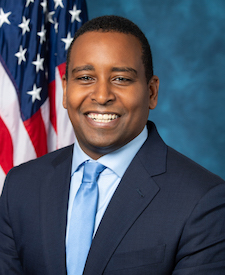
Rep. Joe Neguse
Sponsored bills
Maddy summaryHR 1505, the Public Safety Employer-Employee Cooperation Act, establishes federal standards for collective bargaining rights for public safety officers (including police, firefighters, and emergency medical personnel) in states that do not meet minimum requirements. The Federal Labor Relations Authority (FLRA) will determine after 180 days whether a state law "substantially provides" key rights, such as forming unions, negotiating wages/hours, and using binding arbitration to resolve disputes. If a state fails this assessment, federal bargaining rules apply within two years, but existing state laws with stronger protections remain valid. The bill explicitly respects state laws that exceed its standards and exempts small jurisdictions (under 5,000 population or 25 full-time employees).
Maddy summaryHR 1475, the SBA Disaster Transparency Act, requires the Small Business Administration (SBA) to publish all disaster assistance reports on its website. This bill amends existing law by adding specific language mandating that the SBA "publish on the website of the Administration" reports related to disaster assistance, including those submitted by state and local officials. The key mechanism is a procedural update to existing reporting requirements, ensuring all required reports are publicly accessible online rather than only being submitted internally. This directly affects the SBA (by changing its reporting process) and the public (by providing greater transparency into how disaster aid is distributed). The bill does not alter disaster assistance eligibility or funding levels.
Maddy summaryHR 1477 creates a new Animal Cruelty Crimes Section within the Justice Department's Environment and Natural Resources Division to enforce federal animal cruelty laws. This unit will coordinate with agencies like the FBI, USDA, and U.S. Marshals to investigate and prosecute cases, addressing current gaps in enforcement. The bill requires the unit to submit annual reports to Congress detailing prosecutions, convictions, and investigations where charges weren't filed. It does not change existing animal cruelty laws but establishes a dedicated federal unit to improve enforcement of current statutes.
Maddy summaryHR 1484 requires the Federal Aviation Administration (FAA) to commission the National Academies of Sciences to convene experts and issue a report on the health impacts of air traffic noise and pollution within 30 days of the bill's enactment. The report will summarize current scientific knowledge on these health effects and must be submitted to the FAA, Health and Human Services, the Environmental Protection Agency, and specific congressional committees. This bill creates a new study requirement but does not change existing regulations or funding; it solely mandates the collection of expert consensus on the health impacts of aviation noise and emissions.
Maddy summaryHR 553 (BRAVE Act) creates a new Department of Veterans Affairs (VA) system to proactively connect veterans with mental health resources. It directly affects veterans enrolled in the VA's annual patient enrollment system who have experienced traumatic or highly stressful events, allowing them to opt-in to receive information about available mental health care services. The bill requires the VA to establish this outreach system within two years of enactment and coordinate it with the Department of Defense's Transition Assistance Program. This is a concrete policy change focused on improving access to mental health support for veterans in need.
Maddy summaryThis bill establishes a Veterans Affairs grant program to fund peer-to-peer mental health support for veterans. It provides up to $250,000 per grant to eligible organizations (like veteran nonprofits, service groups, or state agencies) to hire veterans as peer specialists who host nonclinical support groups and offer 24/7 mental health assistance. The program prohibits grant recipients from collecting or reporting veterans' personal information. It directly affects veterans seeking accessible, nonclinical mental health support through peer-led services.
Maddy summaryThis bill protects certain public safety workers - like police officers, firefighters, and emergency medical personnel - from job loss or punishment for expressing personal opinions about work-related issues. It allows covered employees to sue employers if they face adverse actions (like termination) for speaking out on topics such as working conditions, safety equipment, pay, policies, or even political/religious views. However, the protection does not cover speech made while on duty, threats of violence, discrimination, disclosure of confidential personal information, or calls to withhold essential services. The law explicitly states it doesn’t override existing civil rights laws like 42 U.S.C. 1983.
Maddy summaryThis bill amends the Indian Health Care Improvement Act to replace the term "contract health care" with "purchased/referred care" throughout federal law. It ensures patients who pay out-of-pocket for authorized purchased/referred care (such as services arranged by the Indian Health Service) can receive reimbursement from the IHS within 30 days of submitting documentation electronically or in person. The IHS must establish these reimbursement procedures within 120 days and update all relevant documents, including the Indian Health Manual, within 180 days. The changes apply to all purchased/referred care authorized by the IHS after enactment, but do not affect tribal self-determination programs unless tribes agree to the new terms.
Maddy summaryHR 1410 expands access to mental health care for 9/11 responders and survivors by allowing licensed mental health providers (not just physicians) to conduct initial health evaluations and certifications under the World Trade Center Health Program. It adjusts the program’s funding formula to account for changing enrollment numbers by linking annual funding to the previous year’s enrollment ratio, and clarifies that deceased individuals are excluded from enrollment counts. The bill also extends the timeframe for adding new health conditions to the program’s list and requires a 2028 report assessing long-term funding needs through 2090. These changes aim to streamline eligibility, improve care access, and ensure sustainable funding for the program.