

Resident Physician Shortage Reduction Act of 2021 This bill increases the number of residency positions eligible for graduate medical education payments under Medicare for qualifying hospitals, including hospitals in rural areas and health professional shortage areas. Current law provides for an increase of up to 200 positions per fiscal year beginning in FY2023, with a total increase of 1,000 positions; each hospital may receive up to 25 additional positions. The bill provides for an additional increase of 2,000 positions per fiscal year from FY2023-FY2029; during this period, each hospital may receive up to 75 additional positions in total under the bill and current law. Additionally, one-third of the positions that are made available under the bill must be allocated to hospitals that are already operating above applicable resident limits. The bill also requires the Government Accountability Office to report on strategies to increase the diversity of the health professional workforce, including with respect to representation from rural, low-income, and minority communities.
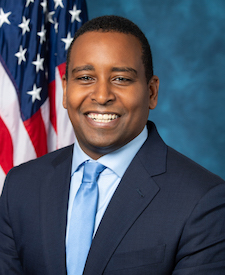
Rep. Joe Neguse
Sponsored bills
Willie O'Ree Congressional Gold Medal Act This bill provides for the award of a Congressional Gold Medal to Willie O'Ree or, if unavailable, to a member of his family, in recognition of his contributions and commitment to hockey, inclusion, and recreational opportunity.
This bill requires the Joint Committee on the Library to enter into an agreement to obtain a statue of Shirley Chisholm, the first African American woman elected to Congress. The committee shall place the statue in a permanent public location in the U.S. Capitol.
Carbon Cost Act of 2021 This bill requires the Government Accountability Office to coordinate with the National Academy of Sciences to study alternatives for a nonpartisan congressional office or agency to make science-based projections of the effect of federal legislation on global greenhouse gas emissions.
Emmett Till and Mamie Till-Mobley Congressional Gold Medal Act of 2021 This bill provides for the posthumous presentation of a Congressional Gold Medal in commemoration of Emmett Till and Mamie Till-Mobley. After the award the medal shall be given to the National Museum of African American History and Culture.
This resolution declares that decreasing the spread of COVID-19 (i.e., coronavirus disease 2019) in Africa is in the national interest of the United States, commends the work of Africa's frontline health workers, and calls on the United States and the international community to support African countries' responses to the pandemic.
Expanded Telehealth Access Act This bill permanently allows audiologists, physical therapists, occupational therapists, speech-language pathologists, and other providers designated by the Centers for Medicare & Medicaid Services (CMS) to provide telehealth services under Medicare. Currently, the CMS is authorized to waive requirements for Medicare telehealth services during the public health emergency relating to COVID-19, and it has done so to allow all providers that are otherwise eligible to furnish in-person services under Medicare to also furnish telehealth services.
Affordable and Safe Prescription Drug Importation Act This bill allows expanded importation of eligible prescription drugs and addresses related issues. Current law allows the Department of Health and Human Services (HHS) to authorize the importation of certain eligible prescription drugs from Canada if HHS certifies to Congress that doing so would pose no additional risk to public health and safety and would result in significant cost savings for consumers. The bill removes this certification requirement and requires HHS to issue regulations that permit the importation of qualifying prescription drugs from Canada. After a certain amount of time, HHS may authorize importation from certain other countries if it determines that importation from Canada has resulted in cost savings for consumers and increased access to safe medication. The bill also expands the types of prescription drugs eligible for importation to include, for example, biologics such as insulin. Furthermore, the bill allows individuals to use an eligible licensed foreign pharmacy to fill a U.S.-issued prescription for a qualifying drug for personal use. Currently, an individual seeking to import a prescription drug generally must acquire a waiver from HHS. The bill imposes various requirements related to certification of foreign sellers, labeling of imported drugs, and supply chain security. The bill also (1) prohibits certain acts that discriminate against foreign sellers, such as charging higher prices to foreign sellers than to other sellers in the same country; and (2) imposes criminal penalties for online websites that sell counterfeit drugs or dispense drugs without a required prescription.
Safe Hydration is an American Right in Energy Development Act of 2021 This bill requires hydraulic fracturing operations to test for and report on underground sources of drinking water that are contaminated by such operations. Hydraulic fracturing, or fracking, is a process to extract underground resources such as oil or gas from a geologic formation by injecting water, a propping agent (e.g., sand), and chemical additives into a well under enough pressure to fracture the formation. Specifically, this bill revises requirements governing state underground injection control programs. In order to obtain primary enforcement responsibility for such programs, states must prohibit the underground injection of fluids or propping agents pursuant to hydraulic fracturing operations related to oil, gas, or geothermal production activities unless the hydraulic fracturing operations agree to test for and report on contamination of drinking water. Hydraulic fracturing operations are exempted from those testing and reporting requirements if there is no accessible underground source of drinking water within a radius of one mile of the site where the operations occur. The Environmental Protection Agency must establish and maintain a publicly accessible and searchable database of the testing results.
Ensuring Parity in MA and PACE for Audio-Only Telehealth Act of 2021 This bill allows audio-only diagnoses that are made via telehealth to be used for purposes of determining risk adjustments to payments under Medicare Advantage. Additionally, the bill requires payments for Medicare telehealth services that are furnished during the public health emergency relating to COVID-19 (i.e., coronavirus disease 2019) to be made in the same amounts as those for in-person services.