

Augmenting Compatibility and Competition by Enabling Service Switching Act of 2021 or the ACCESS Act of 2021 This bill requires large online platforms (e.g., YouTube, Salesforce) to facilitate consumers and businesses switching from one platform to another. Specifically, the platforms must maintain interfaces that (1) securely transfer user data to other platforms (i.e., portability), and (2) allow other platforms to connect and communicate with their systems (i.e., interoperability). The bill provides the Federal Trade Commission (FTC) and the Department of Justice with the authority to designate specific platforms to which these requirements apply. After a platform is designated, the FTC must issue standards of interoperability specific to the platform. A platform may not change its interoperability interface without petitioning the FTC, and the platform must provide to competing businesses documentation for accessing the interface. Further, the FTC must establish a technical committee to assist with the implementation of these requirements. The bill provides the FTC with authority to enforce these requirements including through recovery of civil penalties and injunctive relief.
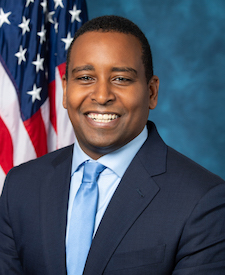
Rep. Joe Neguse
Sponsored bills
Newborn Screening Saves Lives Reauthorization Act of 2021 This bill reauthorizes through FY2026 and revises several programs and activities relating to newborn screening for certain conditions and genetic, endocrine, and metabolic diseases. Among its changes, the bill reauthorizes and makes mandatory the Hunter Kelly Research Program at the National Institutes of Health, and national surveillance activities conducted by the Centers for Disease Control and Prevention. The bill also aligns statutory requirements for research on non-identified newborn blood spots with federal regulations governing research on human subjects. These blood spots are collected as part of newborn screening programs, and some states make them available for biomedical and public health research. Under current regulations, research on non-identified bio-specimens such as blood spots is not considered to be research on human subjects, to which additional protections apply.
Cultivating Opportunity and Recovery from the Pandemic through Service Act or the CORPS Act This bill makes several changes to AmeriCorps programs during the COVID-19 health emergency. Specifically, the bill: increases living allowance payments to program participants; increases educational awards for program participants; relaxes program requirements, including reducing the age requirement for AmeriCorps Seniors to 45 and older; creates a pilot program to allow state commissions to directly place individuals in approved AmeriCorps programs; and allows for targeted AmeriCorps grants to fund recovery projects in communities disproportionately affected by COVID-19. The bill also excludes AmeriCorps living allowance payments and educational awards from taxable income for program participants.
Vanessa Guillén Military Justice Improvement and Increasing Prevention Act This bill modifies the process and policy related to the disposition of charges and convening of courts-martial for certain sexual assault cases and other specified offenses under the Uniform Code of Military Justice (UCMJ). Among other elements, the bill provides that the determinations on the preferral, disposition, and referral of charges for specified offenses under the UCMJ must be made by a commissioned officer of the Armed Forces who is designated as a court-martial convening authority (in grade O-6 or higher) and who is available for detail as trial counsel, has significant trial experience, and is outside the chain of command of the member subject to the charges.
Save Rural Hospitals Act of 2021 This bill establishes an area wage adjustment floor for Medicare hospital payments in states that are not frontier states and excludes such adjustments from certain budget neutrality rules.
Tribal Tax and Investment Reform Act of 2021 This bill treats Indian tribal governments as states for purposes of the annual allocation of the tax-exempt bond volume cap. It also repeals provisions that limit an Indian tribal government's eligibility to issue tax-exempt bonds or to be exempt from specified excise taxes to transactions involving the exercise of an essential government function customarily performed by state and local governments. The bill (1) treats employee benefit or pension plans maintained by Indian tribes and domestic relations orders issued pursuant to tribal law in the same manner as plans maintained by states and domestic relations orders issued pursuant to state law; and (2) treats tribal charities and foundations in the same manner as charities and foundations funded and controlled by other governmental entities for purposes of the tax-exempt status of, and deduction for contributions to, such organizations. The bill gives Indian tribes or tribal organizations access to the Federal Parent Locator Service if they are eligible for a grant to operate a child support enforcement program. It makes those tribes and tribal organizations eligible to participate in the program that collects past-due support from individual tax refunds. An Indian tribal government may determine whether a child has special needs for the purpose of the tax credit for the adoption of a child with special needs.
Keeping Our Promises Act This bill expands the list of diseases that are provided a presumption of service-connection for veterans who served in the Republic of Vietnam between January 9, 1962, and May 7, 1975. The bill extends through September 30, 2030, the requirement for the Department of Veterans Affairs (VA) to make determinations and submissions related to the connection between herbicide exposure and occurrence of disease. Additionally, the VA is prohibited from taking the costs of compensation into account when determining the association between exposure to an herbicide agent and occurrence of a disease. The bill requires the VA to determine within 120 days (currently 60) whether a presumption of service-connection is warranted for diseases covered by a National Academy of Sciences report.
This bill requires the Department of Veterans Affairs to ensure that, if it creates a presumption of service-connection between the occurrence of a disease and exposure to an herbicide agent while serving in the Armed Forces between January 9, 1962, and June 30, 1976, at a military base in Thailand, such presumption must also apply to exposure at any military base in Thailand, regardless of where on the base the veteran was located or what military job specialty the veteran performed.
Puppy Protection Act of 2021 This bill requires the Department of Agriculture to expand standards that govern the humane handling, care, treatment, and transportation of animals to include new requirements for commercial dog dealers. Specifically, the standards must require dog dealers to provide to dogs adequate housing, exercise, and veterinary care; appropriate and nutritious food; continuous access to potable water; and meaningful socialization with humans and compatible dogs for at least 30 minutes each day. The standards must also include requirements for breeders to use safe breeding practices and make all reasonable efforts to find humane placement for retired breeding dogs.
Work Without Worry Act This bill modifies eligibility for Social Security Disability Insurance (SSDI) benefits for individuals who have a disability that began before age 22. Under current law, these individuals may obtain SSDI benefits based on the work record of a retired, disabled, or deceased parent. However, an individual with earnings after age 22 that exceed a specified monetary limit (i.e., constitute substantial gainful activity) permanently loses eligibility for such benefits. This bill allows individuals to retain eligibility for such benefits regardless of the amount of earnings after age 22. Additionally, individuals who apply for SSDI benefits on a parent's record and also independently qualify for Social Security benefits on their own record will receive the larger of the two benefit amounts.