

Ending the Monopoly of Power Over Workplace Harassment through Education and Reporting Act or the EMPOWER Act This bill makes it an unlawful labor practice for an employer to enter into, or attempt to enforce, a contract with an employee or job applicant that contains a nondisparagement or nondisclosure clause that covers workplace or sexual harassment, including retaliation for participating in a workplace harassment proceeding. The bill exempts certain settlement or separation agreements from such prohibition. The bill also requires the Securities and Exchange Commission to promulgate a regulation that requires any issuer of securities to submit a report for the most recent five-year period with respect to workplace and sexual harassment. The commission must provide for the development and dissemination of training programs and information regarding workplace and sexual harassment. The bill denies a tax deduction for amounts related to judgments and expenses in connection with litigation related to workplace or sexual harassment. It also excludes from gross income, for income tax purposes, any amount received in connection with a claim or settlement related to workplace or sexual harassment, or other unlawful discrimination.
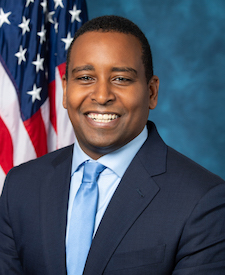
Rep. Joe Neguse
Sponsored bills
Stop Foreign Funds in Elections Act This bill prohibits contributions or donations by foreign nationals in connection with state or local ballot initiatives or referenda.
Tim Hart Wildland Firefighter Classification and Pay Parity Act or Tim's Act This bill addresses the pay and benefits of federal wildland firefighters and related issues. Federal wildland firefighter is defined as any temporary, seasonal, or permanent position at the Department of Agriculture (USDA) or the Department of the Interior that maintains certain group, emergency incident management, or fire qualifications and primarily engages in or supports wildland fire management activities. Specifically, (1) the Office of Personnel Management (OPM) must establish one or more classification series for federal wildland firefighter positions, and (2) USDA and the Department of the Interior shall determine each position within USDA and Interior that qualifies as a federal wildland firefighter position. The bill, among other requirements (1) establishes a pay scale for such positions, with annual adjustments; and (2) provides for hazardous duty pay. The OPM must establish guidelines for work schedules. The bill addresses issues regarding wages, unpaid leave to care for a family member, recruitment and retention bonuses, and housing allowances. USDA and Interior shall (1) establish, maintain, coordinate, and operate a voluntary tuition assistance program; (2) establish and maintain a publicly accessible, searchable Federal Wildland Firefighter Cancer and Cardiovascular Disease Database; and (3) establish and carry out a program for mental health awareness and support. Additionally, the bill provides for continuation of firefighters pension coverage in case of disability and pay parity for federal structural firefighters.
Pets Belong With Families Act This bill prohibits public housing agencies from imposing breed restrictions on pets owned by residents of public housing units. The bill continues to allow public housing agencies to prohibit ownership of dangerous animals in public housing, but prohibits classification as dangerous by breed and requires that any such classification be based on specific behaviors or actions of the animal.
Help Ensure Lower Patient Copays Act or the HELP Copays Act This bill requires health insurance plans to apply certain payments made by, or on behalf of, a plan enrollee toward a plan's cost-sharing requirements. Specifically, plans must apply third-party payments, financial assistance, discounts, product vouchers, and other reductions in out-of-pocket expenses toward the requirements.
Servicemembers and Veterans Empowerment and Support Act of 2021 This bill modifies and implements policies and procedures related to Department of Veterans Affairs (VA) health care and benefits for veterans who have experienced military sexual trauma (MST), which is generally defined as physical assault of a sexual nature, battery of a sexual nature, or sexual harassment that occurred while the veteran was serving in the military. The VA must revise its regulations to update the definition of MST to include matters relating to technological abuse. In the case of any veteran who claims that a covered mental health condition (e.g., post-traumatic stress disorder) based on MST was incurred or aggravated by active service, the VA must accept specified diagnoses and evidence as proof of service-connection. The VA may not deny a veteran's claim of compensation for a covered mental health condition based on MST without first (1) advising the veteran that nonmilitary evidence and behavioral evidence may constitute credible corroborating evidence, and (2) allowing the veteran an opportunity to furnish the corroborating evidence or advise the VA of potential sources of such evidence. The Veterans Benefits Administration must conduct an annual special focus review on the accuracy of the processing of claims for disability compensation for disabilities relating to MST. Additionally, the bill (1) expands access to mental health care at VA facilities for survivors of MST, and (2) requires the VA and the Government Accountability Office to report on access to such care for MST survivors.
Behavioral Health Crisis Services Expansion Act This bill establishes requirements, expands health insurance coverage, and directs other activities to support the provision of behavioral health crisis services along a continuum of care. Specifically, the Department of Health and Human Services (HHS) must establish standards for a behavioral health crisis continuum of care that health care providers and communities may use in responding to individuals experiencing a behavioral health crisis. This continuum of care must include 24-7 crisis hotlines, emergency treatment, stabilization services, and other specified components. In addition, the bill expands health insurance coverage for behavioral health crisis services. It also expands the Community Mental Health Services Block Grant to assist states and territories with developing the infrastructure to provide crisis response services. Furthermore, HHS, in consultation with the Department of Justice, must convene an expert panel to make recommendations concerning training for emergency services dispatchers and crisis call center personnel to respond appropriately to individuals experiencing a behavioral health crisis.
This resolution expresses that the House of Representatives applauds the Biden administration for reaffirming the U.S. commitment to the Paris Agreement on climate change and to our collective responsibility to globally combat climate change; encourages the Biden administration to implement measures to ensure global climate change remains a top priority for this and future administrations and to cement the United States as a global leader in the fight to mitigate its most severe consequences; voices strong commitment as legislators toward achieving the climate goals of the Paris Agreement, fulfilling the forthcoming pledges from the COP26 in Glasgow, Scotland, and advancing other international efforts to keep global warming to no more than 1.5 degrees Celsius and realize global net-zero carbon emissions by 2050 using a whole-of-government approach; and recognizes the critical responsibility of the United States and other developed nations to ensure all societies have the capabilities to transition to a clean energy economy, the resources to protect against climate-induced disasters, and the necessary assistance to endure climate-related challenges to food security, regional migration, and public health.
Disaster Equity and Fairness Act This bill makes changes in the provision of federal disaster assistance to underserved communities and other specified recipients. Underserved community means populations sharing a particular characteristic and geographic communities that have been systematically denied a full opportunity to participate in aspects of economic, social, and civic life. Specifically, the bill increases the federal cost share to a local government or Indian tribal government in connection with a second or subsequent major disaster during any three-year period. The Federal Emergency Management Agency (FEMA) may provide assistance to a state, local government, or Indian tribal government to reimburse the cost of coordinating food delivery, production, and distribution in the event of a major disaster. FEMA must provide direct technical assistance to eligible entities for applications and prioritize specified categories of communities, including underserved communities, those that have demonstrated a compelling need, and those that are exposed to increased hazards or vulnerabilities. The bill increases the federal cost share for a recipient (1) that will use the assistance in, or for the benefit of persons who are members of, an undeserved community; or (2) who is in, or who is a member of, an underserved community.
Access to Breast Cancer Diagnosis Act of 20 21 This bill prohibits private health insurance plans from imposing higher cost-sharing requirements on breast cancer diagnostic examinations than initial breast cancer screening examinations. Diagnostic examinations are generally required after an initial screening detects an abnormality and typically require additional mammogram images (e.g., x-rays).