

Climate Risk and Emergency Support In Livable Inclusive and Equitable Neighborhoods and Communities Everywhere Act or the Climate RESILIENCE Act This bill makes changes to the Robert T. Stafford Disaster Relief and Emergency Assistance Act to take into account climate change. The bill includes extreme temperature events, such as heat waves or freezes, within the scope of the act and defines resilience for purposes of disaster assistance and mitigation efforts. Federal and state preparedness and mitigation assistance may be used for reducing the impacts of extreme temperatures and improving air quality and mitigating against wildfire smoke.. The bill authorizes implementing predisaster hazard mitigation measures that will be cost-effective and equitable long-term and provide enhanced protection to the community. The Federal Emergency Management Agency (FEMA) must (1) provide technical assistance to underserved and disadvantaged communities for such measures; and (2) provide guidance to implement the latest published editions of relevant consensus-based codes, specifications, and standards that incorporate the latest hazard-resistant designs. The bill includes within the hazard mitigation program requirements the abatement of lead, mold, mildew, radon, asthma, and allergen triggers, or other pollutants and hazardous materials directly caused by a major disaster or emergency. FEMA must report to Congress regarding challenges posed by FEMA requirements for determining the cost-effectiveness of mitigation activities and how such requirements may disproportionately burden underserved or disadvantaged communities.
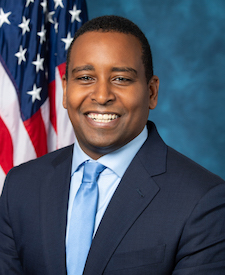
Rep. Joe Neguse
Sponsored bills
Accelerating the Growth of Rural Innovation and Tourism Opportunities to Uphold Rural Industries and Sustainable Marketplaces Act or the AGRITOURISM Act This bill establishes an office within the Department of Agriculture to promote agritourism activities and businesses.
Federal Adjustment of Income Rates Act or the FAIR Act This bill modifies pay rates for federal employees in 2023. Specifically, the bill increases rates under the statutory pay systems and for prevailing rate employees by 4.1% and increases locality pay by 1%.
Congressional Inherent Contempt Resolution of 2022 This resolution sets forth procedures regarding committee subpoenas by the House of Representatives, including allowing the House of Representatives to enforce committee subpoenas with respect to federal departments, agencies, executive branch officials, and other persons. Specifically, the resolution allows the House to punish a noncomplying individual held in contempt with a monetary penalty, detention, or both.
Maddy summaryThis bill (H.J.Res. 68) is a symbolic, procedural measure that would require the President to issue an annual proclamation designating a day as "Democracy Day." It directs the President to call on state/local governments and citizens to observe the day through programs and activities, with January 6 referenced as a potential date. The bill does not create new government programs or change existing laws - it only establishes a recurring presidential proclamation. It directly affects federal, state, and local governments by encouraging them to participate in annual observances. The bill has no budgetary impact and remains focused on promoting civic engagement through a designated day.
Helping Unleash Benefits and Services for Veterans Act of 2021 or the HUBS for Veterans Act of 2021 This bill establishes a grant program to assist the transition of military personnel to civilian life. It directs the Department of Labor to carry out a five-year program of grants to nonprofit organizations that assist the transition of the following persons from Armed Forces service to civilian life: members eligible for preseparation counseling, former members who are transitioning to civilian life, and spouses of such members or former members. Funds must be used for a broad range of supportive programs, such as job recruitment training.
Veterans Pro Bono Corps Act of 2021 This bill requires the Department of Veterans Affairs (VA) to study the feasibility and advisability of establishing a five-year pilot program to provide assistance to entities that provide aid to veterans applying for compensation for a service-connected disability, specifically by helping them substantiate their claims with independent medical examinations and opinions. The study must also assess the use of the VA disability benefits questionnaire forms to support the pilot program. Under the program, eligible entities are those that administer a non-VA medical residency or medical fellowship program in the United States (or a territory of the United States) and are accredited by a nationally recognized accrediting agency.
PrEP Access and Coverage Act This bill requires private health insurance plans to cover prescription drugs that prevent HIV, including related screenings, diagnostic procedures, administrative fees, and clinical follow-ups, without any cost-sharing obligation for the plan holder. Further, insurance plans must not impose any preauthorization requirement for this coverage. These coverage requirements also apply to public health insurance programs, including Medicare, Medicaid, and the Children's Health Insurance Program. Additionally, the bill prohibits denying, limiting, or qualifying coverage or increasing premiums for disability insurance, long-term care insurance, or life insurance policies based on an individual taking medication for HIV prevention. The bill further requires the Department of Health and Human Services to award grants to states, or directly to eligible local organizations, to provide uninsured individuals and underinsured individuals access to prescription drugs and related services that prevent HIV. The Centers for Disease Control and Prevention also must develop a public awareness campaign that focuses efforts in communities with a high need for HIV prevention treatment.
Western Wildfire Support Act of 2021 This bill establishes activities to address wildfires. The bill requires the Department of Agriculture (USDA) and the Department of the Interior to establish spatial fire management plans before the end of FY2024. The bill establishes accounts in the Treasury for addressing wildfires, a program to train and certify citizens who wish to be able to volunteer to assist USDA or Interior during a wildland fire incident, a program to award grants to eligible states or units of local government to acquire slip-on tank and pump units for a surge capacity of resources for fire suppression, the Theodore Roosevelt Genius Prize for the management of wildfire-related invasive species, and the Management of Wildfire-Related Invasive Species Technology Advisory Board. The bill also requires the Department of Defense (DOD) to reimburse a state or federal agency for the costs of wildfire suppression as a result of a fire caused by DOD activity, requires the Joint Fire Science Program to work with unmanned aircraft test ranges to carry out research and development of unmanned aircraft system fire applications, requires federal and state disaster preparedness programs to include postdisaster assistance, and authorizes the Federal Emergency Management Agency to provide funding to a state agency to establish and operate a website to provide information relating to postfire recovery funding and resources to a community or an individual impacted by a wildland fire.
SNAP Tribal Food Sovereignty Act of 2021 This bill directs the Department of Agriculture to enter into self-determination contracts upon the request of Indian tribes and tribal organizations to carry out the Supplemental Nutrition Assistance Program.