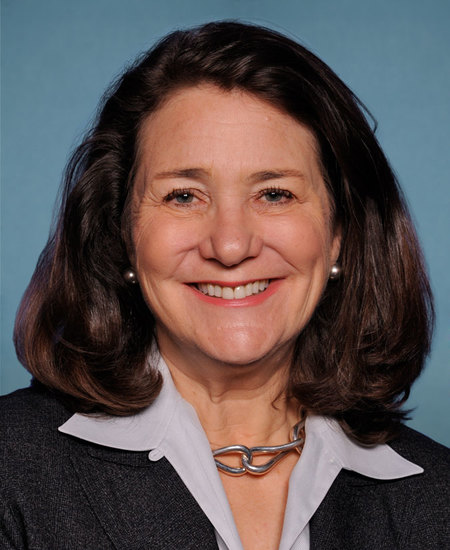
Photo of Diana DeGette
D United States House · District 1 · Colorado

Rep. Diana DeGette

Compare
Total votes
2,837
all sessions
Attendance
99%
28 missed
Near the chamber average
With party
98%
of cast votes
Near the chamber average
Bipartisan score
1%
crosses aisle rarely
Near the chamber average
Sponsored
1,153
bills & resolutions
Near the chamber average
Committees
4
assignments
1,153 bills and resolutions

Sponsored bills

Total
1,153
Primary
47
Co-sponsor
1,106
This page
1,153
matching current filters
Co-sponsor HR 2812
In committee · Indiana House · Co-sponsor
Fairness in Nursing Home Arbitration Act

Fairness in Nursing Home Arbitration Act This bill prohibits, and nullifies any existing, pre-dispute arbitration agreements with respect to Medicare skilled nursing facilities or Medicaid nursing facilities, home- and community-based services, or home health care services.

In committee Apr 23, 2021 1 co-sponsor
Co-sponsor HR 2759
In committee · Indiana House · Co-sponsor
Pharmacy and Medically Underserved Areas Enhancement Act

Pharmacy and Medically Underserved Areas Enhancement Act This bill provides for Medicare coverage and payment with respect to certain pharmacist services that (1) are furnished by a pharmacist in a health-professional shortage area, and (2) would otherwise be covered under Medicare if furnished by a physician.

In committee Apr 23, 2021 1 co-sponsor
Co-sponsor HR 1016
In committee · Indiana House · Co-sponsor
Animal Cruelty Enforcement Act of 2021

Animal Cruelty Enforcement Act of 2021 This bill establishes a new section in the Environmental and Natural Resources Division of the Department of Justice to enforce federal laws concerning animal cruelty.

In committee Apr 23, 2021 1 co-sponsor
Co-sponsor HR 977
In committee · Indiana House · Co-sponsor
Lady Liberty Act of 2021

Lady Liberty Act of 2021 This bill sets a floor of 125,000 for the maximum number of refugees who may be admitted into the United States each fiscal year. Under current law, the President sets the annual cap on refugee admissions at the beginning of each fiscal year. (The cap for FY2021 is 15,000, and the cap for FY2020 was 18,000.)

In committee Apr 23, 2021 1 co-sponsor
Co-sponsor HR 959
In committee · Indiana House · Co-sponsor
Black Maternal Health Momnibus Act of 2021

Black Maternal Health Momnibus Act of 2021 This bill directs multi-agency efforts to improve maternal health, particularly among racial and ethnic minority groups, veterans, and other vulnerable populations. It also addresses maternal health issues related to COVID-19 (i.e., coronavirus disease 2019). The Department of Health and Human Services (HHS) and other specified departments must address the social determinants of maternal health, which include child care, housing, food security, transportation, and environmental conditions. The bill also extends to 24 months postpartum eligibility for the Special Supplemental Nutrition Program for Woman, Infants, and Children. Additionally, HHS and other agencies must take actions to grow and diversify the maternal health workforce. To increase access to maternity care, HHS and other agencies must (1) award specified grants; (2) test an alternative payment model for perinatal care under Medicaid and the Children's Health Insurance Program (CHIP); and (3) support training, technology, and telehealth initiatives. The bill also increases research and data collection on maternal morbidity and mortality, particularly among tribal populations and minority groups. The Bureau of Prisons and the Department of Justice must establish programs to improve maternity care for incarcerated populations. The Medicaid and CHIP Payment and Access Commission must also report on the impact of Medicaid ineligibility for pregnant and postpartum prisoners. Additionally, as a condition for certain grants, states and territories must have laws limiting the use of restraints on pregnant individuals in prisons. The bill also directs activities to mitigate adverse maternal health outcomes associated with climate change and to improve maternal vaccination rates.


In committee Apr 23, 2021 1 co-sponsor
Co-sponsor HCONRES 31
In committee Apr 22, 2021 1 co-sponsor
Co-sponsor HR 2817
In committee · Indiana House · Co-sponsor
Child Care for Working Families Act

Child Care for Working Families Act This bill provides funds and otherwise revises certain child care and early learning programs for low- to moderate-income families. Specifically, the bill provides funds for the Child Care and Development Block Grant program and reestablishes it as a child care and development assistance program. The bill also allocates program funds for states to provide services and supports to infants, toddlers, and children with disabilities. Further, the bill revises the program to require each state to create a tiered and transparent system for measuring the quality of child care providers, which must include evidence-based standards and payment rates that are based on a certain cost estimation model; ensure that copayments are based on a sliding scale and that no family receiving assistance pays more than 7% of its household income on child care; and use quality child care amounts for certain activities, such as increasing the supply of child care providers. The bill also provides funds and establishes grants for states to create preschool programs for low- to moderate-income children between the ages of three and five years. The Department of Health and Human Services (HHS) must make grants to Head Start agencies to provide children with access to full-school-year and full-school-day services, provide access to additional service hours for migrant and seasonal agencies, or enhance the quality of existing services. Finally, the bill requires, and provides funds for, HHS to assist Head Start agencies with ensuring their teachers and staff are paid a living wage.

In committee Apr 22, 2021 1 co-sponsor
Co-sponsor HR 2721
In committee Apr 22, 2021 1 co-sponsor
Co-sponsor HR 1573
Passed · Indiana House · Co-sponsor
Access to Counsel Act of 2021

Access to Counsel Act of 2021 This bill provides various protections for covered individuals subject to secondary or deferred inspections when seeking admission into the United States. Covered individuals include U.S. nationals, lawful permanent residents, aliens in possession of a visa, returning asylees, and refugees. The Department of Homeland Security shall ensure that a covered individual subject to secondary or deferred inspection has a meaningful opportunity to consult with counsel and certain related parties, such as a relative, within an hour of the start of the secondary inspection and as necessary during the inspection process. The counsel and related party shall be allowed to advocate on behalf of the covered individual, including by providing evidence and information to the examining immigration officer. A lawful permanent resident subject to secondary or deferred inspection may not abandon lawful permanent resident status until the individual has had a meaningful opportunity to seek advice from counsel, unless the individual voluntarily and knowingly waives in writing this opportunity to seek counsel's advice.

Passed Apr 22, 2021 1 co-sponsor
Co-sponsor HR 1333
Passed · Indiana House · Co-sponsor
NO BAN Act

National Origin-Based Antidiscrimination for Nonimmigrants Act or the NO BAN Act This bill imposes limitations on the President's authority to suspend or restrict aliens from entering the United States. It also prohibits religious discrimination in various immigration-related decisions, such as whether to issue an immigrant or nonimmigrant visa, unless there is a statutory basis for such discrimination. The President may temporarily restrict the entry of any aliens or class of aliens after the Department of State determines that the restriction would address specific and credible facts that threaten U.S. interests such as security or public safety. The bill also imposes limitations on such restrictions, such as requiring the President, State Department, and the Department of Homeland Security (DHS) to (1) only issue a restriction when required to address a compelling government interest, and (2) narrowly tailor the suspension to use the least restrictive means to achieve such an interest. Before imposing a restriction, the State Department and DHS shall consult with Congress. The State Department and DHS shall report to Congress about the restriction within 48 hours of the restriction's imposition. If such a report is not made, the restriction shall immediately terminate. Individuals or entities present in the United States and unlawfully harmed by such a restriction may sue in federal court. DHS may suspend the entry of aliens traveling to the United States on a commercial airline that failed to comply with regulations related to detecting fraudulent travel documents.

Passed Apr 22, 2021 1 co-sponsor
Showing 1,011 to 1,020 of 1,153 bills