

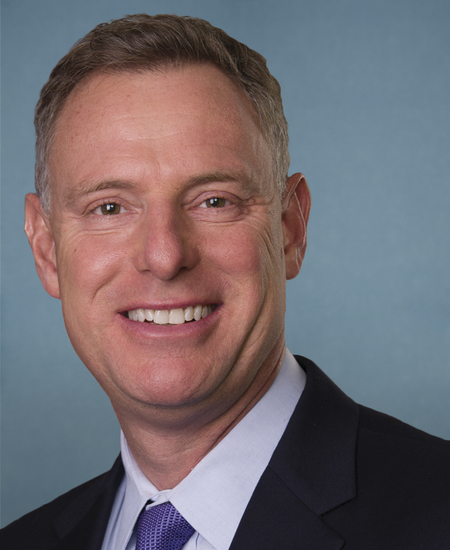
Photo of Scott H. Peters
D United States House · District 50 · California On the 2026 ballot

Rep. Scott H. Peters

Compare
Total votes
2,837
all sessions
Attendance
98%
47 missed
Near the chamber average
With party
96%
of cast votes
Near the chamber average
Bipartisan score
2%
crosses aisle rarely
Near the chamber average
Sponsored
1,573
bills & resolutions
Higher than 80% of chamber peers
Committees
5
assignments
1,573 bills and resolutions

Sponsored bills

Total
1,573
Primary
99
Co-sponsor
1,474
This page
1,573
matching current filters
Co-sponsor HRES 310
In committee · United States House · Co-sponsor
Condemning the inaction by the Islamic Republic of Iran in addressing the poisoning of Iranian schoolgirls, the Daughters of the Iranian Revolution.

This resolution condemns the deliberate gas attacks on schoolgirls in Iran (up to 7,000 schoolgirls were poisoned in at least 290 attacks, according to human rights groups) and Iran's suppression of individuals participating in demonstrations. The resolution also urges the United States to initiate a formal process for an independent investigation and to work with the United Nations in investigating the gas attacks on schoolgirls in Iran.

In committee Apr 20, 2023 1 co-sponsor
Co-sponsor HRES 315
In committee · United States House · Co-sponsor
Expressing support for honoring Earth Day, and for other purposes.

This resolution urges (1) the President to issue a proclamation recognizing Earth Day; and (2) governments and people to continue building upon the Paris Agreement and other efforts to ensure that future generations inherit a livable, sustainable, and ecologically rich planet.

In committee Apr 20, 2023 1 co-sponsor
Co-sponsor HR 2749
In committee · United States House · Co-sponsor
Efficient Grid Interconnection Act of 2023

Efficient Grid Interconnection Act of 2023 This bill establishes requirements concerning (1) the equitable allocation of costs for electric grid upgrades; and (2) the deployment of grid enhancing technology or equipment that increases the capacity, efficiency, or reliability of a transmission facility or transmission system. Specifically, it directs the Federal Energy Regulatory Commission (FERC) to issue regulations that require public electric utilities to allocate the cost of upgrades to the electric grid, such as upgrades to interconnect renewable generation projects, among all customers that benefit from the upgrades. In determining which parties benefit, FERC must consider all material benefits of the network upgrade, including environmental benefits and those that cannot be directly quantified. In addition, FERC must issue regulations that apply to regional transmission organizations, independent system operators, or transmission planning coordinators when they are processing requests to interconnect generation projects or energy storage projects to the electric grid. The regulations must require such organizations, operators, and coordinators to study deploying technology or equipment that increases the capacity, efficiency, or reliability of a transmission facility or transmission system.

In committee Apr 20, 2023 1 co-sponsor
Co-sponsor HR 2777
In committee · United States House · Co-sponsor
School Meals during School Closures Act

Maddy summaryHR 2777, the School Meals during School Closures Act, allows schools to continue providing meals during certain closures without following standard meal program rules. It directly affects schools and meal providers by enabling the Secretary to waive requirements under the National School Lunch Act for closures due to strikes (excluding employer lockouts), weather disasters, public health emergencies, unsafe facilities, construction, or other unanticipated events. The key provision creates a new waiver exception (added to Section 12 of the Act) that skips specific regulatory hurdles normally required for meal services during these closures. This change ensures students can still receive meals when schools close unexpectedly for covered reasons.

In committee Apr 20, 2023 1 co-sponsor
Co-sponsor HRES 269
In committee · United States House · Co-sponsor
Recognizing that it is the duty of the Federal Government to develop and implement a Transgender Bill of Rights to protect and codify the rights of transgender and nonbinary people under the law and ensure their access to medical care, shelter, safety, and economic security.

Maddy summaryHRES 269 is a non-binding resolution passed by the U.S. House of Representatives on March 30, 2023. It recognizes the federal government's duty to develop and implement a Transgender Bill of Rights to protect transgender and nonbinary people. The resolution outlines key provisions, including ensuring access to gender-affirming medical care, ending discrimination in employment and housing, and improving legal recognition of gender identity on government documents. It also calls for addressing systemic barriers in education, safety, and economic security faced by transgender and nonbinary individuals.

In committee Apr 19, 2023 1 co-sponsor
Co-sponsor HR 2725
In committee · United States House · Co-sponsor
Do No Harm Act

Maddy summaryHR 2725, the "Do No Harm Act," amends the Religious Freedom Restoration Act (RFRA) to clarify that RFRA does not apply when federal laws protect against discrimination or promote equal opportunity. It specifically exempts protections under the Civil Rights Act, Americans with Disabilities Act, workplace benefits like leave, child labor safeguards, and healthcare access from RFRA challenges. The bill also clarifies that RFRA does not block private lawsuits between individuals, applying only to cases involving government entities. This amendment ensures that existing federal civil rights and workplace protections remain enforceable under RFRA.

In committee Apr 19, 2023 1 co-sponsor
Co-sponsor HR 2708
In committee · United States House · Co-sponsor
Latonya Reeves Freedom Act of 2023

Maddy summaryThe Latonya Reeves Freedom Act of 2023 strengthens the Americans with Disabilities Act's requirement that individuals with disabilities receive long-term services and supports in community settings rather than institutions. It defines "community-based" services to include specific housing options where individuals with disabilities can live independently with maximum control over their lives, including access to integrated housing, employment, and community participation. The bill requires states to develop transition plans to move people from institutional settings to community-based services within 12 years, with measurable annual targets for reducing institutionalization. It establishes enforcement mechanisms through the Department of Justice and Department of Health and Human Services to ensure compliance with these requirements.

In committee Apr 19, 2023 1 co-sponsor
Primary HR 2722
In committee · United States House · Lead sponsor
Providing Child Care for Police Officers Act of 2023

Maddy summaryThis bill establishes a federal grant program to help states fund child care for the minor children of police officers during their irregular work schedules. It provides competitive grants to states, with 20% reserved for jurisdictions employing fewer than 200 officers, to support law enforcement agencies in creating or expanding child care services. States must match federal funds (10-33% over three years) and use grant money for startup costs, provider training, sick child care, extended hours, or facility construction. The program runs through 2028, requiring annual audits and two federal studies to assess its effectiveness.

In committee Apr 19, 2023 0 co-sponsors
Co-sponsor HR 2726
In committee · United States House · Co-sponsor
Small Business Payment for Performance Act of 2023

Maddy summaryHR 2726, the Small Business Payment for Performance Act of 2023, requires U.S. government agencies to provide small businesses with interim partial payments when they unilaterally change construction contract terms. Specifically, it mandates that agencies pay at least 50% of the estimated additional costs requested by small businesses within the timeframe specified by the contract. The bill also requires small businesses to pass these interim payments to first-tier subcontractors and any lower-tier subcontractors who incurred increased costs due to the contract change. This law applies directly to small business concerns awarded federal construction contracts and takes effect by October 1, 2025, or the start of the next full fiscal year after enactment.

In committee Apr 19, 2023 1 co-sponsor
Co-sponsor HR 2693
In committee · United States House · Co-sponsor
Pay Our Coast Guard Parity Act of 2023

Maddy summaryHR 2693, the Pay Our Coast Guard Parity Act of 2023, ensures Coast Guard members, civilian staff, and qualifying contractors receive pay and benefits during specific funding gaps. It requires Congress to appropriate funds for Coast Guard personnel pay, allowances, and key benefits (like death gratuities and housing allowances) if a Coast Guard-specific funding lapse occurs - when Coast Guard funding isn’t approved before a fiscal year starts but Department of Defense funding is. The bill mandates these payments continue until a full appropriation is enacted or for up to two weeks after the lapse begins, with costs charged to future appropriations. This addresses a gap in funding continuity for Coast Guard personnel during government shutdowns affecting only the Coast Guard.

In committee Apr 19, 2023 1 co-sponsor
Showing 911 to 920 of 1,573 bills
Previous 1 … 91 92 93 … 158 Next