

Maddy summaryThis bill protects living organ donors from insurance discrimination by prohibiting life, disability, and long-term care insurers from denying coverage, raising premiums, or altering policy terms solely because someone donated an organ while alive. It also updates the Family and Medical Leave Act to include recovery from organ donation surgery as a qualifying health condition, allowing donors to take protected leave for this purpose. Additionally, the bill requires the Health and Human Services Secretary to update public educational materials about living donation benefits, risks, and insurance protections within six months of enactment. These changes directly affect living organ donors, insurers, employers, and healthcare systems by ensuring fair access to insurance and workplace leave.
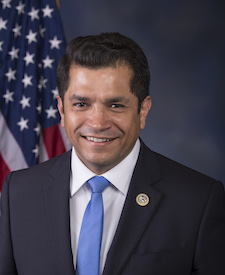
Rep. Jimmy Gomez
Sponsored bills
Maddy summaryHR 2955, the Stop Institutional Child Abuse Act, establishes a Federal Work Group to improve data collection and best practices for youth in residential programs (like therapeutic schools, treatment centers, and group homes). The Work Group, composed of federal agency representatives and diverse stakeholders, must develop national data standards, create risk assessment tools, and issue biennial reports with recommendations to enhance safety, reduce restraints, and expand community-based alternatives. It directly affects youth with mental health, substance use, or disability needs placed in these facilities, as well as agencies overseeing them. The bill also mandates a National Academies study to examine funding, oversight, and barriers to community care. These mechanisms aim to standardize data tracking and promote less restrictive, trauma-informed care for youth in residential programs.
Forced Arbitration Injustice Repeal Act of 2023 or the FAIR Act of 2023 This bill prohibits a predispute arbitration agreement from being valid or enforceable if it requires arbitration of an employment, consumer, antitrust, or civil rights dispute.
Maddy summaryHR 2974 establishes the United States Interagency Council on Housing Affordability and Preservation, a new federal body composed of heads from 21 agencies (including HUD, Treasury, and Justice) to coordinate efforts on affordable housing. The Council’s key duties include developing a national strategic plan for affordable housing within 12 months, reviewing federal housing programs, providing regional support to states and localities to access federal resources, and requiring annual agency reports on housing barriers. It mandates $4.8 million annually for operations (2024-2028) and encourages states to create their own housing councils to align with federal goals. The bill directly affects federal agencies, state/local governments, and low-income renters by improving coordination and access to housing programs, without directly changing housing subsidies or tenant protections.
Performing Artist Tax Parity Act of 2023 This bill modifies the above-the-line tax deduction for the expenses of performing artists (including commissions paid to managers or agents) to provide for a phaseout of such deduction for taxpayers whose adjusted gross income exceeds $100,000 ($200,000 for joint return filers). The $100,000 phaseout threshold is adjusted for inflation annually for taxable years beginning after 2023.
Raise the Age Act of 2023 This bill establishes new restrictions on the sale or transfer of certain semiautomatic firearms to individuals under 21 years of age. Specifically, this bill makes it unlawful for a licensed gun dealer, importer, manufacturer, or collector to sell or deliver a semiautomatic center-fire rifle or semiautomatic center-fire shotgun that has (or has the capacity to accept) an ammunition feeding device with a capacity of more than five rounds to an individual who the licensee knows or has reasonable cause to believe is under age 21. The prohibition does not apply if the individual under age 21 is a full-time law enforcement officer or active-duty member of the Armed Forces. The bill also requires the Federal Bureau of Investigation to report on the operation of its public access line, including a description of information sharing protocols and recommendations for improving such protocols.
Partner with Korea Act This bill creates an E-4 treaty trader visa category for up to 15,000 nationals of South Korea each fiscal year who are coming to the United States solely to perform specialty occupation services, subject to various requirements. The 15,000 limit shall only apply to principal recipients of such visas and not their accompanying spouses or children. (A specialty occupation is one that requires the theoretical and practical application of highly specialized knowledge and a bachelor's degree or higher.)
Maddy summaryThe Fair Housing Improvement Act of 2023 amends the Fair Housing Act to prohibit housing discrimination based on source of income, veteran status, or military status. It defines "source of income" broadly to include housing vouchers, Social Security benefits, child support, and other lawful income sources like savings or gifts. This change directly affects renters using these income types and requires landlords to avoid discrimination. The bill also updates multiple sections of the Fair Housing Act to include these protections and extends the certification period for housing agencies by 40 months.
Ending Qualified Immunity Act This bill eliminates the defense of qualified immunity in certain civil actions for deprivation of rights. Qualified immunity is a judicially created doctrine that protects government officials from being held personally liable for constitutional violations. The bill provides that, under the statute allowing a civil action alleging deprivation of rights under color of state law, it shall not be a defense or immunity to any such action that (1) the defendant was acting in good faith or believed that his or her conduct was lawful at the time it was committed; (2) the rights, privileges, or immunities secured by the Constitution or federal laws were not clearly established at the time of their deprivation; or (3) the state of the law was such that the defendant could not reasonably have been expected to know whether his or her conduct was lawful.
Maddy summaryThe Water Affordability, Transparency, Equity, and Reliability Act of 2023 establishes a new trust fund funded by increasing the corporate tax rate from 21% to 24.5% to support water infrastructure and affordability programs. It allocates funds to clean water programs (42%), safe drinking water funding (42.5%), household water wells (1%), colonias assistance (0.5%), Indian health services (3%), and water operator job training (0.5%). The bill requires the EPA to conduct a study and submit a report on water affordability, discrimination in water services, public participation in regionalization, and data collection related to service disconnections. It includes specific provisions for colonias, household water wells, and job training programs for water system operators to improve water access and equity.