

This resolution states that the House of Representatives (1) rejects hate, discrimination, and antisemitism; (2) stands united with the Jewish people against rising antisemitism; and (3) condemns antisemitic tropes such as claims of dual loyalty.
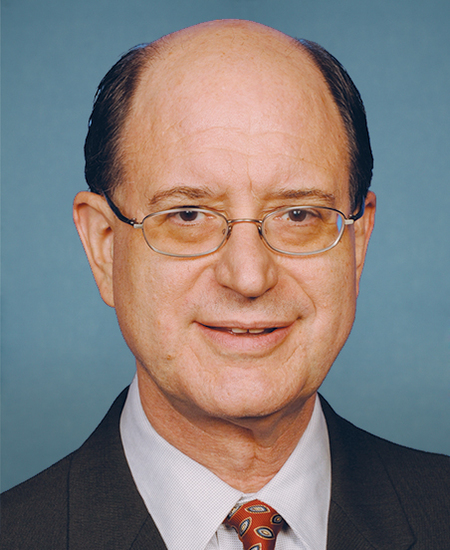
Rep. Brad Sherman
Sponsored bills
Maddy summaryHR 791, the American Music Fairness Act of 2023, requires terrestrial radio stations (AM/FM) to pay royalties for playing music, aligning their payment obligations with those of internet streaming services. It directly affects small local radio stations by establishing low annual fees: $10 for stations with under $100,000 annual revenue, $100 for public broadcasters with $100k-$1.5M revenue, and $500 for other stations in that revenue range. The bill ensures songwriters’ existing royalty rights remain unaffected (Section 6) and mandates that royalty rates for radio be set using economic data, including how radio promotion might impact music sales. This creates a new statutory royalty structure while protecting small broadcasters through tiered, low-cost payment tiers.
This resolution states that the House of Representatives condemns the February 1, 2021, military coup in Burma (Myanmar) and denounces the Burmese military for human rights violations. The resolution calls on the Burmese military to end violence against prodemocracy activists and release political prisoners.
This resolution states that the United Nations Security Council should immediately impose an arms embargo against the military of Burma (Myanmar) and hold it accountable for its ongoing violations of human rights.
Maddy summaryHR 715, the Bipartisan Background Checks Act of 2023, requires background checks for all firearm transfers between private individuals, not just those through licensed dealers. It mandates that unlicensed sellers must involve a licensed dealer to conduct a background check before transferring a firearm, with exceptions for family transfers (like spouses or parents/children), law enforcement, temporary safety transfers, and certain hunting or range activities. The bill also requires licensed dealers to provide a notice and certification form in both English and Spanish to buyers. It explicitly states it won't create a national gun registry or override state laws on the same topic. The law would take effect 180 days after enactment.
Repatriate Our Patriots Act This bill protects certain veterans of the Armed Forces from removal from the United States and provides such veterans with an expedited procedure for naturalization. The bill applies to special veterans , defined as persons who served in the active Armed Forces who were (1) honorably discharged or released; (2) not convicted of various crimes, including voluntary manslaughter, murder, rape, or terrorism; and (3) not a child abuser or pedophile. Special veterans may not be removed from the United States, and the Department of Homeland Security (DHS) must cancel any pending removal proceedings or orders against any such veterans. DHS must also establish a program to permit such veterans who were already removed from the United States to return to as lawful permanent residents. Special veterans shall be naturalized upon filing an application, paying the relevant fees, and taking an oath of allegiance. DHS must take steps to ensure such naturalization applications are pending for no longer than 90 days.
Maddy summaryHR 709, the Muhammad Ali Congressional Gold Medal Act, authorizes Congress to award Muhammad Ali a gold medal in recognition of his life and achievements. The bill directs the Secretary of the Treasury to strike a gold medal for presentation by congressional leaders, which will then be given to Ali's widow, Lonnie Ali. Duplicate bronze medals may be sold to cover production costs, with proceeds deposited into the U.S. Mint fund. This is a commemorative measure, not a policy change affecting laws or programs.
Choosing Our Own Lives Over Fast Firearms Act or the COOL OFF Act This bill establishes a three-day waiting period for certain handgun transfers. Specifically, the bill makes it unlawful for a licensed importer, manufacturer, or dealer to sell or transfer a handgun to an unlicensed individual unless three business days have elapsed since the licensee initiated a background check. A violator is subject to criminal penalties—a fine, up to one year in prison, or both. Additionally, the bill makes it unlawful for an unlicensed individual to receive a handgun from another unlicensed individual unless at least three business days have elapsed since the recipient most recently offered to take possession of the handgun. A violator is subject to criminal penalties—a fine, up to five years in prison, or both. The three-day waiting period does not apply to certain handgun transfers, such as for a loan between spouses for a lawful purpose.
Maddy summaryHR 660, "Ethan's Law," requires gun owners in homes where minors (under 18) or individuals prohibited from owning firearms under federal/state law reside to store firearms securely. It makes unsecured storage unlawful if a minor or prohibited person could access the firearm, with fines of $500 per violation and enhanced penalties (up to 5 years in prison) if injury or death occurs. The bill also establishes a federal grant program to help states implement similar secure storage laws and provides funding incentives for states that already have such laws in place.
Maddy summaryThis bill requires Congress to declare war before the U.S. can conduct a first-use nuclear strike - meaning a nuclear attack launched without prior nuclear retaliation against the U.S., its territories, or allies. It prohibits using federal funds for such strikes unless explicitly authorized by a congressional declaration of war. The bill directly affects the President’s authority to order nuclear weapons use and the military’s execution of such orders, reinforcing constitutional war powers. It defines "first-use" strictly to prevent unilateral action absent congressional approval, aiming to create a clear legal check on nuclear decision-making.