

Stop the Cartels Act This bill addresses various issues including matters relating to immigration, law enforcement cooperation with Mexico, and drug cartels. The bill bars federal financial assistance for state or local jurisdictions that (1) restrict compliance with immigration detainers issued by the Department of Homeland Security, or (2) have any law or policy that violates immigration laws. Furthermore, under this bill, the detention of alien minors must be governed by specified sections of the Immigration and Nationality Act and not any judicial decree or settlement. (A 1997 settlement agreement imposes requirements related to the treatment of such minors, including limits on how long they may be detained under certain conditions.) The bill also makes various changes to asylum applications, including by (1) increasing the burden that an asylum applicant must meet to establish a credible fear of persecution, and (2) establishing refugee application and processing centers in Central America. In addition, certain Department of State and U.S. Agency for International Development assistance may not be made available to Mexico's government until the State Department certifies that Mexico has removed certain barriers to law enforcement cooperation and intelligence sharing between the United States and Mexico. The bill also establishes the foreign Special Transnational Criminal Organization designation and establishes penalties related to designated organizations, such as making it a crime to knowingly provide material support to such an organization. The State Department must designate specified organizations, including the Sinaloa Cartel, with the designation, and may designate other organizations that fit criteria established in this bill.
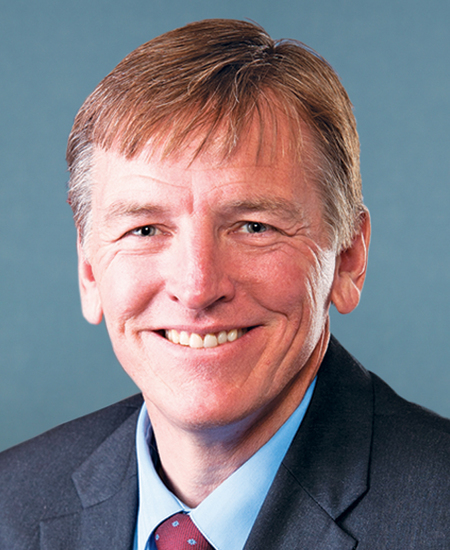
Rep. Paul A. Gosar
Sponsored bills
Body Armor Safety Act of 2022 This bill requires body armor (for use by law enforcement) to comply with certain safety requirements in order to be imported into the United States. It also establishes new criminal offenses related to fraud in connection with such body armor.
Shall Not Be Infringed Act This bill repeals the Bipartisan Safer Communities Act, which was signed into law on June 25, 2022. The act makes various changes to federal firearms laws, including to expand background check requirements, broaden the scope of existing restrictions, and establish new criminal offenses. The act also reauthorizes, funds, and supports various programs, grants, and activities to promote access to behavioral and mental health services, enhance school safety and security initiatives, and address gun violence in communities.
Maddy summaryThis bill proposes adding a death penalty provision for individuals convicted of knowingly distributing fentanyl that causes a death. It amends the Controlled Substances Act to make the death penalty or life imprisonment mandatory for those violating fentanyl distribution laws (sections 401(a)(1) or 416) when a death results. The key mechanism is establishing capital punishment as a potential sentence for fentanyl-related deaths, alongside fines under federal law. It directly affects individuals convicted of fentanyl distribution resulting in fatalities, not the general public or other drug offenses.
Maddy summaryHR 8196, the "Protecting Mothers and Babies from Terrorism Act," designates the groups Jane’s Revenge and Ruth Sent Us as domestic terrorists under existing law (18 U.S.C. §2331), based on their claimed responsibility for vandalism and arson targeting pregnancy centers and related facilities in 2022. The bill does not create new protections for mothers or babies but formally classifies the conduct described in its findings as domestic terrorism. It directly affects the legal status of these groups under federal terrorism statutes. The bill’s sole action is this designation, using current definitions without introducing new policy changes.
Fourth Amendment Restoration Act This bill limits surveillance conducted for foreign intelligence purposes. Specifically, the bill repeals provisions authorizing without a court order various types of searches and surveillance for foreign intelligence purposes, including electronic surveillance and access to business records. An officer of the U.S. government must obtain a warrant for certain search and surveillance activities against a U.S. citizen, including (1) conducting electronic surveillance, (2) conducting physical searches of property under a U.S. citizen's exclusive control, or (3) targeting a U.S. citizen to acquire foreign intelligence information. The bill provides for criminal penalties for a person who knowingly violates these requirements or otherwise obtains such information under color of law without statutory authorization. Information about a U.S. citizen acquired under Executive Order 12333 (relating to intelligence gathering) or during surveillance of a non-U.S. citizen shall not be used against the U.S. citizen in any civil, criminal, or administrative proceeding or investigation.
Fighting Foreign Influence Act This bill addresses foreign influence in federal elections. For example, the bill (1) requires tax-exempt charitable organizations to disclose in annual reports contributions and gifts exceeding $50,000 received from foreign governments and foreign political parties; and (2) prohibits any individual from registering or otherwise serving as the agent of a foreign principal if the individual at any time served as a Member of Congress, a senior political appointee, or a general or flag officer of the Armed Forces.
This bill nullifies the executive order that was published on March 10, 2021, and established requirements for expanding access to voter registration and election information.
Public Servant Protection Act of 2022 This bill allows government officials to demand that persons and interactive computer service providers (e.g., social media companies) remove certain forms of their personal information from the internet. Specifically, a federal, state, territorial, tribal, or local government official may make a demand in writing for the removal of the official's (or an immediate family member's) home address or home phone number that is publicly displayed online. Within 48 hours of receiving a demand, a person displaying the address or phone number online must remove it and may not publicly display a removed address or phone number online during the 4-year period following receipt of the demand. A provider must also remove within 48 hours of receiving a demand the address or phone number publicly displayed through its service. Officials may sue a person or provider for failing to remove an applicable address or phone number. Courts may award to an aggrieved official injunctive relief, the greater of actual damages or $1,000, and reasonable costs and attorney's fees.
Border Safety and Security Act of 2022 This bill requires the Department of Homeland Security (DHS) to suspend the entry of any non-U.S. nationals ( aliens under federal law) without valid entry documents during any period when DHS cannot detain such an individual or return the individual to a foreign country contiguous to the United States. A state may sue DHS to enforce this requirement. (Under current law, non-U.S. nationals who arrive at the border without entry documents are generally subject to expedited removal. However, if such an individual is found to have a credible fear of persecution, they are typically subject to detention while their asylum claim is being considered.) The bill also authorizes DHS to suspend the entry of non-U.S. nationals without entry documents at the border if DHS determines that such a suspension is necessary to achieve operational control over such a border.