

Protecting American Sovereignty Act This bill prohibits the federal government from implementing any obligations upon the United States that may be contained in a draft report by a World Health Organization (WHO) working group on strengthening the WHO's preparedness and response to health emergencies. This prohibition shall also apply to any related or successor reports and recommendations regarding pandemics.
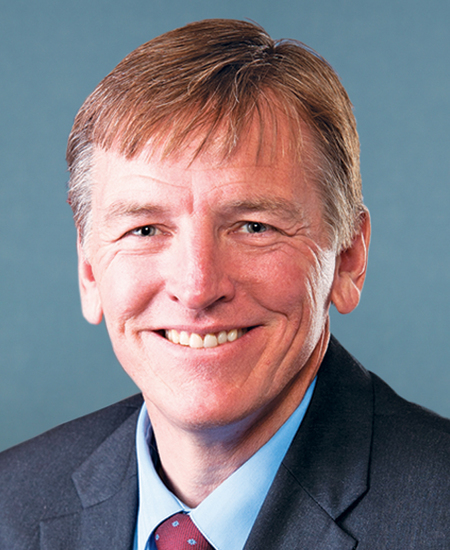
Rep. Paul A. Gosar
Sponsored bills
Maddy summaryThis bill requires the U.S. State Department to officially designate four specific Mexican drug cartels (Gulf Cartel, Cartel Del Noreste, Cartel de Sinaloa, and Cartel de Jalisco Nueva Generacion) as foreign terrorist organizations under existing law. It mandates a 30-day report explaining why these groups meet the legal criteria for such designation, including justification if they don't. The report must be submitted to specified congressional committees and may lead to additional cartels being designated based on the findings. The bill also clarifies that this designation won't affect asylum eligibility for individuals fleeing these groups.
No taxpayer funding for United Nations Human Rights Council Act This bill requires the Department of State to withhold from the U.S. contribution to the United Nations (U.N.) the amount that would be allocated to the U.N. Human Rights Council. Such withheld funds must be rescinded and must not be considered arrears to be repaid to the United Nations. The bill also prohibits the State Department from making voluntary contributions to the U.N. Human Rights Council.
Maddy summaryThis bill adds the death penalty as a possible punishment for individuals who knowingly distribute fentanyl and cause a death. It directly affects people convicted of distributing fentanyl under federal law when their actions result in a fatality. The key provision amends the Controlled Substances Act to require courts to consider the death penalty (or life imprisonment) alongside fines for such offenses. The law applies specifically to fentanyl distribution cases where a death occurs, not to general possession or other drug offenses.
Reprioritizing Unserved Rural Areas and Locations for Broadband Act of 2023 or the RURAL Broadband Act of 2023 This bill restricts the use of Rural Utilities Service grants or loans to deploy broadband infrastructure that would overbuild or otherwise duplicate existing broadband networks.
Maddy summaryThe POWER Act of 2023 prevents the President from blocking or delaying new oil, gas, coal, or mineral leases on federal lands without explicit Congressional approval. It specifically stops executive actions that would delay or cancel permits for energy development on National Forests, public lands, the outer continental shelf, or energy-managed lands. The bill requires Congress to pass new laws if it wants to restrict energy leasing or withdraw land from development under existing federal land laws. This directly affects energy companies seeking to develop resources on federal property by limiting executive authority over lease approvals.
Maddy summaryHCONRES 21 is a non-binding congressional resolution directing the President to withdraw all U.S. Armed Forces from Syria within 180 days of the resolution's adoption. It applies directly to U.S. military personnel stationed in Syria and relies on Section 5(c) of the War Powers Resolution, which requires the President to withdraw forces if Congress passes such a resolution. The bill’s key mechanism sets a clear 180-day deadline for removal, without creating new legal obligations. This is a procedural step to express congressional intent on military deployment, not a law altering troop presence. (Adopted March 1, 2023)
Maddy summaryHJRES 41 disapproves a Department of Homeland Security (DHS) rule that expanded the "public charge" standard, which previously allowed officials to deny visas or green cards to immigrants likely to use public benefits like Medicaid or housing assistance. This resolution would nullify the rule (published in the Federal Register as 87 Fed. Reg. 5547), meaning it could no longer be enforced against immigrants applying for U.S. entry or residency. The bill directly affects noncitizens seeking visas, green cards, or adjustment of status who might use public benefits, as the rule had broadened the criteria for denying their applications. As a disapproval resolution under the Congressional Review Act, it stops the rule from taking effect without creating new immigration law.
Maddy summaryThis bill expands the use of 529 college savings accounts to cover career training and credentialing costs. It allows funds to pay for tuition, fees, books, and testing expenses related to recognized postsecondary credential programs (like vocational certifications) that meet specific standards under the Workforce Innovation and Opportunity Act. The change directly affects workers seeking industry-recognized credentials - such as nursing certifications or IT certifications - instead of traditional degrees. It treats these expenses the same as traditional college costs for 529 account withdrawals, making it easier to save for career-focused training. The provision applies to expenses paid after the bill's enactment date.
Maddy summaryHR 1469 prohibits the Secretary of Defense from requiring mask-wearing on U.S. military installations to prevent COVID-19 spread. This bill directly affects military personnel, contractors, and visitors on all military bases within the United States. The key provision explicitly blocks the Department of Defense from implementing mask mandates for COVID-19 prevention on these installations. It does not address other public health measures or apply to civilian areas.