

Save America's Forgotten Equines Act of 2025 or the SAFE Act of 2025 This bill permanently prohibits the slaughter of equines (e.g., horses and mules) for human consumption. (Current law prohibits the slaughter of dogs and cats for human consumption. This bill extends the prohibition to equines.) Specifically, this bill prohibits a person from knowingly (1) slaughtering an equine for human consumption; or (2) shipping, transporting, possessing, purchasing, selling, or donating an equine to be slaughtered for human consumption or equine parts for human consumption. The bill subjects a violator to a fine. The bill applies to conduct in or affecting interstate or foreign commerce or within the special maritime and territorial jurisdiction of the United States. However, it does not apply to an activity carried out by an Indian for a religious ceremony. As background, in recent years, the appropriations acts have prohibited the Department of Agriculture (USDA) from using federal funds to inspect horses before they are slaughtered for human consumption. Therefore, there are currently no USDA-inspected horse slaughter facilities in the United States.
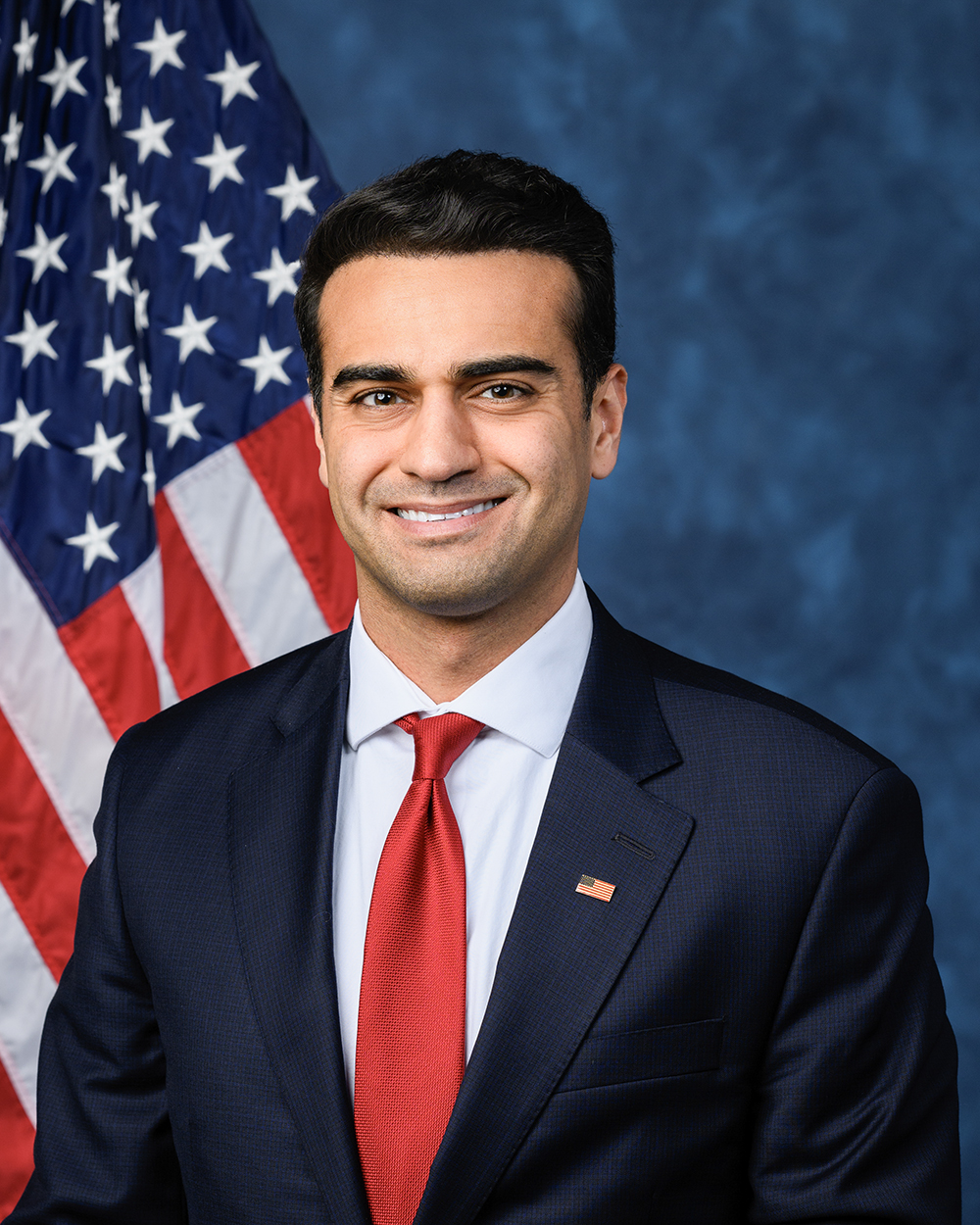
Rep. Abraham J. Hamadeh
Sponsored bills
Maddy summaryThis bill amends the tax code to allow health savings account (HSA) funds to be used tax-free for funeral expenses of the account holder. It defines covered expenses broadly - including burial, cremation, caskets, funeral services, and related costs - and sets a $5,000 annual limit per person. Expenses incurred within 90 days of the account holder’s death can be treated as if paid before death. The change applies to distributions after the bill’s enactment for eligible taxable years.
Maddy summaryThe SHORT Act (HR 2395) redefines federal firearm definitions to exclude antique and collector firearms from being classified as firearms, and removes distinctions between short-barreled rifles and shotguns in federal regulations. It prevents state laws from imposing taxes or registration requirements on short-barreled rifles and shotguns, requiring state rules to align with federal compliance instead. The bill also mandates the federal government to destroy specific records related to these firearms within one year of enactment.
Maddy summaryThe Freedom from Unfair Gun Taxes Act of 2025 would prohibit states and local governments from imposing taxes on the sale of firearms, ammunition, or firearm parts during interstate or foreign commerce. This bill directly affects state tax policies and manufacturers or dealers selling these items across state lines. It explicitly states that the bill does not change the existing federal tax on firearms and ammunition that funds wildlife conservation programs. The key provision bans state-level taxes for these sales in interstate transactions while preserving current federal funding mechanisms.
Maddy summaryThis bill requires colleges receiving federal financial aid to prohibit events promoting antisemitism, using the International Holocaust Remembrance Alliance's 2016 working definition (including contemporary examples). It bans institutions from authorizing, funding, or otherwise supporting such events on campus. The policy change applies directly to all higher education institutions covered by the Higher Education Act of 1965. This amendment modifies existing federal funding requirements for colleges.
Maddy summaryThe SAVE Act requires the Department of Veterans Affairs (VA) to submit an annual report to Congress detailing its accreditation process for representatives who assist veterans with benefit claims. The report must cover training requirements, data collection methods, verification procedures, database accuracy, staffing, costs, and denial rates for accreditation applications. It also establishes a certification mark for accredited representatives and imposes civil penalties for fraudulent use of the mark, while mandating regular updates to the VA’s public database of accredited representatives. This directly affects VA administrators, veterans’ representatives, and the transparency of the accreditation system.
Maddy summaryHRES 254 is a non-binding resolution recognizing the 250th anniversary of the United States Marine Corps, to be observed on November 10, 2025. The resolution honors the Corps' founding at Tun Tavern in Philadelphia on November 10, 1775, its history of service in major conflicts, and its values of honor, courage, and commitment. It encourages public participation in commemorative events and local recognition of Marines' contributions to national defense.
Maddy summaryHRES 251 is a symbolic resolution recognizing the 250th anniversary of Morocco’s 1777 recognition of the United States, marking the oldest continuous diplomatic relationship in U.S. history. It highlights historical milestones like the 1787 Treaty of Marrakech and Morocco’s gift of the Tangier American Legation, while acknowledging current ties including the U.S.-Morocco Free Trade Agreement and security cooperation. The resolution does not create new laws or affect any individuals or policies; it solely expresses congressional recognition of this longstanding partnership. It affirms the relationship’s importance for mutual economic, security, and cultural interests without proposing any concrete action. This is a commemorative measure with no binding effect on government operations or constituents.
Maddy summaryThe Knife Owners’ Protection Act of 2025 allows individuals legally permitted to possess knives in their state to transport them interstate between locations where they may lawfully possess them, provided knives are stored securely (e.g., locked in a container for vehicles or air travel). It specifically permits knives in temporary lodging overnight and exempts certain emergency tools (like seatbelt cutters) from storage rules in vehicles. The bill prohibits state arrests for compliant transport and requires states to prove non-compliance in criminal cases, while allowing knife owners to use this law as a legal defense. It explicitly does not override existing state knife possession laws or impose new air travel restrictions beyond locked container requirements.
Maddy summaryThis bill establishes the Congressional Fitness Challenge, a national program promoting physical fitness for students aged 6-17 in public, private, or home schools. It requires five standardized fitness tests (1-mile run, pull-ups, curl-ups, shuttle run, and sit-and-reach) administered by certified fitness professionals, with performance benchmarks set by age and gender. Participants meeting these benchmarks receive a certificate signed by congressional leaders, with recognition levels (Bronze, Silver, Gold) based on percentile performance relative to peers. The program is funded through existing congressional allowances for Members of Congress to organize local events, overseen by the House Administration and Senate Rules committees.