

Maddy summaryThis bill withholds federal grant funding from states or local governments that implement specific policies. It prohibits funding for jurisdictions with laws that substantially limit cash bail for certain serious crimes (like violent offenses or public disorder) or allow felony convicts to be released without bail. It also blocks funding for cities classified as "urbanized areas" that reduced police budgets (unless due to a general budget shortfall). The policy directly affects local governments and states that adopt these specific approaches to criminal justice or law enforcement funding. The bill modifies two existing federal grant programs to enforce these eligibility rules.
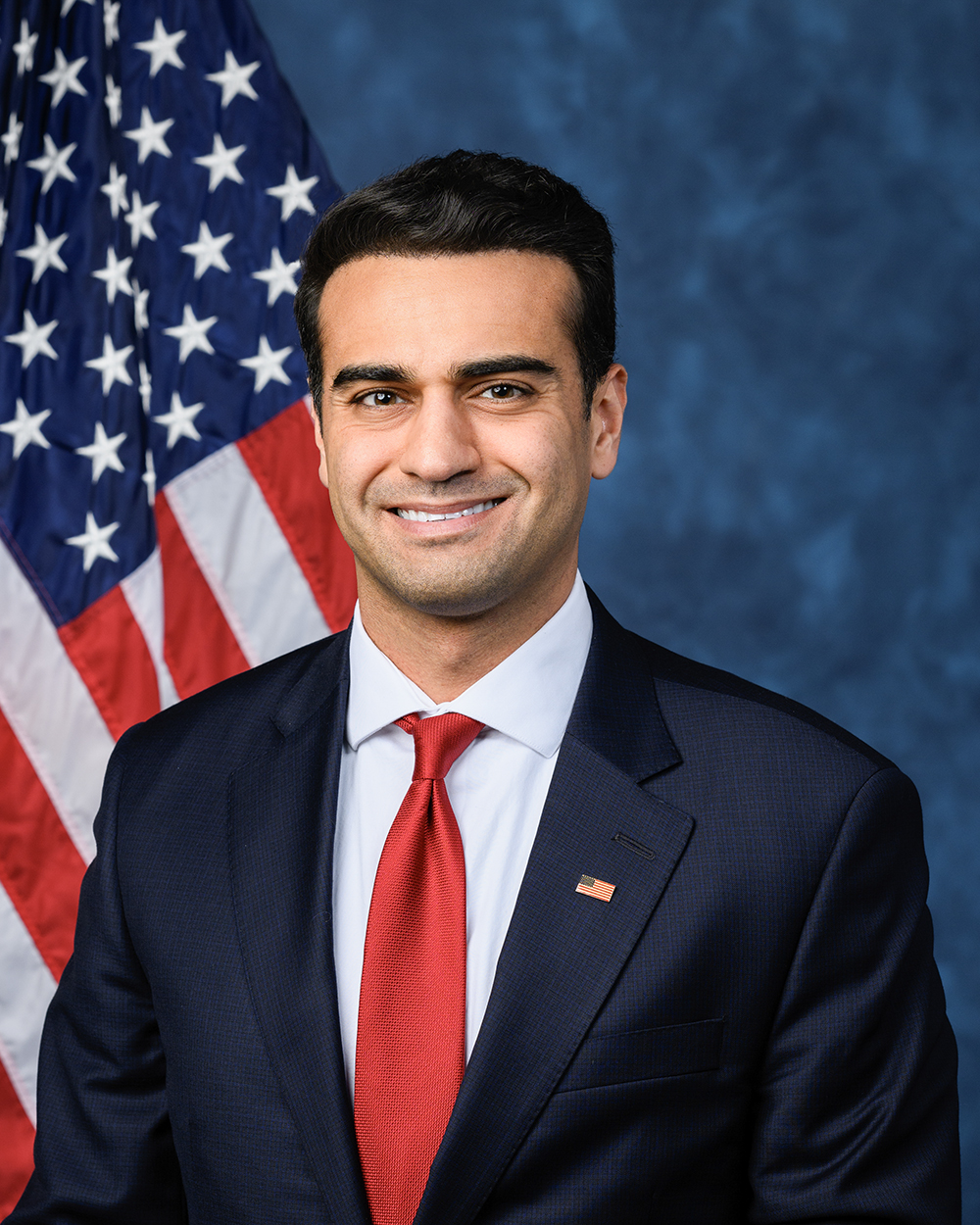
Rep. Abraham J. Hamadeh
Sponsored bills
Maddy summaryHR 5580, the Charlie Kirk Commemorative Coin Act, authorizes the U.S. Mint to produce 400,000 $1 silver coins in 2026 to honor Charlie Kirk, founder of Turning Point USA, who died in 2025. The coins must feature Kirk's image on the obverse and "well done, good and faithful servant" on the reverse, with standard minting specifications. They will be sold at face value plus production costs to collectors, with no net cost to the government. This bill has no policy impact beyond commemoration; it affects only the U.S. Mint and coin collectors.
Maddy summaryHRES 719 is a House resolution honoring Charles "Charlie" James Kirk, the founder of Turning Point USA who was assassinated on September 10, 2025. The resolution condemns his assassination and all political violence, extends condolences to his family, and calls on Americans to reject violence while promoting civil discourse. It specifically recognizes Kirk's legacy as a defender of constitutional principles and his role in inspiring youth through free speech and faith-based civic engagement. As a commemorative resolution, it does not enact policy changes but formally expresses the House's stance on honoring his life and legacy.
Maddy summaryThis bill prohibits U.S. courts from enforcing judgments based on Shari'a or any foreign law if they conflict with constitutional rights, particularly in family law cases like divorce, child custody, or inheritance. It requires courts to apply only U.S. law when foreign legal systems would violate fundamental rights such as due process, equal protection, or freedom from coercion. Contracts may still reference foreign law, but enforcement is blocked if it infringes constitutional protections. The law aims to ensure all court decisions comply with U.S. constitutional standards nationwide.
Maddy summaryHRES 744 is a non-binding House resolution supporting the designation of September 21-27, 2025, as "Gold Star Families Remembrance Week." It honors families who lost members in military service (Gold Star Families) and families of veterans, recognizing their sacrifices. The resolution encourages Americans to observe the week through community service and by celebrating the lives of those who died defending the U.S. It does not create new laws or policies but formally recognizes these families annually. This is a commemorative measure, not a legislative change.
Maddy summaryHR 5459 adjusts the Congressional summer schedule by moving the start of the summer break from July 31 to June 30 and ending the break earlier, shifting the end date from Labor Day to the first Monday in August. This procedural bill directly affects Congress's calendar, changing when lawmakers return from summer recess. The amendments take effect when the second session of the 119th Congress convenes. It does not alter policy or impact the public.
Maddy summaryHR 5401, the Pay Our Troops Act of 2026, ensures military personnel, civilian Defense workers, and supporting contractors receive pay during government funding gaps in fiscal year 2026. It appropriates emergency funds for active-duty service members, reserves, and their supporting personnel (including Coast Guard staff under DHS) if regular appropriations aren't enacted by the end of the fiscal year. The bill provides necessary pay and allowances during any period when full-year funding is unavailable, covering both active service and support roles. Funding expires when regular appropriations are passed, a funding resolution is enacted, or January 1, 2027, whichever comes first. This is a procedural measure to prevent pay delays for military and support staff during fiscal year 2026 funding lapses.
Maddy summaryHR 3767, the Health Professionals Scholarship Program Improvement Act of 2025, requires the Department of Veterans Affairs (VA) to guarantee full-time clinical employment contracts for scholarship participants within 90 days of completing their training. These contracts must be at VA facilities with the highest need, offering competitive salaries and benefits consistent with VA standards. The bill mandates biannual reports to Congress on implementation until September 30, 2027, to track compliance with the new employment requirement. This directly affects health professionals who complete VA scholarship programs by ensuring post-graduation job placement. The key mechanism is the mandatory 90-day employment guarantee for participants, replacing previous processes.
Maddy summaryHR 2334, the Servicemember Residence Protection Act, amends the Servicemembers Civil Relief Act to prevent state "squatter's rights" laws from applying to properties owned by active-duty military members. The bill specifically blocks states from allowing squatters to claim ownership of a servicemember's home during the member's period of military service. This directly protects deployed servicemembers and their families by ensuring their property rights remain secure while they serve. The key mechanism is a new federal provision (Section 301A) that overrides conflicting state laws for military-owned properties occupied by squatters during active service.
Maddy summaryThis bill modifies the Edith Nourse Rogers STEM Scholarship program for veterans. It reduces the maximum months of scholarship use from 60 to 45 and lowers the required benefit usage threshold from 90% to 67.5% for certain veterans. The changes prioritize veterans who have used the most months of their regular education benefits and those pursuing STEM degrees. Veterans must now exhaust all their regular education benefits under Chapter 33 before accessing this scholarship, as specified in new subsection (d)(5). The bill directly affects veterans using education benefits to pursue STEM fields.