

Maddy summaryThis resolution formally recognizes the value of the Greenhouse Gas Reporting Program, a federal system that requires over 8,000 industrial facilities to submit data on their emissions. The bill highlights how this program provides transparent information on pollution sources to help government agencies, researchers, and communities make informed decisions about public health and environmental protection. It specifically notes that the data collected supports efforts to address climate change and protects vulnerable populations who are disproportionately affected by air pollution. The measure does not create new laws or regulations but serves to express support for the existing reporting requirements and their role in maintaining scientific integrity.
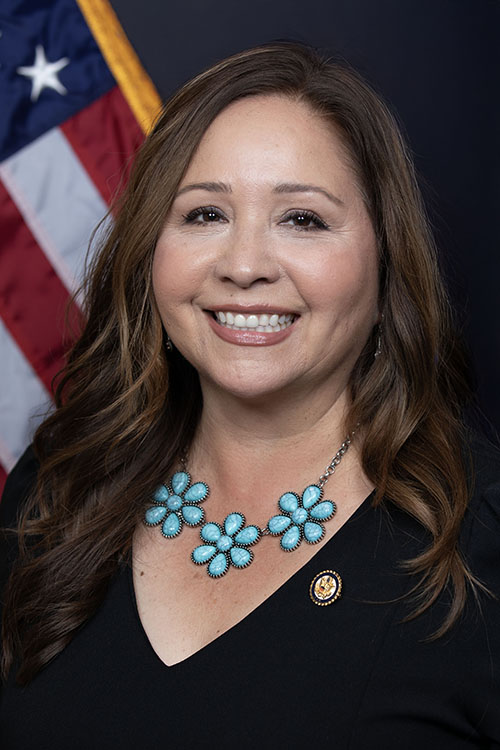
Rep. Adelita S. Grijalva
Sponsored bills
Maddy summaryThis bill, known as the PFAS Cleanup Act, aims to address the health and economic costs of per- and polyfluoroalkyl substances by introducing two main financial mechanisms. First, it imposes a 45% excise tax on the sale of PFAS chemicals by manufacturers, producers, and importers starting in 2027. Second, it creates a tax credit for public water systems that spend money removing PFAS from drinking water when contamination levels exceed EPA safety limits. The revenue from the tax is intended to help fund cleanup efforts, while the credit encourages water providers to remediate hazardous pollution.
Maddy summaryThe Reward Work Act prohibits companies from buying back their own stock on public exchanges while requiring at least one-third of corporate board members to be elected by employees. Under this bill, corporations would need to hold one-employee-one-vote elections to select these worker representatives, with the Securities and Exchange Commission tasked with creating rules to ensure fair and democratic processes. The legislation specifically targets publicly traded companies and their boards of directors, aiming to increase worker influence in corporate governance through direct election mechanisms.
Maddy summaryThe CHARTER Act aims to ensure that public funds for charter schools are not used to generate profits for for-profit companies. It directly affects charter schools receiving federal money by prohibiting them from contracting with for-profit entities to run, manage, or oversee their daily operations. While the bill allows schools to hire for-profit vendors for specific services like food, supplies, and transportation, it strictly bans contracts where a for-profit company controls the school or takes a cut of its revenue. These rules will only apply to new or renewed contracts made after the law is passed, with full enforcement beginning three years later.
Maddy summaryThe No WAR Act prohibits Congress from using budget reconciliation procedures to fund military hostilities against Iran unless such actions are explicitly authorized by a formal declaration of war or a specific authorization for the use of military force. This legislation directly affects the legislative process by establishing a point of order that blocks any reconciliation bill attempting to provide budget authority for offensive military operations, strikes, or covert actions targeting Iranian military forces, territory, or government institutions. The bill also defines proxy forces as any foreign military or irregular groups operating with U.S. direction or material support, ensuring these entities are included in the restrictions on unauthorized funding. By amending the Congressional Budget and Impoundment Control Act, the measure aims to prevent the use of budgetary shortcuts to bypass the constitutional requirement for congressional approval before engaging in armed conflict with Iran.
Maddy summaryThis bill, titled the Protecting Human Rights and Public Health in Foreign Assistance Act, aims to cancel specific regulations issued by the Department of State. It directly affects the federal government by prohibiting any department or agency from enforcing, implementing, or proposing rules related to protecting life, combating discriminatory equity ideology, and combating gender ideology in foreign aid programs. The legislation treats these cancelled rules as if they never existed, effectively nullifying their impact on future foreign assistance policies.
Maddy summaryThis bill, known as the Lowering Utility Bills Act, aims to reduce electricity and natural gas costs by regulating how utility companies calculate their profits and what expenses they can pass on to customers. It requires transmission providers and investor-owned utilities to determine a reasonable profit range based on historical stock market returns from academics, large financial institutions, and major global banks, then generally limits their authorized profit to the lowest point in that range. Additionally, the legislation bans utilities from recovering specific costs in customer rates, including lobbying fees, political contributions, executive travel, and entertainment expenses. The bill also mandates that utilities prioritize lower-cost grid technologies in their planning and requires them to publicly justify any decision to use a higher profit rate than the standard minimum.
Maddy summaryThis bill requires U.S. Immigration and Customs Enforcement to limit the use of short-term holding facilities to a maximum of 12 hours for detainees, unless specific exceptional circumstances like medical emergencies or natural disasters occur. To enforce this rule, the Department of Homeland Security must ensure facilities remain safe and provide meals every six hours, along with constant access to water and appropriate food for vulnerable individuals such as minors and pregnant women. The legislation also mandates that officials document any instances where a detainee is held longer than 12 hours and submit annual reports to Congress detailing the number of such cases, their duration, and the reasons given for the extended custody. Additionally, the Department's Inspector General will conduct periodic audits to verify compliance with these new standards.
Maddy summaryThe Living Wage For All Act raises the federal minimum wage in a tiered schedule, requiring large corporations to reach $25 per hour by 2031 while giving smaller businesses a longer timeline to catch up. Once the standard is met, the law automatically indexes the minimum wage to two-thirds of the national median hourly wage to ensure it keeps pace with economic changes. The bill also eliminates the lower minimum wage for tipped employees and youth workers, phasing them out until they match the general standard, and extends similar protections to incarcerated workers. Additionally, the legislation restricts the issuance of special minimum wage certificates for workers with disabilities and mandates that employers provide technical assistance during the transition period.
Maddy summaryThe Long-Term Care Workforce Support Act aims to address the severe shortage and low wages of direct care professionals who support older adults and people with disabilities by increasing Medicaid funding, expanding training grants, and establishing new federal labor protections. To improve compensation and retention, the bill allows states to receive additional Medicaid funds if they implement specific workforce improvements, such as raising wages, providing paid leave, and ensuring stable scheduling, while also creating a national strategy to calculate fair labor costs. The legislation introduces comprehensive worker rights, including a requirement for written employment agreements, fair scheduling with advance notice, paid sick time, and a federal standard to prevent workplace violence. Furthermore, the bill establishes multiple grant programs to fund training, career advancement, and diversity initiatives, alongside a new commission to develop national training standards and a technical assistance center to address inequities within the workforce.