

Maddy summaryHR 4709, the U.S.-Israel Anti-Killer Drone Act of 2023, amends a reporting requirement in the National Defense Authorization Act to enhance U.S.-Israel cooperation on countering Iranian drone threats. The bill requires the Secretary of Defense to submit a report within 180 days detailing the status of joint efforts to develop and deploy counter-drone technologies, including assessments of current capabilities and proposed policy changes. It also increases funding for this cooperation from $40 million to $55 million annually. The bill directly affects U.S. and Israeli military operations by mandating formal coordination to address Iran’s growing arsenal of armed drones, which have been used against U.S. allies like Israel and Saudi Arabia. This is a procedural bill focused on improving existing coordination, not on new weapons or sanctions.
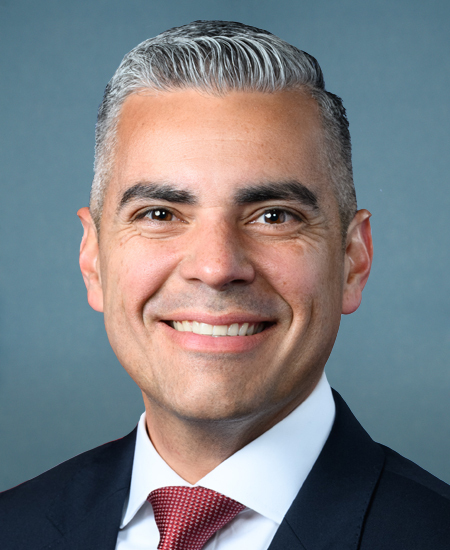
Rep. Juan Ciscomani
Sponsored bills
Maddy summaryHR 4721, the Main Street Tax Certainty Act, makes a permanent the 20% tax deduction for eligible small business owners under Section 199A of the tax code. This provision directly affects pass-through business owners (like S-corps, partnerships, and sole proprietorships) who qualify for the deduction. The bill achieves this by removing the temporary expiration language (subsection (i)) from the existing tax code provision. The key change is ending the need for annual congressional extensions of this deduction, providing long-term tax certainty for small businesses.
Maddy summaryThis bill, HR 1282 (Major Richard Star Act), expands benefits for certain military retirees by allowing them to receive both veterans' disability compensation and military retirement pay simultaneously. It specifically affects combat-related disabled retirees under Chapter 61 of the military retirement system who have fewer than 20 years of service. The key change removes the automatic reduction of military retirement pay when these retirees also receive disability compensation, as amended in Section 1413a(b)(3) of Title 10. Technical updates to the law’s structure and effective date (starting after enactment) complete the provisions.
Maddy summaryHR 4643, the Nogales Wastewater Improvement Act of 2023, limits the cost share for the City of Nogales, Arizona, on a shared wastewater infrastructure project. It specifies that the city's financial responsibility covers only the treatment and conveyance of its own wastewater, excluding costs related to wastewater originating in Nogales, Sonora, Mexico. The bill transfers ownership of the International Outfall Interceptor pipeline to the U.S. Section of the International Boundary and Water Commission (IBWC) after required agreements with Arizona authorities, and authorizes $6.5 million for IBWC operations in 2025 plus $2.5 million annually thereafter. It also mandates construction of a debris screen at Manhole One to intercept drug bundles from Mexico, with $8 million allocated for this in 2025 and ongoing maintenance funding. The changes take effect October 1, 2024.
Maddy summaryThe Choice in Affordable Housing Act of 2023 (HR 4606) aims to increase landlord participation in the Housing Choice Voucher program, particularly in high-opportunity neighborhoods (census tracts with poverty rates below 20%), by providing new financial incentives. Key provisions include one-time payments to landlords (up to 200% of monthly rent) for leasing to voucher holders in low-poverty areas, security deposit assistance for tenants, and bonuses for public housing agencies employing dedicated landlord liaisons. The bill establishes a $100 million annual fund (Herschel Lashkowitz Housing Partnership Fund) to support these initiatives and requires annual reports tracking landlord participation and unit distribution in high-opportunity areas. These changes directly affect low-income renters seeking housing in quality neighborhoods and landlords in underserved areas.
Maddy summaryThe Afghan Adjustment Act creates a pathway for certain Afghans who directly supported U.S. missions in Afghanistan during the 20-year U.S. military presence to adjust to lawful permanent resident status (green card holders). It specifically targets Afghans who worked with U.S. forces or agencies, including military personnel, security personnel, and their families, who received "Chief of Mission approval" for special immigrant status. Key provisions include new vetting requirements (in-person interviews and biometric screening), exemption from immigration numerical limits, $20 million annually for implementation, and a task force to develop resettlement strategies. The bill also establishes a new category of special immigrant visas for at-risk Afghan allies and sets a two-year application deadline after guidance is published.
Child Care Investment Act of 2023 This bill increases the employer-provided child care tax credit, the amount excludable from gross income for dependent care flexible spending accounts, and makes the household and dependent care tax credit refundable. Among other provisions, the bill increases the rate of the employer-provided child care tax credit from 25% to 50% and increases the maximum credit amount from $150,000 to $500,000. It also increases (1) the pre-tax deduction for dependent care flexible spending accounts from $5,000 to $10,000, plus an additional $2,000 for each eligible dependent; and (2) the rate of the household and dependent care tax credit and makes such credit refundable.
Reignite Hope Act of 2023 This bill establishes a tax credit for the hiring of critical employees and makes permanent certain expiring provisions that increase the child tax credit. Specifically, the bill allows a $3,500 tax credit for the hiring of a critical employee. The bill defines critical employee as a healthcare professional, a law enforcement officer, member of a rescue squad or ambulance crew, a firefighter, an eligible child care provider, or a personal or home care aide. The employer of these professionals must certify that they worked full-time for not less than 75% of the taxable year in their professional capacity and that their primary place of employment for the majority of hours worked during the year is located in a qualified opportunity zone.
Canadian Snowbird Visa Act This bill authorizes the Department of Homeland Security to admit into the United States qualifying Canadian citizens as long-term nonimmigrant visitors. A qualifying Canadian citizen is an individual who (1) is at least 50 years old, (2) maintains a Canadian residence, (3) owns a U.S. residence or has rented a U.S. accommodation for the duration of the individual's stay, (4) is not inadmissible or deportable, (5) will not engage in employment or labor for hire in the United States other than for a non-U.S.-based person or entity by whom the Canadian citizen was employed in Canada or for whom the Canadian citizen performed services in Canada, and (6) will not seek certain forms of assistance or benefits. A qualified individual may be admitted for up to 240 days during any single 365-day period. The spouse of such an individual may be admitted under the same terms, except that the spouse is not required to separately satisfy the requirement for owning or renting a residence in the United States. An individual admitted into the United States under this bill shall have nonresident alien tax status.
Maddy summaryHRES 535 is a symbolic resolution designating November 12, 2023, as "National Warrior Call Day" to raise awareness about veterans' mental health and connection to support systems. It does not create new programs or funding but encourages Americans to call veterans or military members for meaningful conversation and to connect them with resources. The resolution cites rising veteran suicide rates (6,261 in 2019) and aims to address isolation through public engagement. It directly affects veterans, active-duty service members, and first responders by promoting community support. This is a non-binding awareness measure with no concrete policy changes.