

Maddy summaryThe FLASH Act authorizes construction of navigable roads along federal border lands to improve U.S. Customs and Border Protection access and operational control. It requires federal agencies to develop protocols for reducing trash accumulation and environmental degradation from unauthorized border crossings, while targeting illegal cannabis cultivation sites with environmental response initiatives. The bill prohibits using federal funds to provide housing for undocumented immigrants on federal lands and establishes criminal penalties for illegal pesticide use. The legislation affects how federal land management agencies (National Park Service, Bureau of Land Management, etc.) operate along the southern border, with specific reporting requirements for environmental impacts and trash collection.
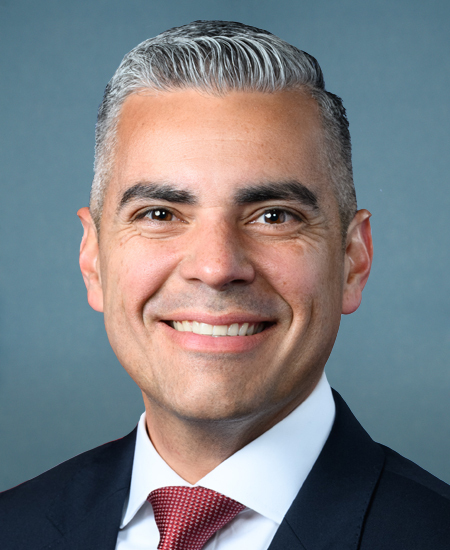
Rep. Juan Ciscomani
Sponsored bills
Maddy summaryThe Choice in Affordable Housing Act of 2025 aims to increase landlord participation in the Housing Choice Voucher program, which helps low-income families, seniors, and people with disabilities afford housing in the private market. The bill creates new incentives including one-time payments to landlords (up to 200% of monthly rent) for renting to voucher holders in low-poverty areas (census tracts with poverty rates below 20%), security deposit assistance for tenants, and bonus payments to public housing agencies that employ dedicated landlord liaisons. It establishes a $100 million annual fund for these initiatives and requires annual reports on the program's effectiveness in expanding housing options in high-opportunity neighborhoods. These changes directly affect landlords, voucher recipients, and public housing agencies administering the program.
Maddy summaryThis bill authorizes a posthumous Congressional Gold Medal for actor James Earl Jones to recognize his career achievements in theater and film. It directs the Treasury Secretary to strike a gold medal bearing his name, which will be presented to his son, Flynn Earl Jones, following Jones' passing. The bill also permits the sale of bronze duplicates to cover costs. As a ceremonial honor with no policy changes, it does not affect legislation or government operations.
Maddy summaryThis bill ensures that U.S. Border Patrol agents and Customs and Border Protection (CBP) officers who remain on duty during a government shutdown receive their salaries. It appropriates funds from the Treasury for fiscal year 2025 to cover their pay during any shutdown period beginning after the bill's enactment. The provision specifically applies to CBP personnel who are not furloughed under standard shutdown protocols. It directly affects federal workers in CBP’s Border Patrol and Office of Field Operations during government funding gaps.
Maddy summaryThis bill ensures military personnel, civilian Defense workers, and supporting contractors continue receiving pay during government funding gaps in fiscal year 2025. It provides temporary funding from existing Treasury reserves to cover salaries for active-duty troops, reservists, Defense civilians, and contractors supporting military operations until Congress passes a full budget or by January 1, 2026. The measure directly affects all active-duty service members, reserve components, and their civilian/contractor support staff across the military. It does not create new policies but guarantees uninterrupted pay during budget implementation delays.
Maddy summaryHR 1851 increases the minimum required fighter aircraft inventory for the Air Force and its reserve components to 1,900 total and 1,200 for the reserve by October 2030, up from current levels (Section 2). The bill allows temporary reductions below these totals for recapitalization, but only for up to two years and with a floor of 1,800 aircraft, requiring congressional notification (Section 2). It mandates quarterly reports to Congress detailing new aircraft acquisitions, assignments, retirements, and recapitalization plans for both active and Air National Guard units (Section 3). The bill specifically protects 25 existing Air National Guard fighter squadrons from fleet reductions until 2030 and requires new aircraft to be assigned to service-retained units at a 3:1 ratio with legacy aircraft retirements (Sections 5, 6).
Maddy summaryThis bill establishes a federal pilot program to increase wages for child care workers through competitive grants to states and tribes. It requires grant recipients to use funds directly to supplement wages for eligible workers in licensed child care centers or home-based settings, paid quarterly, with up to 10% of funds allowed for administrative costs. The program must track impacts on worker retention, well-being, care quality, and affordability, and report results to Congress within two years. It targets low-wage workers in underserved areas, including those serving infants, toddlers, children with disabilities, or during nontraditional hours.
Maddy summaryHR 1827, the Child Care Availability and Affordability Act, increases tax benefits for families with child care needs and employers providing child care. It raises the employer child care credit from 25% to 50% of expenses with a maximum credit of $500,000 (up from $150,000), and creates a new household and dependent care credit allowing families to claim up to 50% of eligible child care expenses, with the credit amount reduced as income increases, up to $8,000 for multiple children. The bill directly affects working parents with children under 13 or dependents needing care, as well as employers offering child care benefits. Key provisions include expanded credit amounts, new definitions for qualifying care, and special rules for small businesses.
Maddy summaryHR 668 establishes a 3-year pilot program to coordinate healthcare between the Department of Veterans Affairs (VA) and Medicare for veterans enrolled in both systems (called "covered veterans"). It assigns each participating veteran a VA case manager to create personalized care plans, navigate VA and Medicare services, and coordinate medical records to improve access, outcomes, and cost efficiency. The program tracks specific metrics like care costs, patient satisfaction, and service gaps, and requires quarterly reports to Congress on its implementation and results. The pilot will operate across 3-5 VA facilities in diverse settings (rural, urban, medically underserved areas) to test coordination models before potentially expanding the approach.
Combat Veterans Pre-Enrollment Act of 2025 This bill requires the Department of Veterans Affairs (VA) to establish a program to carry out all activities necessary to permit certain members of the Armed Forces to elect to enroll in the VA health care system on the date of separation of such members from active service. Specifically, the program is for those who served on active duty in a theater of combat operations during a period of war after the Persian Gulf War or in combat against a hostile force during a period of hostilities after November 11, 1998. The VA must, in conjunction with the Department of Defense (DOD) and Department of Homeland Security, establish a mechanism to permit a member of the Armed Forces to elect to pre-enroll in the VA health care system during the 180-day period preceding the date of separation of the member from active service. The VA-DOD Joint Executive Committee must brief Congress on the efforts to implement such a mechanism under the program. The Government Accountability Office must report on the program and include recommendations with respect to methods to improve the program.