

Rural Veterans’ Improved Access to Benefits Act of 2025 This bill extends and expands the pilot program under which certain non-Department of Veterans Affairs (VA) health care professionals may be contracted to provide disability examinations to veterans, regardless of the jurisdiction of their licensure, for purposes of Department of Veterans Affairs (VA) benefits and care. Specifically, the bill (1) expands the types of health care professionals who may provide such examinations, and (2) extends the authority for such professionals to be contracted for this purpose through January 5, 2031. Currently, such examinations may only be contracted to licensed non-VA physicians, physician assistants, nurse practitioners, audiologists, or psychologists. The bill expands the list to include qualified health care professionals who are eligible for appointment to specified positions in the Veterans Health Administration, including hospital or clinic directors, dentists, and pharmacists. The VA must report on its use of the expanded authority under this bill.
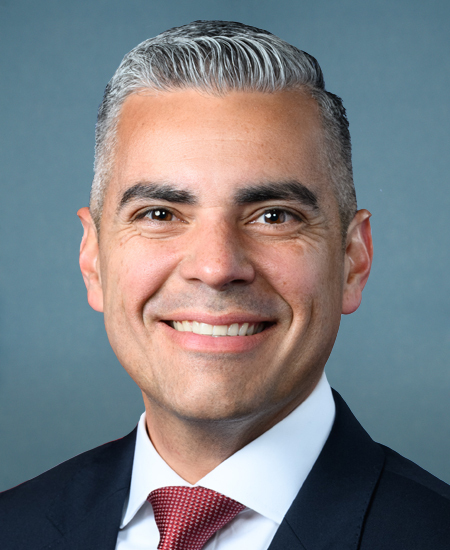
Rep. Juan Ciscomani
Sponsored bills
Maddy summaryHR 3579 requires veterans to submit an application before the VA can begin an initial evaluation for vocational rehabilitation services. It limits employment assistance under the program to a maximum of 365 days per veteran. The bill also mandates the VA to annually report veterans' regional office assignments, pre- and post-program wages, and average wait times for counselor meetings to Congress and the public. Additionally, it requires an independent review of VA rehabilitation programs within one year of enactment to recommend improvements.
Maddy summaryHRES 716 is a symbolic resolution designating September 15-19, 2025, as "National Clean Energy Week" to raise awareness about clean energy. It encourages voluntary actions like investing in clean energy technologies but does not create new laws, funding, or requirements. The resolution cites the clean energy sector's economic role (noting 8.5 million U.S. jobs in 2024 per the Department of Energy) and applauds national laboratories. As a non-binding gesture, it directly affects no individuals or entities but aims to promote existing clean energy initiatives.
Maddy summaryHR 5357, the College Students Continuation of Mental Health Care Act of 2025, allows college mental health providers to offer telehealth services to enrolled or recently attending students across state lines. It directly affects college mental health providers (employed by institutions of higher education) and students registered at or who attended the college within the past three months. Key provisions require providers to verify student identity, obtain consent for telehealth, maintain backup communication methods, and respect state prohibitions on specific services while operating under their home state’s licensing rules. The bill also clarifies that malpractice insurance covers these telehealth services as if provided in the provider’s home state and permits states to form compacts to facilitate cross-state telehealth.
Maddy summaryHRES 695 is a commemorative resolution honoring Charlie Kirk, a conservative speaker and Turning Point USA leader, following his assassination on September 10, 2025, in Orem, Utah. The resolution condemns the attack, offers condolences to his family, and recognizes first responders. It reaffirms the First Amendment right to peaceful assembly and emphasizes that violence cannot silence democratic participation. This non-binding resolution does not create new laws or policies but serves as a symbolic tribute to Kirk's memory and the principles of democratic engagement.
Maddy summaryThe RESULTS Act (HR 5269) changes how Medicare calculates payment rates for clinical diagnostic laboratory tests. It requires Medicare to collect data on private payor rates for widely available non-Advanced Diagnostic Laboratory Tests (non-ADLTs) from a qualifying independent claims data entity (a national nonprofit organization meeting specific criteria) rather than relying on data reported directly by laboratories. For tests where data is unavailable, the bill establishes default payment rates based on previous years' rates adjusted for inflation. The law also requires Medicare to publicly explain payment rates with supporting data, affecting Medicare beneficiaries, clinical laboratories, and private payors that provide services covered by Medicare.
Maddy summaryThis bill ensures U.S. Border Patrol Agents and Customs and Border Protection officers who continue working during a government shutdown receive their salaries. It authorizes funding from the Treasury for fiscal year 2026 to cover their salaries and expenses during any lapse in discretionary appropriations. The measure specifically applies to employees "excepted from furlough," meaning those required to work during shutdowns. It does not change eligibility for pay but guarantees funding for these personnel during funding gaps.
Maddy summaryThis bill amends the Social Security Act to remove an exclusion for rural facilities primarily treating mental health conditions from Medicare coverage. It specifically changes Section 1861(aa)(2) by deleting the phrase "or a facility which is primarily for the care and treatment of mental diseases," allowing these facilities to qualify for Medicare reimbursement. The change directly affects rural behavioral health centers specializing in mental health care that were previously excluded. The amendment takes effect on January 1, 2027, enabling these facilities to access federal Medicare funding for services.
Maddy summaryThis bill changes federal rules for rural healthcare facilities that employ physician assistants (PAs) and nurse practitioners (NPs). It requires these facilities (not run by a physician) to have arrangements consistent with state laws governing PA/NP practice, ensuring services follow state regulations. The policy directly affects rural clinics and hospitals seeking federal reimbursement for PA/NP services. The changes take effect January 1, 2027, aligning federal requirements with existing state oversight of these healthcare providers.
Maddy summaryHR 5198, the Rural Health Clinic Location Modernization Act of 2025, changes Medicare eligibility rules for rural health clinics by updating the definition of "urban area" used to determine clinic qualification. It replaces the current "urbanized area" standard with a clearer definition: any urban area (per Census Bureau data) having a population of 50,000 or more. This adjustment directly affects clinics seeking Medicare certification, ensuring they meet consistent geographic criteria for rural designation. The change takes effect January 1, 2027, aiming to simplify qualification rules without altering Medicare coverage or benefits.