

Maddy summaryThe HEATS Act ensures continued funding for the Low-Income Home Energy Assistance Program (LIHEAP) during federal government shutdowns. It directs the use of unappropriated Treasury funds to pay for LIHEAP benefits when discretionary federal funding lapses, preventing interruption in aid for eligible households. This directly affects low-income families who rely on LIHEAP to cover heating and cooling costs. The bill creates a specific mechanism to maintain these critical energy assistance payments without requiring new congressional appropriations during shutdown periods.
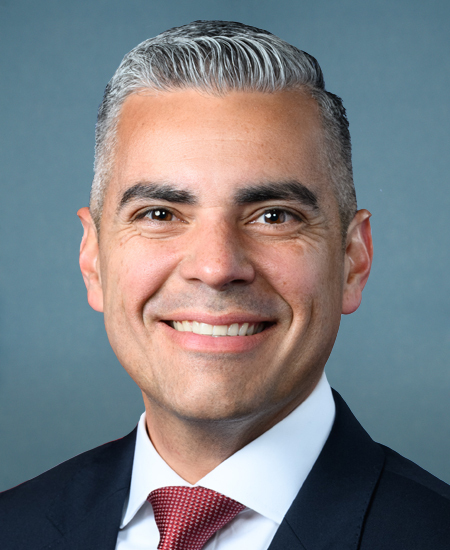
Rep. Juan Ciscomani
Sponsored bills
Maddy summaryHRES 799 is a symbolic resolution (not a law) introduced by House members recognizing former President Donald J. Trump for his claimed diplomatic achievements. It states that Trump brokered a "historic peace agreement" ending Hamas-led hostilities in Gaza, securing hostage releases and disarming Hamas, and resolved other conflicts like Israel-Iran and India-Pakistan. The resolution urges the Norwegian Nobel Committee to award Trump the Nobel Peace Prize for these actions. It has no legal effect and serves solely as a ceremonial tribute to Trump's foreign policy record.
Maddy summaryHRES 795 is a non-binding resolution condemning Hamas for the October 7, 2023, attacks that killed over 1,200 people, took 251 hostages (including Americans), and involved sexual violence. It demands Hamas immediately surrender and release all remaining hostages - specifically noting 48 people still held, including two U.S. citizens. The resolution also affirms Israel’s right to self-defense, calls for humanitarian aid to reach Palestinians, and condemns global antisemitism following the attacks. As a symbolic congressional statement, it does not create new laws or alter policies.
Maddy summaryThe TAAP Act reauthorizes the U.S. program assessing shared aquifers between the U.S. and Mexico. It adjusts which states receive priority for aquifer studies (adding Arizona while excluding a specific Yuma basin area), reduces annual funding from $50 million to $1.5 million for fiscal years 2026-2033, and updates the program’s expiration date to align with this new law. The bill directly affects U.S. states (New Mexico, Texas, Arizona) and Mexican water management entities by modifying federal funding and assessment priorities for transboundary groundwater resources.
Maddy summaryThis bill adds Medicare coverage for multi-cancer early detection screening tests (blood or biological tests analyzing cell-free DNA) starting January 1, 2028. It directly affects Medicare beneficiaries aged 68 and older (starting in 2028, with the age limit increasing by 1 year annually), requiring tests to be FDA-cleared and deemed reasonable/necessary by the Secretary for early cancer detection across multiple organ sites. Payment will initially match current stool DNA test rates before 2031, then shift to a lower rate or new payment system after 2031, with limits preventing more than one test per year. The bill explicitly states it does not alter coverage for existing cancer screenings like breast, colorectal, or prostate cancer tests.
Maddy summaryThis bill would require all states to recognize valid concealed carry permits issued by other states, allowing permit holders to carry concealed handguns (excluding machine guns) in any state that either issues such permits or doesn't prohibit concealed carry. It directly affects law-abiding gun owners with valid permits from their home state, ensuring they can carry in states with similar permit systems or no prohibitions. Key provisions include treating valid permit documents as proof of legal carry (reducing officer stops), shifting the burden of proof to prosecutors if challenged, and allowing civil lawsuits for violations with attorney's fee awards. The bill does not override state laws restricting firearms on private property or government land, nor does it affect federal gun restrictions like those in section 922(q).
Maddy summaryHRES 772 is a symbolic House resolution expressing support for National Public Lands Day (observed September 27, 2025). It encourages U.S. citizens to visit public lands on this fee-free day, recognizing their cultural, spiritual, and economic value. The resolution cites existing statistics on public lands' economic contributions (e.g., $252 billion in economic output from Bureau of Land Management lands in 2024) but does not create new policies or alter fees. As a procedural resolution, it has no binding effect and serves only to promote awareness of existing public land access.
Maddy summaryThe FASTER Act (HR 5575) provides federal grants through FEMA to fire departments for programs that prevent falls among older adults (65+). It directly affects fire departments (career, combination, and volunteer) and seniors by funding home safety modifications like handrails, removing tripping hazards, and installing emergency access devices. Key provisions include 3-year grants covering up to 75% of costs in the first two years (35% in year three), requiring fire departments to use funds for specific fall prevention activities like home assessments and community paramedicine staffing - not to replace local funding. The bill mandates performance evaluations and a congressional report on effectiveness within two years of enactment.
Maddy summaryHR 5580, the Charlie Kirk Commemorative Coin Act, authorizes the U.S. Mint to produce 400,000 $1 silver coins in 2026 to honor Charlie Kirk, founder of Turning Point USA, who died in 2025. The coins must feature Kirk's image on the obverse and "well done, good and faithful servant" on the reverse, with standard minting specifications. They will be sold at face value plus production costs to collectors, with no net cost to the government. This bill has no policy impact beyond commemoration; it affects only the U.S. Mint and coin collectors.
Maddy summaryThis bill amends the Violence Against Women Act Reauthorization Act of 2022 to clarify and expand law enforcement support for identity theft cases. It defines "identity theft" as criminal acts involving unauthorized use of another person's identifying details (like Social Security numbers or bank info), and adds "identity theft" to existing federal grant programs for local police to investigate cybercrimes. These grants will now fund investigations into identity theft alongside other cybercrimes. The bill directly affects local law enforcement agencies receiving these grants and victims of identity theft by improving enforcement resources. (Note: The title "Protect Your PIN" is misleading; the bill focuses on identity theft definitions and funding, not PIN security.)