

Maddy summaryHR 1024, the US-Kazakhstan Trade Modernization Act, terminates the application of Title IV of the Trade Act of 1974 to Kazakhstan. This means the U.S. will no longer apply special trade restrictions tied to Kazakhstan's emigration policies, as Kazakhstan has been found compliant since 1997. The bill allows the President to determine that Title IV no longer applies and extend normal trade relations (NTR) treatment to Kazakhstan's products. As a result, Kazakhstan's exports to the U.S. will be subject to standard U.S. trade rules rather than the specific Title IV provisions.
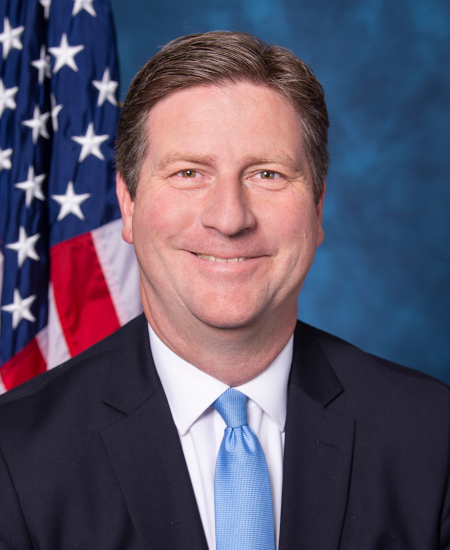
Rep. Greg Stanton
Sponsored bills
Maddy summaryThis bill establishes a federal right to access contraception, protecting individuals' ability to obtain contraceptives and health care providers' ability to offer them without government interference. It prohibits states from banning or restricting contraceptive services, products, or information, including laws that force providers to deny care based on personal beliefs or limit access to specific methods. The law immediately overrides conflicting state regulations and ensures that contraception remains available regardless of factors like race, income, disability, or location. It applies to all individuals and providers, building on existing federal protections like the Affordable Care Act's coverage requirements.
This resolution supports federal investment in public K-12 schools, affirms that the Department of Education (ED) plays a vital role in the public education system, and states that public education funding should not be diverted (e.g., through the use of vouchers) to privately run K-12 schools. The resolution also rejects any claim that the executive branch has the legal authority to (1) dismantle or relocate ED or any of its major offices; or (2) reduce federal funding for public education, block federal grants for education, or transfer funding burdens for education to state and local governments.
Maddy summaryThis bill reauthorizes the Dr. Lorna Breen Health Care Provider Protection Act, extending mental health support programs for healthcare professionals through 2030 (previously ending in 2024). It requires funded programs to specifically address reducing administrative burdens on healthcare workers while continuing to promote access to mental health and substance use disorder services. The legislation directly affects healthcare providers across the U.S. who may access these federally supported resources. Key provisions include extending funding periods and mandating that grant recipients focus on easing workplace administrative tasks, alongside maintaining existing awareness initiatives. The bill does not create new programs but continues and refines existing mental health support for the healthcare workforce.
National Origin-Based Antidiscrimination for Nonimmigrants Act or the NO BAN Act This bill imposes limitations on the President's authority to suspend or restrict aliens from entering the United States. It also prohibits religious discrimination in various immigration-related decisions, such as whether to issue an immigrant or nonimmigrant visa, unless there is a statutory basis for such discrimination. The President may temporarily restrict the entry of any aliens or class of aliens after the Department of State determines that the restriction would address specific and credible facts that threaten U.S. interests such as public safety. The bill also imposes limitations on such restrictions, such as requiring the President, State Department, and the Department of Homeland Security (DHS) to (1) only issue a restriction when required to address a compelling government interest, and (2) narrowly tailor the suspension to use the least restrictive means to achieve such an interest. Before imposing a restriction, the State Department and DHS shall consult with Congress. The State Department and DHS shall report to Congress about the restriction within 48 hours of the restriction's imposition. If such a report is not made, the restriction shall immediately terminate. Individuals or entities present in the United States and unlawfully harmed by such a restriction may sue in federal court. The bill transfers the authority to suspend the entry of aliens traveling to the United States on a commercial airline that failed to comply with regulations related to detecting fraudulent travel documents from the Department of Justice to DHS.
Medicare Patient Access and Practice Stabilization Act of 2025 This bill increases certain payment adjustments under the Medicare physician fee schedule for services furnished between April 1, 2025, and January 1, 2026.
Maddy summaryThis resolution expresses the House of Representatives' position that Congress should take steps to prevent the privatization of the United States Postal Service (USPS), ensuring it remains a federal independent agency. It highlights USPS’s constitutional role, self-sustaining nature (relying on service revenue, not taxpayer funds), and critical functions - serving 168 million addresses daily, supporting rural communities, and underpinning e-commerce. The resolution opposes privatization, noting it would raise prices, reduce services, and harm the $1.9 trillion mailing industry. As a non-binding resolution, it reflects the House’s stance but does not create new law or policy.
Maddy summaryThe STAR Act of 2025 adds a 25% tax credit for qualified semiconductor design expenses incurred by U.S. companies. It directly affects businesses conducting semiconductor design in the United States, covering both in-house costs (like wages and supplies for U.S. design work) and contracted design services. The credit excludes duplicating existing products, cosmetic design, or activities unrelated to performance or reliability improvements. This incentive expires for design expenses paid after December 31, 2036.
Maddy summaryHR 768, the Holocaust Education and Antisemitism Lessons Act, requires the U.S. Holocaust Memorial Museum Director to study how states and school districts currently teach about the Holocaust and antisemitism in K-12 schools. The study will examine curriculum requirements, teacher training, educational materials used, and assessment methods across all states and a representative sample of school districts and schools. It specifically aims to identify gaps, resources needed, and how schools address antisemitism and genocide prevention in their teaching. The Museum must submit a report to Congress within three years of the bill's enactment, detailing findings on current practices and challenges. This bill does not mandate new teaching requirements but seeks to understand existing approaches to Holocaust education.
Maddy summaryHR 764, the Global Health, Empowerment and Rights Act, removes two barriers for foreign nongovernmental organizations (NGOs) seeking U.S. foreign assistance. It ensures these organizations cannot be denied funding solely because they provide health services (like counseling and referrals) using non-U.S. government funds, as long as those services comply with local laws. The bill also requires that foreign NGOs face the same rules on using non-U.S. funds for advocacy and lobbying as U.S. NGOs receiving similar aid. This directly affects international health-focused NGOs working in countries where U.S. aid is provided.