Maddy summaryThe HOME Act of 2025 prohibits landlords and sellers from charging "unconscionably excessive" rental or home sale prices during a federally declared affordable housing crisis. The Secretary of Housing and Urban Development (HUD) must determine crisis periods using metrics like mortgage rates, median home prices, and disaster declarations, with restrictions limiting crisis periods to 30 days (renewable). Violations are enforced by HUD and state attorneys general, with penalties funding affordable housing through the Housing Trust Fund. The law also requires HUD to monitor housing markets, investigate excessive investor purchases, and review anti-competitive practices in rental markets.
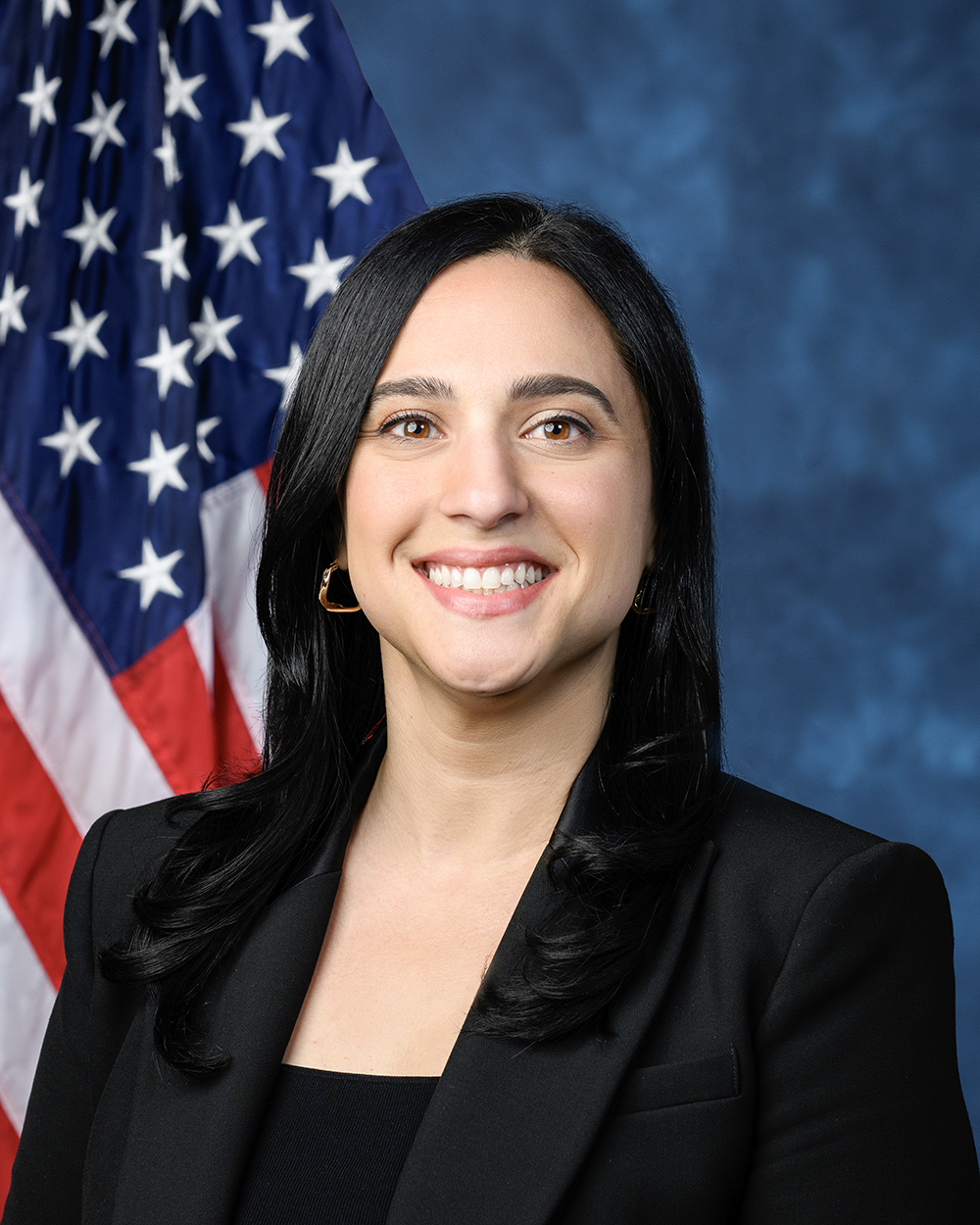
Rep. Yassamin Ansari
Sponsored bills
Maddy summaryHR 3184, the PFAS Alternatives Act, funds research to develop turnout gear (firefighter safety clothing) without harmful PFAS chemicals, directly affecting firefighters who wear this gear. It authorizes $25 million annually (2025-2029) for grants to eligible organizations to research and test PFAS-free gear, requiring partnerships with firefighting groups to translate findings into practice. The bill also allocates $2 million yearly (2027-2031) for training programs on safe gear use and decontamination. Its goal is to reduce firefighters' exposure to chemicals linked to occupational illnesses during operations.
Maddy summaryHRES 380 is a symbolic resolution supporting the designation of May 5-9, 2025, as "Teacher Appreciation Week." It does not create new laws or funding but formally recognizes teachers' contributions to education. The resolution affirms teachers' role in shaping students' futures and calls for including teachers in education policymaking at all levels. It highlights teacher survey data showing broad support for policies like equitable school funding and culturally responsive teaching, though the resolution itself only expresses support for the week's designation. This is a non-binding gesture with no direct impact on affected individuals or policies.
Affordable and Safe Prescription Drug Importation Act of 2025 This bill expands the categories of prescription drugs that may be imported into the United States and the countries from which such drugs may be imported. Current law allows the Department of Health and Human Services (HHS) to authorize importation of certain eligible prescription drugs from Canada if HHS certifies that doing so would pose no additional risk to public health and safety, among other requirements. HHS long declined to make the requisite certification, citing safety concerns (e.g., contamination, counterfeiting), but ultimately made the certification in 2020 and has since approved one state plan to import drugs. The bill removes the certification requirement and requires HHS to issue regulations that permit importation of qualifying prescription drugs from the United Kingdom, Switzerland, and member states of the European Union, in addition to Canada. After one year, if HHS determines that importation of drugs from these countries has been conducted safely, HHS may authorize importation from other countries that meet certain requirements. The bill also expands the types of prescription drugs eligible for importation to include, for example, biologics such as insulin. Further, the bill allows individuals to use an eligible licensed foreign pharmacy to fill a U.S.-issued prescription for a qualifying drug for personal use. Currently, an individual seeking to import a prescription drug generally must acquire a waiver from HHS. Finally, the bill imposes criminal penalties for websites that sell counterfeit drugs or dispense drugs without a required prescription.

Maddy summaryThis bill expands OSHA safety protections to cover public employees, including teachers, police, and sanitation workers, who were previously excluded from federal workplace safety regulations. It directly affects state and local government workers by amending the Occupational Safety and Health Act to explicitly include "the United States, a State, or a political subdivision of a State" under OSHA coverage. The key mechanism is a technical amendment to the law’s definition of covered employees, ensuring public service workers fall under the same safety standards as private-sector employees. The bill takes effect 90 days after enactment for most workplaces, with a 36-month delay for state/local governments without existing OSHA plans.
Maddy summaryHR 3158, the Help Hoover Dam Act, authorizes the Secretary of the Interior to use recovered non-reimbursable funds (including those in account XXXR5656P1) for Hoover Dam operations, maintenance, cleanup, and capital improvements within the Boulder Canyon Project. It directly affects the dam's management and contractors identified under the 2011 Hoover Power Allocation Act. The bill amends the 1928 Boulder Canyon Project Act to streamline spending of existing recovered funds without creating new policy or public impact. (This is a procedural funding amendment, not a substantive policy change.)
Maddy summaryThe HAVEN Act (HR 3133) makes several key changes to federal housing assistance programs. It reduces the percentage used to calculate rental payments from 30% to 20% for several housing programs, increasing assistance for recipients. The bill expands the Housing Choice Voucher Program by adding 500,000 vouchers in 2026 and increasing by 500,000 each year through 2029. It also creates housing navigation grants to help families find housing, expands anti-discrimination protections to include "lawful source of income," and requires zip code-based fair market rents for housing vouchers starting in 2026.
Maddy summaryHRES 366 is a non-binding resolution recognizing the 50th anniversary of the Fall of Saigon on April 30, 1975, known as Black April in Vietnamese history. It honors the Vietnamese American community - now over 2.3 million strong - who resettled in the U.S. after 1975 and have contributed to American society through diverse fields like public service and business. The resolution commemorates the service of U.S. and South Vietnamese military personnel during the Vietnam War and reaffirms U.S. support for democracy and human rights in Vietnam. As a symbolic gesture, it does not create new laws but encourages public observance of this historical event and the community's resilience.
Maddy summaryThis resolution requests the President to provide unredacted documents within 14 days about government use of electronic communication platforms like Signal, WhatsApp, and Slack for official communications. It specifically seeks information on how the administration preserves national security communications sent via these platforms and ensures compliance with federal recordkeeping laws. The resolution targets communications containing highly sensitive national security information, whether sent on government or personal devices. It does not change policy but seeks transparency regarding current practices.
Maddy summaryHRES 286 is a non-binding House resolution (not a law) requesting the President to provide specific documents about a fictional "United States DOGE Service" and its AI use. It asks for records related to AI deployments at federal agencies since January 2025, including data sources, personnel involved in decisions, and analyses of potential program cuts, all framed around alleged violations of privacy laws and transparency requirements. The resolution specifically targets documents concerning "Elon Musk or an individual associated with the United States DOGE Service," which does not exist as a government entity. This is a procedural request for information, not a policy change, and references fictional elements (e.g., "Trump Administration" in 2025).