

Maddy summaryThis bill would criminalize the prescription, dispensing, distribution, or sale of chemical abortion drugs (mifepristone and misoprostol) for abortion purposes under federal law, with penalties up to 25 years in prison. It directly affects healthcare providers, pharmacists, and patients who use these drugs for abortion. Key exceptions include contraceptive use before pregnancy confirmation, treatment of miscarriage, and life-threatening pregnancy conditions certified by a physician. The bill defines "abortion" as intentionally ending a pregnancy with intent other than live birth or treating specific medical conditions, and explicitly prohibits prosecuting women who receive chemical abortions.
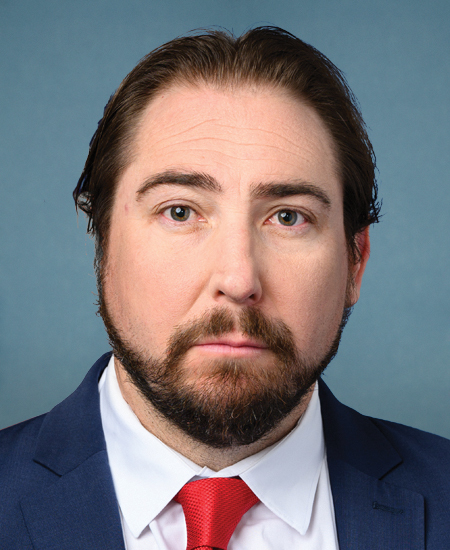
Rep. Elijah Crane
Sponsored bills
Maddy summaryH.J. Res. 93 proposes a constitutional amendment to withhold pay from U.S. Representatives and Senators during any government shutdown. A shutdown is defined as a period when federal agencies lack funding due to Congress failing to pass a regular budget or temporary spending bill. The amendment would require Congress to pass implementing legislation to enforce this pay restriction during shutdowns. This directly affects all members of Congress by temporarily halting their salaries when federal operations cease due to funding gaps.
Maddy summaryHRES 684 is a symbolic congressional resolution passed by the U.S. House of Representatives on September 14, 2023, condemning New Mexico Governor Michelle Lujan Grisham's emergency order that temporarily suspended open and concealed carry firearm rights for 30 days. The resolution asserts the order violated the Second Amendment, citing Supreme Court precedents (Heller, McDonald, Bruen) and noting a federal judge had already blocked the order's firearm restrictions. It does not change any laws or impose legal consequences - it is solely a formal expression of disapproval from Congress. The resolution directly addresses the Governor's actions but has no effect on New Mexico's laws or citizens' rights.
Maddy summaryHR 5636, the "Protect Children’s Innocence Act," prohibits federal criminal penalties for performing gender-affirming medical care on minors under specific circumstances. It defines prohibited care as surgeries (like hysterectomy or mastectomy), puberty blockers, and hormone therapies at supraphysiologic doses, with exceptions for medical emergencies, intersex conditions, or life-threatening illnesses. The law only applies when the care involves interstate commerce (e.g., payments, communications, or travel across state lines). Minors receiving such care cannot be prosecuted, but they may sue providers for civil damages. The bill directly affects minors under 18, healthcare providers, and families seeking gender-affirming medical treatment.
Maddy summaryThis bill prohibits federal funding for colleges and universities that require students or staff to get a COVID-19 vaccine to enroll, work, or access services. It directly affects institutions of higher education receiving federal funds, such as those participating in student aid programs. The key provision blocks all federal financial support if an institution enforces such vaccine requirements as a condition of enrollment, employment, or benefits. The law does not ban vaccine mandates outright but ties federal funding to compliance with this prohibition.
Maddy summaryHR 5635, the Northern Arizona Protection Act, nullifies a specific presidential proclamation (Proclamation 10606) that established the Baaj Nwaavjo I’tah Kukveni-Ancestral Footprints of the Grand Canyon National Monument. It also prohibits the future designation or extension of national monuments within the defined area without explicit approval from Congress. This bill directly affects federal land management decisions in northern Arizona, specifically blocking the use of the Antiquities Act for monument creation or expansion in that region. The key mechanism is a legal restriction requiring congressional authorization for any new monument designation in the specified area, effectively limiting presidential authority under the Antiquities Act there.
Maddy summaryHR 5577, the FACE Act Repeal Act of 2023, would repeal a federal law (Section 248 of Title 18, U.S. Code) that made it a crime to block access to abortion clinics or threaten clinic staff. This repeal would remove criminal penalties for obstructing access to clinics, affecting abortion providers, clinic staff, and individuals attempting to access or block clinic entrances. The bill specifically targets the repeal of this prohibition, applying to prosecutions pending or initiated after the law's enactment. It does not change other abortion-related laws or create new policies.
Maddy summaryHR 5465, the Congressional Access to Bureaucratic Offices Act (CABO Act), requires federal agency heads to allow Members of Congress and their staff access to agency headquarters buildings during regular business hours. It mandates that access be granted upon presentation of valid congressional identification (for Members) or a staff badge while accompanied by the employing Member (for staff), with exceptions for areas requiring secret-level security clearance. The bill also ensures this access applies during declared emergencies (like national emergencies under the National Emergencies Act or public health emergencies), without imposing additional costs by using existing agency funds. This directly affects how federal agencies manage physical access for congressional personnel.
Maddy summaryThis bill requires the HHS Secretary to publish all HHS-held information about the origins of the COVID-19 pandemic within 90 days of enactment, including research records, communications with Chinese institutions, and data from Wuhan. Specific categories include unpublished reports (like the 2019 CDC workshop), grant applications, EcoHealth Alliance records, and records of researchers in China. HHS may withhold classified, personally identifiable, or sensitive commercial information. Failure to comply results in daily $1 million rescissions from HHS funds, deposited to reduce the national debt.
Maddy summaryHR 5507 prohibits the use of federal funds to establish a Disinformation Governance Board within the Department of Homeland Security. The bill directly affects the Secretary of Homeland Security by blocking any funding from being used for this specific board's creation. It is a straightforward funding restriction with no additional policy mechanisms or provisions beyond preventing the board's establishment.