

Maddy summaryHCONRES 86 is a non-binding congressional resolution expressing that a carbon tax would harm the U.S. economy. It states that such a tax would raise energy prices for essentials like gasoline, electricity, and home heating, disproportionately affecting low-income families, the elderly, and fixed-income individuals. The resolution argues a carbon tax would reduce economic growth, encourage businesses to move overseas, and weaken U.S. global competitiveness, urging focus on pro-growth energy policies instead.
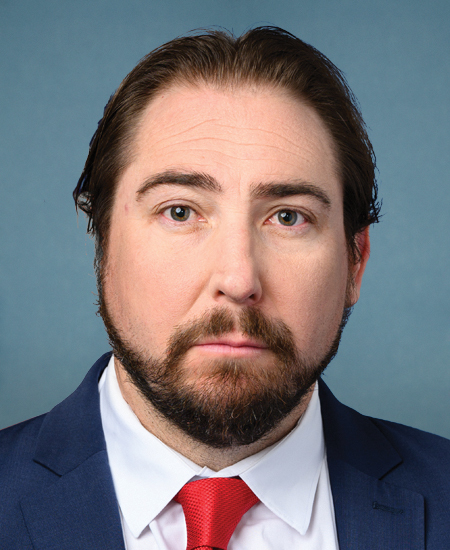
Rep. Elijah Crane
Sponsored bills
Child Tax Credit Integrity Act This bill requires an individual taxpayer to provide social security account numbers to claim the child tax credit. The social security number must be that of the taxpayer and the taxpayer's spouse (for joint returns) and the child named on the tax return.
Maddy summaryThis bill repeals Section 115 of the Clean Air Act, which previously addressed interstate and international pollution abatement. It removes this specific provision from federal law, though the conforming amendment ensures Section 110 remains focused solely on interstate pollution (without international aspects). The bill does not create new energy policies or directly affect any states, industries, or individuals; it is purely a procedural change to the Clean Air Act's text.
Maddy summaryThis bill establishes new eligibility rules for women's and girls' amateur sports by defining "female" and "male" based on biological sex at birth. It prohibits individuals designated as male under these definitions from participating in athletic competitions designated for females, women, or girls. The law amends existing U.S. Code provisions to add this requirement, directly affecting athletes and organizations managing female-designated teams. The key change is a clear ban on male-identified participants in female sports, replacing previous eligibility standards with biological sex criteria.
Maddy summaryHR 5499, titled "Congressional Oversight of the Antiquities Act," would amend the Antiquities Act to impose time limits on national monument designations. It requires that any national monument established by presidential proclamation under the law expires after six months unless Congress extends it, and if not extended, the land cannot be re-designated as a monument for 25 years. This directly affects federal land managers and future presidents, who would need congressional action to maintain or expand monument boundaries. The bill changes the current process by adding automatic expiration and a long-term moratorium on re-designation, shifting authority to Congress.
Maddy summaryThis bill amends U.S. immigration law to automatically bar immigrants from entering the country and require their removal if they have been convicted of, admitted to committing, or are charged with sexual assault. It directly affects non-citizens (aliens) who have been involved in sexual assault offenses, as defined under existing law. Key provisions add new grounds for inadmissibility (preventing entry) and deportability (requiring removal) specifically for such offenses under sections 212(a)(2) and 237(a)(2) of the Immigration and Nationality Act. The bill does not change criminal penalties for sexual assault but modifies immigration consequences for those with such convictions or admissions.
Maddy summaryThe AUSTIN Act of 2024 requires cabinet-level officials, such as department heads, to notify the President and congressional leaders within 24 hours if they cannot perform their duties due to illness or absence, and to publish this notice on their agency’s website. The notice must include the reason for the inability and a timeline for when they will be unable to work and when they expect to return. The President may temporarily waive the public posting requirement for national security reasons but must explain the waiver to Congress, and congressional leaders can override such a waiver if they disagree. Failure to comply could result in the official losing federal funding for their salary and facing termination.
Let Injured Americans Be Legally Empowered Act or the LIABLE Act This bill prohibits COVID-19 vaccine manufacturers from being immune under federal law from lawsuits relating to their vaccines. Specifically, the bill prohibits any federal law from providing immunity for COVID-19 vaccine manufacturers from civil suits or liability, or limiting liability, with respect to the administration or use of their vaccines. Additionally, individuals may not be precluded from bringing a civil suit against a COVID-19 vaccine manufacturer because the individual sought or received compensation through specified federal vaccine injury compensation programs, nor does the bill preclude individuals from seeking compensation through these programs. The bill applies to vaccine administrations that occur before, on, or after the bill's date of enactment.
Maddy summaryHR 7102, the Native American Entrepreneurial Opportunity Act, establishes an Office of Native American Affairs within the Small Business Administration (SBA) to better support Native-owned businesses. The office, led by a specially appointed Assistant Administrator with cultural expertise, directly serves small business owners who are members of Indian Tribes or Native Hawaiian Organizations by providing training, counseling, capital access, and contracting assistance. Key provisions require the office to collaborate with tribes, connect businesses to SBA programs, and report annually to Congress on services delivered. The office is set to terminate seven years after the bill’s enactment, with no new funding authorized for implementation.
Maddy summaryHR 7505, the American Worker Protection Act of 2024, would change how H-1B visas are issued by requiring the Department of Homeland Security to prioritize applications based on the highest salary offered to foreign workers. This amendment to the Immigration and Nationality Act would reorder visa issuance from the current first-come-first-served system to rank applicants by the compensation rate stated in their visa applications. The bill directly affects employers seeking H-1B workers and foreign workers applying for these visas, as it would influence which applications are approved first. The key mechanism is the new requirement to process applications in descending order of salary rates, with implementation rules to be issued by the Secretary of Homeland Security after enactment.