Maddy summaryHJRES 165 is a congressional resolution seeking to block a Department of Education rule issued in April 2024 that updated protections against sex discrimination in schools receiving federal funding. The resolution aims to disapprove this specific rule (published as 89 Fed. Reg. 33474), which would have required schools to address sex-based discrimination in educational programs. If passed, the rule would no longer be in effect, meaning schools would not need to comply with its requirements. This resolution directly affects all schools and educational programs receiving federal financial assistance, as it targets the implementation of the new nondiscrimination standard.
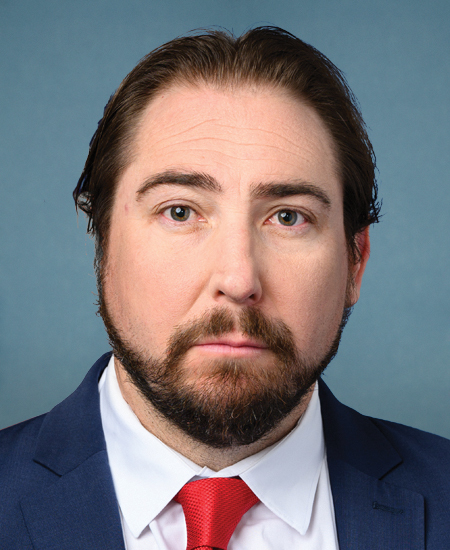
Rep. Elijah Crane
Sponsored bills
Maddy summaryHRES 1377 is a procedural resolution requiring the Secretary of Homeland Security to provide the House of Representatives with all relevant documents, records, and communications about the July 13, 2024, attempted assassination of Donald J. Trump within 7 days of the resolution's adoption. It specifically mandates the transfer of Secret Service protection records, DHS-SS communications, and audio/video recordings related to Trump's Butler, Pennsylvania, campaign rally on that date. The resolution does not change policy but demands transparency by directing the executive branch to disclose existing materials. It directly affects the Department of Homeland Security and its Secretary, who must comply with the 7-day deadline.
Maddy summaryThis bill prohibits Department of Veterans Affairs (VA) employees from initiating, participating in, or advocating for the removal of firearms under state risk-based protective orders. It specifically targets state "gun confiscation laws" that allow temporary firearm removal through court orders. The law directly affects veterans who might face state-level gun confiscation proceedings and VA staff handling such cases. Key provisions ban VA involvement in these state proceedings, ensuring veterans' firearms cannot be seized based on state risk orders during VA-related processes. The bill focuses on restricting VA actions, not altering state gun laws or veterans' rights.
Maddy summaryHR 9053, the Veterans 2nd Amendment Restoration Act of 2024, requires the Department of Veterans Affairs (VA) to notify the Attorney General within 30 days of enactment that it improperly sent certain veterans' personal information to the national background check system. This applies to veterans whose benefits were managed by a fiduciary (under 38 U.S.C. §5502) but who were not legally adjudicated as "mental defectives" under 18 U.S.C. §922(g). The bill corrects a procedural error where the VA transmitted this information to the FBI's background check system without legal basis. It directly affects veterans wrongly flagged due to this data transmission error, aiming to remove them from the system's records.
Maddy summary# Summary of the Document This is a comprehensive legislative act related to water rights for Native American tribes in the Colorado River basin, specifically addressing the Navajo Nation, Hopi Tribe, and San Juan Southern Paiute Tribe. The document establishes: 1. **Water rights and delivery systems** - It creates specific water entitlements including: - Navajo Nation Cibola Water - Navajo Nation Fourth Priority Water - Hopi Tribe Cibola Water - Navajo Nation Upper Basin Colorado River Water - Hopi Tribe Upper Basin Colorado River Water 2. **Settlement Agreement** - This is a major agreement between the tribes, the federal government, and other entities that resolves longstanding water rights disputes. 3. **Accounting rules** - Detailed provisions for how different types of water deliveries will be accounted for in the Colorado River system, including special rules for water delivered to the tribes. 4. **Reservation creation** - Establishes the San Juan Southern Paiute Reservation (approximately 5,400 acres) within the Navajo Indian Reservation. 5. **Waivers and releases** - Comprehensive waivers of claims by the tribes and the United States regarding water rights and other claims. 6. **Funding** - Authorizes $5 billion in appropriations for implementation. 7. **Limited sovereign immunity waiver** - Allows the tribes to be joined in certain legal actions related to the interpretation and enforcement of the agreement. 8. **Special provisions** - Includes specific rules for the Navajo-Gallup Water Supply Project and the "iiná bá - paa tuwaqat'si" pipeline (a Navajo language term for a water pipeline). The document represents a comprehensive resolution of water rights claims for these tribes, establishes new water delivery systems, creates a legal framework for how water will be accounted for in the Colorado River basin, and creates a reservation for the San Juan Southern Paiute Tribe. It addresses unique circumstances related to the tribes' location in both the Upper and Lower Colorado River basins.

Maddy summaryThe SAVE Act (HR 8281) requires U.S. citizens to provide documentary proof of citizenship when registering to vote in federal elections. It defines acceptable proof as documents like passports, REAL ID-compliant IDs, military IDs, or birth certificates, and mandates that states verify citizenship using information from government agencies like DHS and Social Security. States must establish processes for voters without required documentation to provide an attestation under penalty of perjury. The law also requires states to remove noncitizens from voter rolls when verified evidence shows they're not citizens. This bill directly affects all applicants registering to vote in federal elections and state election officials who must implement these requirements.
Maddy summaryHR 4581, the Maternal and Child Health Stillbirth Prevention Act of 2024, amends Title V of the Social Security Act to explicitly allow federal funds to support stillbirth prevention efforts. The bill directs states receiving Title V maternal and child health funds to use these resources for evidence-based programs and research aimed at reducing stillbirths, including tracking fetal movements, screening for growth issues, smoking cessation, and community support. It directly affects state maternal health programs by clarifying that existing funding can now cover specific stillbirth prevention activities previously not explicitly permitted. The law changes how Title V funds may be spent, adding clear provisions for research and programs targeting stillbirth reduction. This is a policy change that updates funding guidelines without creating new programs or mandates.
Maddy summaryHR 4848, the Censorship Accountability Act, allows individuals to sue federal employees who, while acting in their official capacity, deny others their First Amendment rights (such as free speech or assembly). It directly affects federal employees (excluding the President/Vice President) who may restrict protected expression under federal law. Key provisions create a private right of action for victims to seek legal redress in court, with courts able to award attorney fees to the winning party. The bill explicitly excludes lawsuits against the federal government for employment-related conduct and clarifies that unconstitutional sections won’t invalidate the rest of the law.
Maddy summaryThis bill amends federal law to clarify that veterans may lawfully carry firearms on Department of Veterans Affairs (VA) property, provided it complies with applicable state and local laws. It updates Title 18, U.S. Code, to explicitly include veterans' lawful firearm carrying on VA property as an exception to certain restrictions. The bill also adds a new provision to Title 38 confirming that such lawful possession does not violate VA regulations or penalties. It directly affects veterans using VA facilities (like hospitals or offices) and ensures VA policies align with state firearm laws where permitted. The change focuses on clarifying existing legal boundaries without altering state gun laws or expanding firearm access.
Maddy summaryThe Conscience Protection Act of 2024 would strengthen protections for health care providers, facilities, and organizations that refuse to participate in or provide coverage for abortions, assisted suicide, or other procedures conflicting with their religious or moral beliefs. It creates a private right of action allowing individuals or entities to sue when their conscience rights are violated, and requires the Department of Health and Human Services to enforce existing conscience protections through the Office for Civil Rights. The bill prohibits discrimination against health care entities that decline to provide or facilitate these services, while ensuring these protections don't interfere with emergency care requirements under existing law. It also establishes clearer enforcement mechanisms, including the ability to terminate federal funding for non-compliance with conscience protections.